


Wydawcy
Katalog tematyczny
- Archeologia (109)
- Ekonomia, finanse, business (13704)
- Filozofia (1445)
- Historia (3040)
- Języki i językoznawstwo (2356)
- Lifestyle, hobby i rozrywka (475)
- Medycyna (9704)
- Nauki humanistyczne (4)
- Nauki o Ziemi i środowisku (2638)
- Nauki ścisłe (20412)
- Nauki społeczne (8486)
- Edukacja (229)
- Kryminologia, opieka spełeczna (284)
- Obronność (10)
- Polityka (1389)
- Psychologia (777)
- Socjologia (410)
- Społeczeństwo i kultura (187)
- Nauki techniczne (13450)
- Prawo (1696)
- Publikacje informacyjne i interdyscyplinarne (1288)
- Religia i wierzenia (917)
- Technika komputerowa (4067)
- Zdrowie, relacje międzyludzkie i rozwój osobisty (657)





Informacje szczegółowe o książce
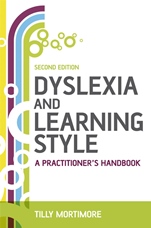
Dyslexia and Learning Style: A Practitioners Handbook
ISBN 9780470511688
Autor: Tilly Mortimore
Wydawca: Wiley
Dostępność: 3-6 tygodni
Cena: 257,25 zł
Przed złożeniem zamówienia prosimy o kontakt mailowy celem potwierdzenia ceny.
ISBN13: |
9780470511688 |
ISBN10: |
0470511680 |
Autor: |
Tilly Mortimore |
Oprawa: |
Paperback |
Rok Wydania: |
2008-01-18 |
Numer Wydania: |
2nd Edition |
Ilość stron: |
338 |
Wymiary: |
232x166 |
Tematy: |
JDGS |
The second edition of this highly successful book, Dyslexia and Learning Style builds on the latest research to extend its practical, evidence–based approach to learning style in the educational environment. Containing a response to the most recent critical insights into style theory and new suggestions for practical work for students within a range of educational contexts, this book remains essential for any teacher wishing to use awareness of style preferences to ensure that all students are helped to succeed.
Recent government policy emphasises inclusive teaching for all and personalised learning. This means that all teachers need to consider how they can adapt the ways in which they teach to maximise success for all learners.
The first section of this practical book provides an overview of the latest research into both dyslexia and learning style and how pupils should be helped to consider the ways in which they can take responsibility to make use of their style preferences to learn effectively. The second section provides ways in which style preferences can be established. It offers techniques to help students absorb, process and create responses to information across the curriculum. It suggests practical ways in which teachers can adapt material to make it accessible to a range of learners and provides activities to help students develop a more flexible approach to learning throughout their studies in school and higher education.
Spis treści:
Preface to the second edition.
Advanced organiser.
Part One: Learning Style.
Chapter 1 Different ways of seeing.
Introduction.
What are cognitive or learning styles?
Models of cognitive or learning style.
Simplifying the picture – two inclusive approaches.
Should style theory go out the window.
Chapter summary.
Chapter 2 Different ways of learning.
Introd
uction.
Concept maps a visuo–spatial tool.
Helping students cope with the teaching methods of secondary school.
Matching the mode to the style.
Identifying cognitive or learning style.
A caution.
Chapter summary.
Part Two: Dyslexia.
Chapter 3 The 3 `D′s: Dyslexia, Definitions and Diagnosis.
Introduction: What is dyslexia?
Defining dyslexia.
Definitions and differences.
How can dyslexia be diagnosed or identified?
Chapter summary.
Chapter 4 Dyslexia – curse or blessing?
Introduction: What impact does dyslexia have on daily life?
The pattern of difficulties.
Dyslexia at home.
Dyslexia at school.
Learning difficulties sometimes related to dyslexia.
Self–esteem and dyslexia – the effects of early negative experiences.
Dyslexia in adults.
Chapter summary.
Chapter 5 Strengths and talents.
Introduction: Does dyslexia bring special talents?
The research background.
Conclusions.
Chapter summary.
Part Three: "It′s No Use If You Can′t Use It."
Chapter 6 Applying learning style theory to learning.
Introduction: Recap: learning style and dyslexia.
Learning styles and learning strategies.
What theories underpin these strategies?
Schema theory – its role in learning.
Memory function – its role in learning.
Dyslexia and memory.
What are the most effective ways of providing this support for a vulnerable student?
Summary.
Chapter summary.
Part Four: Strategies for Wholistic and Analytic Learners.
Chapter 7 Wholistic approaches.
Introduction: What types of behaviour and approaches to learning might be characteristic of a wholistic learner?
The learning implications for people with dyslexia.
What strategies can teachers use to help learners with wholistic learners preferences?
Getting students ready to learn.
Teaching and learn
ing strategies to help wholistic learners.
Strategies for getting the information in modes of presentation.
Strategies for processing, storing and revising.
Strategies for getting information out– modes of expression.
Wholistic examination and revision techniques.
Chapter summary.
Chapter 8 Analytical approaches.
Introduction: What types of behaviour and approaches to learning might be characteristic of an analytical learner?
The learning implications for people with dyslexia of adopting an analytical style.
Getting students ready to learn.
Teaching and learning strategies to help analytical learners.
Strategies for getting information in– modes of presentation.
Strategies for processing, storing and revising.
Strategies for getting information out– modes of expression.
Examination and revision techniques for analytics.
Chapter summary
Part Five: Words or Pictures?
Chapter 9 Images and visualisation.
Introduction: The power of images.
Teaching and learning strategies to help imagers.
Strategies for getting information in– modes of presentation.
Strategies for processing, storing and revising– turning words into pictures.
Getting information out– modes of expression: oral and written.
Examination and revision techniques for imagers.
Spelling techniques for imagers.
Chapter summary.
Chapter 10 Verbal strategies.
Introduction: The power of the word.
Teaching and learning strategies to help verbal learners.
Strategies for getting information in – modes of presentation.
Strategies for processing, storing and revising.
Strategies for getting information out–creating text writing frames for verbalisers.
Developing phonological awareness.
Using phonological awareness to improve proofreading skills.
Examination and revision techniques for verbalisers.
Spelling techniques for verb
alisers.
Chapter summary
Part Six: What Were Those Last Ten Chapters About?
Chapter 11 Helping students to remember.
Introduction: Dyslexic students and memory.
Learning style and memory.
Making things easier to remember – key memory aids.
Useful techniques.
Chapter summary.
Last words: a caution.
Appendices.
Appendix 1: Assessing the reading level of texts.
Appendix 2: Strategies for kinesthetic learners.
Appendix 3: Visual processing deficit checklist.
Appendix 4: A Common Sight Word list.
Appendix 5: Case studies.
Appendix 6: The thirteen style constructs explored by the report of Coffield and his team (2004).
References.
Further reading.
Index.
Okładka tylna:
The second edition of this highly successful book, Dyslexia and Learning Style builds on the latest research to extend its practical, evidence–based approach to learning style in the educational environment. Containing a response to the most recent critical insights into style theory and new suggestions for practical work for students within a range of educational contexts, this book remains essential for any teacher wishing to use awareness of style preferences to ensure that all students are helped to succeed.
Recent government policy emphasises inclusive teaching for all and personalised learning. This means that all teachers need to consider how they can adapt the ways in which they teach to maximise success for all learners.
The first section of this practical book provides an overview of the latest research into both dyslexia and learning style and how pupils should be helped to consider the ways in which they can take responsibility to make use of their style preferences to learn effectively. The second section provides ways in which style preferences can be established. It offers techniques to help students absorb, process and cre
Koszyk
Książek w koszyku: 0 szt.
Wartość zakupów: 0,00 zł
Informacje


Kontakt
Gambit
Centrum Oprogramowania
i Szkoleń Sp. z o.o.
Al. Pokoju 29b/22-24
31-564 Kraków
Siedziba Księgarni
ul. Kordylewskiego 1
31-542 Kraków
+48 12 410 5991
+48 12 410 5987
+48 12 410 5989
Subskrypcje
Administratorem danych osobowych jest firma Gambit COiS Sp. z o.o. Na podany adres będzie wysyłany wyłącznie biuletyn informacyjny.
Autoryzacja płatności

Informacje na temat autoryzacji płatności poprzez PayU.

© Copyright 2012: GAMBIT COiS Sp. z o.o. Wszelkie prawa zastrzeżone.
Projekt i wykonanie: Alchemia Studio Reklamy