


Wydawcy
Katalog tematyczny
- Archeologia (109)
- Ekonomia, finanse, business (13704)
- Filozofia (1445)
- Historia (3040)
- Języki i językoznawstwo (2356)
- Lifestyle, hobby i rozrywka (475)
- Medycyna (9704)
- Chirurgia (272)
- Inne gałęzie medycyny (1871)
- Medycyna kliniczna (4187)
- Choroby wewnętrzne (514)
- Dermatologia (51)
- Diagnostyka medyczna (3)
- Endokrynologia (144)
- Gastroenterologia (27)
- Geriatria (50)
- Ginekologia i położnictwo (134)
- Hematologia (46)
- Hepatologia (10)
- Kardiologia (71)
- Laryngologia (12)
- Nefrologia (10)
- Neurologia (500)
- Oftalmologia (50)
- Pediatria (33)
- Pulmunologia (32)
- Reumatologia (14)
- Terapia genowa (1)
- Układ mięśniowo-szkieletowy (1)
- Urologia (14)
- Medycyna niekonwencjonalna (14)
- Medycyna przedkliniczna (269)
- Medycyna, ogólnie (1740)
- Medyczne służby pomocnicze (745)
- Studia medyczne (16)
- Weterynaria (548)
- Nauki humanistyczne (4)
- Nauki o Ziemi i środowisku (2638)
- Nauki ścisłe (20412)
- Nauki społeczne (8486)
- Nauki techniczne (13450)
- Prawo (1696)
- Publikacje informacyjne i interdyscyplinarne (1288)
- Religia i wierzenia (917)
- Technika komputerowa (4067)
- Zdrowie, relacje międzyludzkie i rozwój osobisty (657)





Informacje szczegółowe o książce
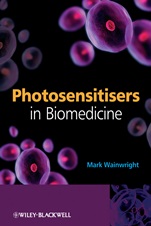
Photosensitisers in Biomedicine
ISBN 9780470510605
Autor: Mark Wainwright
Wydawca: Wiley
Dostępność: 3-6 tygodni
Cena: 605,85 zł
Przed złożeniem zamówienia prosimy o kontakt mailowy celem potwierdzenia ceny.
ISBN13: |
9780470510605 |
ISBN10: |
0470510609 |
Autor: |
Mark Wainwright |
Oprawa: |
Hardback |
Rok Wydania: |
2009-03-27 |
Ilość stron: |
296 |
Wymiary: |
253x175 |
Tematy: |
MJ |
Photosensitisers in Biomedicine offers a clear and comprehensive coverage of the many different photosensitiser types, including information on their applications which now extend beyond anticancer therapy. This text offers the most up–to–date coverage of photodynamic therapy including information on how photosensitisers have evolved within the field of cancer therapy and more recently antimicrobial research.
The text is clearly defined into three distinct parts beginning with a clear introduction to the various types of photosensitisers. The book then moves on to discuss the chemistry of photosensitisers and closes with their numerous applications, for example, photodynamic therapy, photodiagnosis, photodynamic antimicrobial chemotherapy (PACT) and other non–oncological applications such as optical, arterial plaques and stents.
An essential text for postgraduate students, researchers and professionals working in the area looking for an up–to–date account of the field.
· Takes a ′basics–up′ approach to allow non–specialists in the field to follow the routes to potentially useful photosensitisers
· Provides an up–to–date coverage of photosensitiser evolution
· Includes comprehensive overview of all photosensitiser types, rather than the traditional focus on porphyrins
· Includes full coverage of applications
· Includes section on oncological photodynamic therapy and the use of photosensitisers against bacteria, viruses, yeast and protozoa
· Clear introduction to the subject looking at both the theory and the application
Spis treści:
Author’s introduction.
PART 1: INTRODUCTION.
1. Light.
1.1 Electromagnetic radiation in everyday life.
1.2 Radiation and tissue.
1.3 Light, electrons and molecules.
1.4 Photoreaction.
1.5 Dental/plastics curing.
1.6 Photoaging/photofading/photoblea
ching.
References.
2. Dyes and stains.
2.1 Dye use.
2.2 Textile dyeing and biological staining.
2.3 Biological stains and biomedical photosensitisers.
2.4 The human factor.
2.5 Dyes and drug development.
2.6 Dyes and stains and photosensitiser design.
References.
3. Photosensitisers and photosensitisation.
3.1 Photosensitiser action.
3.2 The photodynamic effect and cell death.
3.3 Photosensitising drug discovery.
3.4 Fitness for purpose.
3.5 Organic versus inorganic photosensitisers.
References.
PART 2: CHEMISTRY OF PHOTOSENSITISERS.
4. Azines.
4.1 Acridines.
4.2 Acridine synthesis.
4.3 Rationale.
4.4 Acridines in photodynamic therapy.
4.5 Phenanthridines.
4.6 Phenaziniums.
4.7 Phenoxaziniums.
4.8 Phenothiazinium derivatives.
4.9 Reduction––oxidation activity.
4.10 Hydrophilicity?lipophilicity.
4.11 Molecular planarity.
4.12 Benzannelated derivatives.
4.13 Synthetic approaches.
References.
5. Triarylmethanes and xanthenes.
5.1 Triarylmethanes.
5.2 Victoria blue series.
5.3 Structure and photoproperties in triarylmethanes –– extending the long–wavelength absorption.
5.4 Synthesis.
5.5 Xanthene derivatives.
5.6 Biological uses.
5.7 Rhodamines.
5.8 Rosamines.
5.9 Pyrylium compounds.
5.10 Pyronines.
References.
6. Porphyrins.
6.1 Central metals.
6.2 Meso compounds.
6.3 Amino derivatives.
6.4 Hetero–porphyrins.
6.5 Chlorins.
6.6 Benzoporphyrin derivative.
6.7 Temoporfin.
6.8 Tookad.
6.9 Purpurins.
6.10 Texaphyrins.
6.11 Porphycenes.
6.12 5–Aminolaevulinic acid.
6.13 Esters.
References.
7. Phthalocyanines.
7.1 General features.
7.2 Phthalocyanine synthesis.
7.3 Photosens.
7.4 Naphthalocyanines.
7.5 Hetero–fused systems.
7.6 Silicon derivatives.
7.7 Photoantimicrobial activity.References.
8. Cyanines.
8.1 Synthesis.
8.2 Merocyanine 540.
8.3 N,N′–bis(2–ethyl–l,3–dioxolane)kryptocyanine.
8.4 Indocyanine green.
8.5 Structural improvement.
8.6 Squaric and croconic acid derivatives.
8.7 Functional cyanines.
References.
9. Natural product photosensitisers.
9.1 Condensed aromatic pigments: perylene– and phenanthroperylenequinones.
9.2 Hypericin–type photosensitisers.
9.3 Hypocrellins.
9.4 Anthraquinones.
9.5 Psoralens (furocoumarins).
9.6 Isoquinoline alkaloid photosensitisers.
9.7 Riboflavin.
9.8 Terthiophenes.
References.
PART 3: APPLICATIONS.
10. PDT in oncology.
10.1 Photosensitisers for use in photodynamic therapy.
10.2 Indications for photodynamic therapy.
10.3 Skin.
10.4 Head and neck.
10.5 Gastrointestinal tract.
10.6 Breast.
10.7 Lung.
10.8 Genitourinary tract and prostate.
10.9 Brain.
10.10 Haematological disease (leukaemia and lymphoma).
10.11 Targeting/formulation.
10.12 Liposomes.
10.13 Biomolecular conjugation.
10.14 Dendrimers.
10.15 Nanoparticles.
10.16 Magnetic targeting.
10.17 Light in photodynamic therapy.
References.
11. Antimicrobial –– PACT.
11.1 Antimicrobial and photoantimicrobial action.
11.2 Applications.
11.3 Blood.
11.4 Thionin/light + low–dose UVB for the decontamination of platelet concentrates.
11.5 The cellular problem.
11.6 A role for photodynamic antimicrobial chemotherapy in tropical medicine?
References.
12. Non–oncological applications.
12.1 Age–related macular degeneration.
12.2 Atherosclerosis.
12.3 Endometreosis.
12.4 Port wine stain.
12.5 Arthritis and autoimmune disorders.
12.6 Photodynamic diagnosis.
12.7 Photocytotoxics and photochemical internalisation.
References.
Index.
Okładka tylna:
Photose
nsitisers in Biomedicine offers a clear and comprehensive coverage of the many different photosensitiser types, including information on their applications which now extend beyond anticancer therapy. This text offers the most up–to–date coverage of photodynamic therapy including information on how photosensitisers have evolved within the field of cancer therapy and more recently antimicrobial research.
The text is clearly defined into three distinct parts beginning with a clear introduction to the various types of photosensitisers. The book then moves on to discuss the chemistry of photosensitisers and closes with their numerous applications, for example, photodynamic therapy, photodiagnosis, photodynamic antimicrobial chemotherapy (PACT) and other non–oncological applications such as optical, arterial plaques and stents.
An essential text for postgraduate students, researchers and professionals working in the area looking for an up–to–date account of the field.
· Takes a ′basics–up′ approach to allow non–specialists in the field to follow the routes to potentially useful photosensitisers
· Provides an up–to–date coverage of photosensitiser evolution
· Includes comprehensive overview of all photosensitiser types, rather than the traditional focus on porphyrins
· Includes full coverage of applications
· Includes section on oncological photodynamic therapy and the use of photosensitisers against bacteria, viruses, yeast and protozoa
· Clear introduction to the subject looking at both the theory and the application
Koszyk
Książek w koszyku: 0 szt.
Wartość zakupów: 0,00 zł
Informacje


Kontakt
Gambit
Centrum Oprogramowania
i Szkoleń Sp. z o.o.
Al. Pokoju 29b/22-24
31-564 Kraków
Siedziba Księgarni
ul. Kordylewskiego 1
31-542 Kraków
+48 12 410 5991
+48 12 410 5987
+48 12 410 5989
Subskrypcje
Administratorem danych osobowych jest firma Gambit COiS Sp. z o.o. Na podany adres będzie wysyłany wyłącznie biuletyn informacyjny.
Autoryzacja płatności

Informacje na temat autoryzacji płatności poprzez PayU.

© Copyright 2012: GAMBIT COiS Sp. z o.o. Wszelkie prawa zastrzeżone.
Projekt i wykonanie: Alchemia Studio Reklamy