


Wydawcy
Katalog tematyczny
- Archeologia (109)
- Ekonomia, finanse, business (13704)
- Filozofia (1445)
- Historia (3040)
- Języki i językoznawstwo (2356)
- Lifestyle, hobby i rozrywka (475)
- Medycyna (9704)
- Nauki humanistyczne (4)
- Nauki o Ziemi i środowisku (2638)
- Nauki ścisłe (20412)
- Nauki społeczne (8486)
- Edukacja (229)
- Kryminologia, opieka spełeczna (284)
- Obronność (10)
- Polityka (1389)
- Psychologia (777)
- Socjologia (410)
- Społeczeństwo i kultura (187)
- Nauki techniczne (13450)
- Prawo (1696)
- Publikacje informacyjne i interdyscyplinarne (1288)
- Religia i wierzenia (917)
- Technika komputerowa (4067)
- Zdrowie, relacje międzyludzkie i rozwój osobisty (657)





Informacje szczegółowe o książce
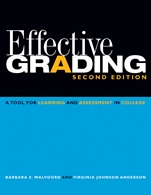
Effective Grading: A Tool for Learning and Assessment in College
ISBN 9780470502150
Autor: Barbara E. Walvoord, Virginia Johnson Anderson
Wydawca: Wiley
Dostępność: 3-6 tygodni
Cena: 203,70 zł
Przed złożeniem zamówienia prosimy o kontakt mailowy celem potwierdzenia ceny.
ISBN13: |
9780470502150 |
ISBN10: |
0470502150 |
Autor: |
Barbara E. Walvoord, Virginia Johnson Anderson |
Oprawa: |
Paperback |
Rok Wydania: |
2009-11-24 |
Numer Wydania: |
2nd Edition |
Ilość stron: |
272 |
Wymiary: |
279x216 |
Tematy: |
JD |
The second edition of Effective Grading—the book that has become a classic in the field—provides a proven hands–on guide for evaluating student work and offers an in–depth examination of the link between teaching and grading. Authors Barbara E. Walvoord and Virginia Johnson Anderson explain that grades are not isolated artifacts but part of a process that, when integrated with course objectives, provides rich information about student learning, as well as being a tool for learning itself. The authors show how the grading process can be used for broader assessment objectives, such as curriculum and institutional assessment.
This thoroughly revised and updated edition includes a wealth of new material including:
Expanded integration of the use of technology and online teaching
A sample syllabus with goals, outcomes, and criteria for student work
New developments in assessment for grant–funded projects
Additional information on grading group work, portfolios, and service–learning experiences
New strategies for aligning tests and assignments with learning goals
Current thought on assessment in departments and general education, using classroom work for program assessments, and using assessment data systematically to "close the loop"
Material on using the best of classroom assessment to foster institutional assessment
New case examples from colleges and universities, including community colleges
"When the first edition of Effective Grading came out, it quickly became the go–to book on evaluating student learning. This second edition, especially with its extension into evaluating the learning goals of departments and general education programs, will make it even more valuable for everyone working to improve teaching and learning in higher education."
—L. Dee Fink, author, Creating Significant Learning Experiences
"Inform
ed by encounters with hundreds of faculty in their workshops, these two accomplished teachers, assessors, and faculty developers have created another essential text. Current faculty, as well as graduate students who aspire to teach in college, will carry this edition in a briefcase for quick reference to scores of examples of classroom teaching and assessment techniques and ways to use students′ classroom work in demonstrating departmental and institutional effectiveness."
—Trudy W. Banta, author, Designing Effective Assessment
Spis treści:
Preface to the Second Edition.
The Authors.
Chapter 1 Introduction.
PART ONE GRADING IN THE CLASSROOM.
Chapter 2 Clarifying Goals, Constructing Assignments.
Chapter 3 Fostering Healthy Student Motivation.
Chapter 4 Establishing Criteria and Standards for Grading.
Chapter 5 Linking Teaching, Learning, and Grading.
Chapter 6 Managing Time for Teaching, Learning, and Responding.
Chapter 7 Making Grading More Time–Efficient.
Chapter 8 Calculating Course Grades.
Chapter 9 Communicating with Students About Their Grades.
Chapter 10 Using the Grading Process to Improve Teaching.
PART TWO HOW GRADING SERVES BROADER ASSESSMENT PURPOSES.
Chapter 11 Assessment for Departments and General Education.
Chapter 12 Case Studies of Departmental and General Education Assessment.
Chapter 13 Assessment for Grant Proposals.
Appendix A: Examples of Rubrics.
Appendix B: Example of Departmental Assessment Report.
References.
Index.
Nota biograficzna:
Barbara E. Walvoord is professor emerita at the University of Notre Dame. For more than thirty years she has been leading faculty workshops across the country on the topics of grading, assessment, teaching, learning, and writing across the curriculum. She is the author of Assessment Clear and Simple from Jossey–Bass.
Virginia Johnson And
erson is professor of biology at Towson University. In her published works, numerous workshops, and consulting with the National Science Foundation Urban Science Initiatives, she addresses teaching, learning, and assessment in the sciences.
Okładka tylna:
The second edition of Effective Grading—the book that has become a classic in the field—provides a proven hands–on guide for evaluating student work and offers an in–depth examination of the link between teaching and grading. Authors Barbara E. Walvoord and Virginia Johnson Anderson explain that grades are not isolated artifacts but part of a process that, when integrated with course objectives, provides rich information about student learning, as well as being a tool for learning itself. The authors show how the grading process can be used for broader assessment objectives, such as curriculum and institutional assessment.
This thoroughly revised and updated edition includes a wealth of new material including:
Expanded integration of the use of technology and online teaching
A sample syllabus with goals, outcomes, and criteria for student work
New developments in assessment for grant–funded projects
Additional information on grading group work, portfolios, and service–learning experiences
New strategies for aligning tests and assignments with learning goals
Current thought on assessment in departments and general education, using classroom work for program assessments, and using assessment data systematically to "close the loop"
Material on using the best of classroom assessment to foster institutional assessment
New case examples from colleges and universities, including community colleges
"When the first edition of Effective Grading came out, it quickly became the go–to book on evaluating student learning. This second edition, especially with its extension into
evaluating the learning goals of departments and general education programs, will make it even more valuable for everyone working to improve teaching and learning in higher education."
—L. Dee Fink, author, Creating Significant Learning Experiences
"Informed by encounters with hundreds of faculty in their workshops, these two accomplished teachers, assessors, and faculty developers have created another essential text. Current faculty, as well as graduate students who aspire to teach in college, will carry this edition in a briefcase for quick reference to scores of examples of classroom teaching and assessment techniques and ways to use students′ classroom work in demonstrating departmental and institutional effectiveness."
—Trudy W. Banta, author, Designing Effective Assessment
Koszyk
Książek w koszyku: 0 szt.
Wartość zakupów: 0,00 zł
Informacje


Kontakt
Gambit
Centrum Oprogramowania
i Szkoleń Sp. z o.o.
Al. Pokoju 29b/22-24
31-564 Kraków
Siedziba Księgarni
ul. Kordylewskiego 1
31-542 Kraków
+48 12 410 5991
+48 12 410 5987
+48 12 410 5989
Subskrypcje
Administratorem danych osobowych jest firma Gambit COiS Sp. z o.o. Na podany adres będzie wysyłany wyłącznie biuletyn informacyjny.
Autoryzacja płatności

Informacje na temat autoryzacji płatności poprzez PayU.

© Copyright 2012: GAMBIT COiS Sp. z o.o. Wszelkie prawa zastrzeżone.
Projekt i wykonanie: Alchemia Studio Reklamy