


Wydawcy
Katalog tematyczny
- Archeologia (109)
- Ekonomia, finanse, business (13704)
- Filozofia (1445)
- Historia (3040)
- Języki i językoznawstwo (2356)
- Lifestyle, hobby i rozrywka (475)
- Medycyna (9704)
- Nauki humanistyczne (4)
- Nauki o Ziemi i środowisku (2638)
- Nauki ścisłe (20412)
- Nauki społeczne (8486)
- Nauki techniczne (13450)
- Prawo (1696)
- Publikacje informacyjne i interdyscyplinarne (1288)
- Religia i wierzenia (917)
- Technika komputerowa (4067)
- Zdrowie, relacje międzyludzkie i rozwój osobisty (657)





Informacje szczegółowe o książce
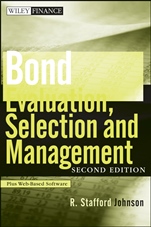
Bond Evaluation, Selection, and Management: + Website
ISBN 9780470478356
Autor: R. Stafford Johnson
Wydawca: Wiley
Dostępność: 3-6 tygodni
Cena: 557,55 zł
Przed złożeniem zamówienia prosimy o kontakt mailowy celem potwierdzenia ceny.
ISBN13: |
9780470478356 |
ISBN10: |
0470478357 |
Autor: |
R. Stafford Johnson |
Oprawa: |
Hardback |
Rok Wydania: |
2010-10-22 |
Numer Wydania: |
2nd Edition |
Ilość stron: |
768 |
Wymiary: |
264x191 |
Tematy: |
KF |
A fully revised guide to fixed income securities that reflects current market conditions
The Second Edition of Bond Evaluation, Selection, and Management combines fundamental and advanced topics in the field, offering comprehensive coverage of bond and debt management.
This fully updated and revised edition provides you with the basics needed to understand various strategies, and explanations of cutting edge advanced topics. Focusing on essential concepts, models, and numerical examples, this book will help you quickly become familiar with the tools needed to effectively select, evaluate, and manage bonds.Covers both the fundamental and advanced topics in the field, including debt securities, bonds with embedded options, asset–backed securities, and bond derivativesReinforces important concepts through review questions, web exercises, and practice problems in each chapterReviews the history of the credit markets from the 1980s to the present with a retrospective look at the 2008 financial crisisContains "Interview Boxes" consisting of questions and answers with distinguished fixed–income portfolio managers, traders, analysts, and academicians
Filled with in–depth insights and practical advice, this reliable resource offers a solid foundation in understanding the complexities of evaluating and selecting bonds and other fixed income securities.
Spis treści:
Preface.
Acknowledgments.
Part One: Bond Evaluation.
Chapter 1: Overview of the Financial System.
1.1 Real and Financial Assets.
1.2 Types of Debt Claims.
1.3 Financial Market.
1.4 Types of Financial Markets.
1.5 Regulations.
1.6 Efficient Financial Markets.
1.7 Characteristics of Assets.
1.8 Conclusion.
Key Terms.
Problems and Questions.
Web Exercises.
Notes.
Selected References.
Chapter 2: Bond Value and Return.
2.1 Introduction
.
2.2 Bond Valuation.
2.3 The Yield to Maturity and Other Rates of Return Measures.
2.4 Rates on Zero–Coupon Bonds.
2.5 Total Return.
2.7 Geometric Mean.
2.8 Conclusion.
Key Terms.
Problems and Questions.
Web Exercises.
Notes.
Selected References.
Chapter 3: the Level and Structure of Interest Rates.
3.1 Introduction.
3.2 Level of Interest Rates.
3.3 the Structure of Interest Rates.
3.4 Conclusion.
Key Terms.
Problems and Questions.
Web Exercises.
Notes.
Selected References.
Chapter 4: the Term Structure of Interest Rates.
4.1 Introduction.
4.2 Market Segmentation Theory.
4.3 Preferred Habitat Theory.
4.4 Pure Expectations Theory.
4.5 Liquidity Premium Theory.
4.6 Summary of Term Structure Theories.
4.7 Constructing the Benchmark Yield Curve.
4.8 Conclusion.
Key Terms.
Problems and Questions.
Web Exercises.
Notes.
Selected References.
Chapter 5: Bond Risk.
5.1 Introduction.
5.2 Default Risk.
5.4 Market Risk.
5.5 Duration and Convexity.
5.6 Conclusion.
Key Terms.
Problems and Questions.
Web Exercises.
Notes.
Selected References.
Part 2: Debt MarketsChapter 6: Corporate Debt Securities.
Chapter 6: Corporate Debt Securities.
6.1 Introduction.
6.2 Corporate Bonds.
6.3 Bankruptcy.
6.4 The Markets for Corporate Bonds.
6.5 Medium–Term Notes.
6.6 Commercial Paper.
6.7 Conclusion.
Key Terms.
Problems and Questions.
Web Exercises.
Notes.
Selected References.
Chapter 7: Treasury and Agency Securities.
7.1 Introduction.
7.2 Treasury Instruments.
7.3 Repurchase Agreements.
7.4 Federal Agency Securities.
7.5 Conclusion.
Key Terms.
Problems and Questions.
Web Exercises.
Notes.
Selected References.
Chapter 8: Municipal Securities.
8.1 Introduction.
8.2 Municipal Financing.
8.3 Tax–Exempt Status
.
8.4 Types of Muncipals.
8.5 Special Features of Municipals.
8.6 Credit Risk, Quality Ratings, and Credit Spreads.
8.7 Municipal Bond Markets.
8.7 Conclusion.
Key Terms.
Problems and Questions.
Web Exercises.
Notes.
Selected References.
Chapter 9: Intermediary Debt Securities.
9.1 Introduction.
9.3 Banker’s Acceptances.
9.4 Mortgage‑Backed and Asset–Backed Securities.
9.5 Investment Funds.
9.6 Insurance Companies and Pension Funds.
9.7 Conclusion.
Key Terms.
Problems and Questions.
Web Exercises.
Notes.
Selected References.
Chapter 10: International Debt Securities.
10.1 Introduction.
10.3 The Foreign Bond Market.
10.4 The Eurobond Market.
10.5 Non–U.S. Domestic Bonds.
10.6 Emerging Market Debt.
10.7 Global Fixed–Income Mutual Funds and ETFs.
10.8 Foreign Bond Risk and Sovereign Bond Ratings.
10.9 Eurocurrency Market.
10.10 The Foreign Currency Market and Exchange Rate Risk.
10.11 Conclusion.
Key Terms.
Problems and Questions.
Web Exercises.
Notes.
Selected References.
Chapter 11: Residential Mortgages and Mortgage‑Backed Securities.
11.1 Introduction.
11.2 Residential Mortgage Loans.
11.3 Mortgage Portfolio.
11.4 Mortgage–Backed Securities.
11.5 Features of Mortgage–Backed Securities.
11.6 Collateralized Mortgage Obligations and Strips.
11.7 Evaluating Mortgage–Backed Securities.
11.8 Conclusion.
Key Terms.
Problems and Questions.
Web Exercises.
Notes.
Selected References.
Chapter 12: Nonagency Residential Mbss, Commercial Mbss and Other Asset–Backed Securities.
12. 1 Introduction.
12.2 Nonagency Mortgage–Backed Securities.
12.3 Commercial Mortgage–Back Securities.
12.4 Asset–Backed Securities.
12.5 Collateralized Debt Obligations.
12.6 Conclusion.
Key Terms.
Problems and Questio
ns.
Web Exercises.
Notes.
Selected References.
Part 3: Bond Strategies and the Evaluation of Bonds with Embedded Options.
Chapter 13: Bond Investment Strategies.
13.1 Introduction.
13.2 Active Investment Strategies.
13.3 Passive Bond Management Strategies.
13.4 Bond Immunization Strategies.
13.5 Conclusion.
Key Terms.
Problems and Questions.
Web Exercises.
Notes.
Selected References.
Chapter 14: Binomial Interest Rate Trees and the Valuation of Bonds with Embedded Options.
14.1 Introduction
14.2 Binomial Interest Rate Model.
14.3 Valuing Bonds with Other Option Features.
14.4 Convertible Bond.
14.5 Valuing Mortgage–Backed Securities.
Key Terms.
Problems and Questions.
Web Exercises.
Notes.
Selected References.
Chapter 15: Estimating the Binomial Tree.
15.1 Introduction.
15.2 Subdividing the Binomial Tree.
15.3 Estimating the Binomial Tree.
15.4 U and D Estimation Approach.
15.5 CALIBRATION MODEL.
15.6 Option–Adjusted Spread.
15.7 Duration and Convexity.
15.8 A Note on the Black–Scholes Option Pricing Model.
15.9 Conclusion.
Key Terms.
Problems and Questions.
Web Exercises.
Notes.
Selected References.
Part 4: Debt Derivatives: Futures and Options.
Chapter 16: Futures Contracts on Debt Securities: Fundamentals.
16.1 Introduction.
16.2 The Market and Characteristics of Futures on Debt Securities.
16.3 The Nature of Futures Trading and the Role of the Clearinghouse and Margins.
16.4 Futures Hedging.
16.5 Futures Pricing.
16.6 Conclusion.
Key Terms.
Problems and Questions.
Web Exercises.
Notes.
Selected References.
Chapter 17: Interest Rate Option Contracts: Fundamentals.
17.1 Introduction.
17.2 Option Terminology.
17.3 Markets and Types of Interest Rate Options.
17.4 OPTION POSITIONS.
17.5 Option Trading – Microstructure
Koszyk
Książek w koszyku: 0 szt.
Wartość zakupów: 0,00 zł
Informacje


Kontakt
Gambit
Centrum Oprogramowania
i Szkoleń Sp. z o.o.
Al. Pokoju 29b/22-24
31-564 Kraków
Siedziba Księgarni
ul. Kordylewskiego 1
31-542 Kraków
+48 12 410 5991
+48 12 410 5987
+48 12 410 5989
Subskrypcje
Administratorem danych osobowych jest firma Gambit COiS Sp. z o.o. Na podany adres będzie wysyłany wyłącznie biuletyn informacyjny.
Autoryzacja płatności

Informacje na temat autoryzacji płatności poprzez PayU.

© Copyright 2012: GAMBIT COiS Sp. z o.o. Wszelkie prawa zastrzeżone.
Projekt i wykonanie: Alchemia Studio Reklamy