


Wydawcy
Katalog tematyczny
- Archeologia (109)
- Ekonomia, finanse, business (13704)
- Filozofia (1445)
- Historia (3040)
- Języki i językoznawstwo (2356)
- Lifestyle, hobby i rozrywka (475)
- Medycyna (9704)
- Nauki humanistyczne (4)
- Nauki o Ziemi i środowisku (2638)
- Nauki ścisłe (20412)
- Astronomia (294)
- Biologia (5119)
- Chemia (6540)
- Chemia analityczna (361)
- Chemia fizyczna (346)
- Chemia nieorganiczna (137)
- Chemia organiczna (535)
- Krystalografia (27)
- Minerologia (46)
- Fizyka (3309)
- Matematyka (4574)
- Nauki ścisłe, ogólnie (503)
- Nauki społeczne (8486)
- Nauki techniczne (13450)
- Prawo (1696)
- Publikacje informacyjne i interdyscyplinarne (1288)
- Religia i wierzenia (917)
- Technika komputerowa (4067)
- Zdrowie, relacje międzyludzkie i rozwój osobisty (657)





Informacje szczegółowe o książce
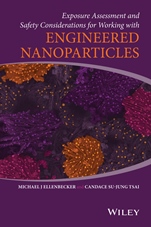
Exposure Assessment and Safety Considerations for Working with Engineered Nanoparticles
ISBN 9780470467060
Autor: Michael J. Ellenbecker, Candace Su–Jung Tsai
Wydawca: Wiley
Dostępność: 3-6 tygodni
Cena: 470,40 zł
Przed złożeniem zamówienia prosimy o kontakt mailowy celem potwierdzenia ceny.
ISBN13: |
9780470467060 |
ISBN10: |
0470467061 |
Autor: |
Michael J. Ellenbecker, Candace Su–Jung Tsai |
Oprawa: |
Hardback |
Rok Wydania: |
2015-08-28 |
Ilość stron: |
312 |
Wymiary: |
240x168 |
Tematy: |
PN |
Addresses acceptable Nanoparticles levels of exposures and identifies best practices to follow to control such exposures
Exposure Assessment and Safety Considerations for Working with Engineered Nanoparticles addresses what acceptable levels of exposures to nanoparticles are and indentifies best practices to follow and control such exposures. The field of nanotechnology health and safety is growing rapidly, due to the thousands of commercial and medical applications for engineered nanoparticles that are currently available or under development, and there is a strong need for knowledge and guidelines associated with the evaluation and control of engineered nanoparticle exposures.
Exposure Assessment and Safety Considerations for Working with Engineered Nanoparticles features:
Methods to evaluate and control worker exposures to engineered Nanoparticles
Guidance for concerned EHS professionals on acceptable levels of exposure to Nanoparticles
Best practices to be followed by all researchers when working with engineered Nanoparticles
Knowledge on toxicity of nanoparticles
The book includes a wide range of topics; from why we should be concerned about Nanoparticle exposure to the current knowledge on the toxicity of nanoparticles, and evaluation of exposure. Finally the authors evaluate case studies related to particle exposure.
1. Introduction
1.1 Why a Book on Nanotechnology Health and Safety?
1.2 Some Scenarios
1.3 Organization of the Material
1.4 Our Approach to Nanoparticle Health and Safety
2. What is a Nanoparticle?
2.1 Nanotechnology, Nanomaterials and Nanoparticles
2.2 Naturally–occurring Nanoparticles
2.3 Industrial Nanoparticles
2.4 Engineered Nanoparticles
2.5 Emerging Uses for Engineered Nanoparticles
2.6. Other Useful Definitions
2.7 Summary
3. Why are we Concerned? The Unique Properties ofNanoparticles
3.1. Surface–to–volume ratio
3.2 Particle size
3.3 Particle Concentration
3.4 Dose Metrics: Particle Number, Surface Area, Morphology andSurface Properties
3.5 Implications for the Occupational and Environmental HealthImpacts of Nanoparticles
3.6 Implications for Physical Risks
3.7 Summary
4. Routes of Exposure for Engineered Nanoparticles
4.1 Introduction
4.2 Engineered Nanoparticle Exposure through Inhalation
4.3 Engineered Nanoparticle Exposure through Dermal Contact
4.4 Engineered Nanoparticle Exposure through Ingestion
4.5 Translocation of Nanoparticles from the Lung
4.6 Summary
5. Current Knowledge on the Toxicity of Nanoparticles
5.1 Introduction
5.2 The Toxicity of Industrial Nanoparticles
5.3 Nanoparticle Toxicity General Concepts
5.4 Carbon Nanotubes
5.5 Fullerenes
5.6 Quantum Dots
5.7 Metal–based Nanoparticles
5.8 Summary
6. Sources of Exposure
6.1 Overview of Occupational Exposures
6.2 Occupational Exposures in Research Facilities
6.3 Occupational Exposures in Manufacturing Facilities
6.4 Exposure Potential for ENPs in Different Physical States
6.5 Environmental Exposures to Engineered Nanoparticles
7. Evaluation of Exposures to Engineered Nanoparticles
7.1 Current Knowledge Concerning Exposure to EngineeredNanoparticles
7.2 Exposure to Engineered Nanoparticles by Inhalation
7.3 Dermal Exposures to Engineered Nanoparticles
7.4 Evaluation of Exposures in Aquatic Environments
8. Exposure Characterization
8.1 Exposure Characterization Steps
8.2 Exposure Measurement Strategies
8.3 Data Analysis and Interpretation
8.4 Statistical Analysis of Data
8.5 Practical Aspects of Aerosol Sampling and MicroscopyTechniques
8.6 Practical Applications and Limitations
8.7 Typical Production Processes
8.8 Case Study: Manual Handling of Nanoparticles
8.9 Case Study: Synthesis of Carbon Nanotubes
8.10 Case Study: Exposure from Twin Screw ExtrusionCompounding
9. Control of Occupational Exposures to EngineeredNanoparticles
9.1 Control of Airborne Exposures
9.2 Control of Dermal Exposures
9.3 Administrative Controls and Good Work Practices
9.4 Respiratory Protection
9.5 Case Study – comparison of the performance of various fumehoods
9.6 Case Study performance of non–traditional fumehoods
10. Control of Environmental Exposures
10.1 Control of Air Emissions
10.2 Control of Water Emissions
10.3 Nanoparticles in Solid Waste
10.4 Control of Exposures throughout a Product s LifeCycle
10.5 Uncertainties and Needed Research
10.6 Case study – filtration control
11. The Regulatory Environment for EngineeredNanomaterials
11.1 Occupational Health Regulations
11.2 Environmental Regulations
11.3 Comparison of Nanotechnology Regulation under TSCA andREACH
11.4 Private Law
11.5 Conclusions
12. Future Directions in Engineered Nanoparticle Health andSafety
12.1 Where we are Today
12.2 Human Health Effects Studies
12.3 Exposure Assessment
12.4 Optimal Approaches to Control Exposures
12.5 The Future of Regulation
12.6 Conclusions
Michael Ellenbecker, Professor of Occupational and Environmental Hygiene at the University of Massachusetts Lowell, has published widely on the measurement and control of airborne contaminants. He is co–author of the Wiley textbook Ventilation for Control of the Work Environment, 2d edition. He leads the health and safety efforts at CHN.
Candace Tsai recently completed her doctorate in occupational and environmental hygiene and cleaner production at UMass Lowell. Dr. Tsai also has Master s degrees in chemical engineering and business administration. For her doctoral research, Dr. Tsai evaluated the potential for Nanoparticle exposure in all CHN labs and measured actual exposures in more than a dozen of them. Three articles based on her doctoral work, which was completed in February 2008, have already been accepted for publication.
Koszyk
Książek w koszyku: 0 szt.
Wartość zakupów: 0,00 zł
Informacje


Kontakt
Gambit
Centrum Oprogramowania
i Szkoleń Sp. z o.o.
Al. Pokoju 29b/22-24
31-564 Kraków
Siedziba Księgarni
ul. Kordylewskiego 1
31-542 Kraków
+48 12 410 5991
+48 12 410 5987
+48 12 410 5989
Subskrypcje
Administratorem danych osobowych jest firma Gambit COiS Sp. z o.o. Na podany adres będzie wysyłany wyłącznie biuletyn informacyjny.
Autoryzacja płatności

Informacje na temat autoryzacji płatności poprzez PayU.

© Copyright 2012: GAMBIT COiS Sp. z o.o. Wszelkie prawa zastrzeżone.
Projekt i wykonanie: Alchemia Studio Reklamy