


Wydawcy
Katalog tematyczny
- Archeologia (109)
- Ekonomia, finanse, business (13704)
- Filozofia (1445)
- Historia (3040)
- Języki i językoznawstwo (2356)
- Lifestyle, hobby i rozrywka (475)
- Medycyna (9704)
- Nauki humanistyczne (4)
- Nauki o Ziemi i środowisku (2638)
- Nauki ścisłe (20412)
- Nauki społeczne (8486)
- Nauki techniczne (13450)
- Prawo (1696)
- Publikacje informacyjne i interdyscyplinarne (1288)
- Religia i wierzenia (917)
- Technika komputerowa (4067)
- Zdrowie, relacje międzyludzkie i rozwój osobisty (657)





Informacje szczegółowe o książce
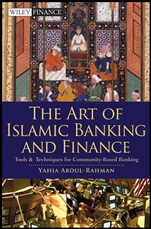
The Art of Islamic Banking and Finance: Tools and Techniques for Community–Based Banking
ISBN 9780470449936
Autor: Yahia Abdul–Rahman
Wydawca: Wiley
Dostępność: 3-6 tygodni
Cena: 304,50 zł
Przed złożeniem zamówienia prosimy o kontakt mailowy celem potwierdzenia ceny.
ISBN13: |
9780470449936 |
ISBN10: |
0470449934 |
Autor: |
Yahia Abdul–Rahman |
Oprawa: |
Hardback |
Rok Wydania: |
2010-01-26 |
Ilość stron: |
432 |
Wymiary: |
228x159 |
Tematy: |
KF |
Praise for The Art of Islamic Banking and Finance
"It is not surprising that The Art of Islamic Banking and Finance provides a definitive exposition of Islamic economics theory and its application in developing Shari′aa–compatible products. The writer, Dr. Yahia Abdul–Rahman, is among the pioneering scholars who showed how Islamic economic concepts, long forgotten, can be revived and applied effectively in today′s financial services industry. His American Finance House: Lariba has become one of the main driving forces for Islamic finance in North America, providing a showcase for how such concepts can be successfully applied."
—Dr. Saleh Malaikah, Chairman, RUSD Investment Bank Inc.
"The Art of Islamic Banking and Finance is an insightful and sometimes surprising comparative study of the impact of Judeo–Christian–Islamic religious principles on the evolution of banking and finance in its various forms. One of Dr. Rahman′s key observations is this: it is not so much the fundamental principles that are different between Islamic and conventional finance, but rather their interpretation and application in modern practice. This fine work will appeal not only to those who wish to understand Islamic banking, but to anyone with an interest in our financial institutions and how and why they have evolved to what they are today."
—Guy David, Partner, Gowling Lafleur Henderson LLP
"The Art of Islamic Banking and Finance gives a powerful, practical, and proven answer to the question of the hour: how to make banks responsible to the public they are meant to serve. The book offers not a theory but a report on how Islamic banking has successfully functioned in modern America."
—Richard Bushman, Professor of History Emeritus, Columbia University
"Yahia′s discussion of Islamic banking is frank, engaging, and informed by substantial practical experience. For all those wh
o believe that the finance industry should once again serve the wider interests of humanity, this is a welcome guide on changing things for the better."
—Tarek El Diwany, Senior Partner, Zest Advisory LLP
Spis treści:
Preface.
Acknowledgments.
Chapter 1: Introduction.
Chapter 2: The Faith–Based Judeo–Christian–Islamic Foundation of the Prohibition of Interest and the RF (Riba–Free) Banking System.
An Introduction to the Judeo–Christian–Islamic Foundations of Faith.
The Judaic Position on the Charging of Ribit (Interest) – Money, Lending and Interest in the Torah and the Jewish Tradition.
The Charging of Ribit (Interest) in the Catholic Tradition: Then and Now.
The Charging of Ribit (Interest) in the Tradition and Teachings of the Evangelical Christian Church.
The Prohibition of Charging of Ribit /Riba (Interest/Usury) in Islam.
Chapter 3: The Role of Community Indexation and the Principle of Marking to the Market.
Development of the Mark–to–the–Market Rule.
Riba–Free Business Transaction Models.
Chapter 4: Shari′aa: Shari′aa Boards in Islamic Banks: An Overview and a Vision for the Future.
The Law: Shari′aa.
The Shari′aa Board in an Islamic Bank or Finance Company.
The Development of Shari′aa Scholars and Shari′aa Compliance Committee for Riba–Free Banks and Financis Institutions in the 21st Century.
Chapter 5: Money and Its Creation: The Federal Reserve System (Central Banks), Interest Rates, and Commodity Indexation.
Those Who “Make” Money and Others Who “Earn” Money.
The Federal Reserve Board of the United States of America.
The Dollar Made As Gold! What a Wonderful Place to Be!
The Prohibition of Riba/Ribit: Rulings on Riba in Fiqh, the Science of Shari′aa.
Ho
mes in America.
Price of Coal.
Price of Crude Oil.
Price of Natural Gas.
Price of Rice.
Gold: That Amazing Metal
Marking the Investment to the Market.
Chapter 6: Civility and Social responsibility of the Riba–Free Banking System.
The Judeo–Christian–Islamic Values: Civility, Morality and Social Responsibility.
The Vision of an Ideal Faith–Based Judeo–Christian–Islamic Society.
New Trends That Captured the Imagination of the Pagans of the Arabian Peninsula.
Elements of the Riba–Free Economic System.
The Riba–Free Judeo–Christian–Islamic System and Business Ethics.
Banking and Investment Banking.
Values and Business Ethics of the RF Banker.
The Ten Golden Covenants of the RF Bank.
Where Do We Start and How to Realize the Dream?
Chapter 7: The Conventional Riba–Based Banking System.
The Banking System of the United States.
Types of Banking Services in the United States.
Government Supervision of the Bank.
United States Banking Regulations.
Summary of Federal Banking Regulations in the United States.
Chapter 8: What is the Difference? Comparing Riba–Free Banking and Conventional Riba–Based Banking.
The RF Banking Brand: History, Development, and Stages of Growth.
An Overview of RF Banking.
Chapter 9: Islamic Banking in the 20th Century.
Islamic Banking Models.
Court Challenges of the Shari′aa–Compliant “Contract Fitting” Islamic Finance. Approach.
Conclusion.
Chapter 10: RF Banking Model for the 21st Century: Developing the Shari′aa–Based Finance Model.
The Puzzle and the Challenge of Developing RF Banking and Financing.
Shari′aa and the Laws of the Land.
Major Objections of Scholars to the Conventional Riba–Based Finance Contract.
Building the Shari′aa–Based Finance Mod
el.
The Results.
Chapter 11: Starting an RF Bank in the United States: Acquiring and Restructuring a Troubled Bank and Operating It Riba–Free.
Introduction.
Riba–Based Conventional Financing versus RF Financing.
Looking for a Suitable Bank to Acquire.
Making History: Acquiring the Bank of Whittier, NA.
Operating the First RF Bank in the United States.
The Staff and Employee Policy: Strategy Used to Build Up and Train Bank Staff.
The Audit Policy: Strategy Used for Auditing Bank Functions and Operations.
Chapter 12: Operating an RF Bank in the United States.
Investing in and Operating a Riba–Free Bank in the United States.
The Added Value of RF Banking.
What is RF Banking and Finance?
Strategies Used to Build a viable RF Banking System in the United States.
Creating True RF Private Bankers and RF Credit Analysis.
Training Program at the Bank of Whittier Open University.
The Balance Sheet of the RF Bank.
The Need for a Good Detail–Oriented Management Team at the RF Bank.
Restructuring at Riba–Based Bank to Operate as an RF Bank.
Chapter 13: Case Studies: Developing the RF Banking Investment Products.
The Investment Pyramid.
RF Asset–Backed Bonds (Sukuk).
RF Stock Market Investments.
Chapter 14: Visions for the Future of RF Banking.
The 2008 Global Economic and Financial Meltdown.
The Mega–Banks and Financial Institutions.
The Culture of Renting Money with Ribit/Riba.
The Lifestyle of the Judeo–Christian–Islamic Value System.
Some Advice for the Newcomers to the RF Lifestyle.
Chapter 15: A New Banking Vision for the 21st Century.
Index.
Nota biograficzna:
Dr. Yahia Abdul–Rahman is the CEO and Chairman of the Bank of Whittier, as well as the founder and Chairman of American Finance House: LARIBA, which has offered Islamic finance
and banking research and instruments since July 1987. Dr. Yahia has more than forty years of highly diversified experience in the banking and oil and gas industries. His area of expertise lies in international, investment, and Islamic banking, project financing, small– and medium–sized business financing, community banking, bank management, and financial services. Dr. Yahia is the author of many papers on faith–based financing and financial instruments, and he speaks regularly at forums focused on Islamic finance at many universities, including Harvard University and institutions in Egypt, Malaysia, Singapore, Bahrain, Saudi Arabia, Dubai, and Turkey.
Okładka tylna:
Praise for The Art of Islamic Banking and Finance
"It is not surprising that The Art of Islamic Banking and Finance provides a definitive exposition of Islamic economics theory and its application in developing Shari′aa–compatible products. The writer, Dr. Yahia Abdul–Rahman, is among the pioneering scholars who showed how Islamic economic concepts, long forgotten, can be revived and applied effectively in today′s financial services industry. His American Finance House: Lariba has become one of the main driving forces for Islamic finance in North America, providing a showcase for how such concepts can be successfully applied."
—Dr. Saleh Malaikah, Chairman, RUSD Investment Bank Inc.
"The Art of Islamic Banking and Finance is an insightful and sometimes surprising comparative study of the impact of Judeo–Christian–Islamic religious principles on the evolution of banking and finance in its various forms. One of Dr. Rahman′s key observations is this: it is not so much the fundamental principles that are different between Islamic and conventional finance, but rather their interpretation and application in modern practice. This fine work will appeal not only to those who wish to understand I
slamic banking, but to anyone with an interest in our financial institutions and how and why they have evolved to what they are today."
—Guy David, Partner, Gowling Lafleur Henderson LLP
"The Art of Islamic Banking and Finance gives a powerful, practical, and proven answer to the question of the hour: how to make banks responsible to the public they are meant to serve. The book offers not a theory but a report on how Islamic banking has successfully functioned in modern America."
—Richard Bushman, Professor of History Emeritus, Columbia University
"Yahia′s discussion of Islamic banking is frank, engaging, and informed by substantial practical experience. For all those who believe that the finance industry should once again serve the wider interests of humanity, this is a welcome guide on changing things for the better."
—Tarek El Diwany, Senior Partner, Zest Advisory LLP
Koszyk
Książek w koszyku: 0 szt.
Wartość zakupów: 0,00 zł
Informacje


Kontakt
Gambit
Centrum Oprogramowania
i Szkoleń Sp. z o.o.
Al. Pokoju 29b/22-24
31-564 Kraków
Siedziba Księgarni
ul. Kordylewskiego 1
31-542 Kraków
+48 12 410 5991
+48 12 410 5987
+48 12 410 5989
Subskrypcje
Administratorem danych osobowych jest firma Gambit COiS Sp. z o.o. Na podany adres będzie wysyłany wyłącznie biuletyn informacyjny.
Autoryzacja płatności

Informacje na temat autoryzacji płatności poprzez PayU.

© Copyright 2012: GAMBIT COiS Sp. z o.o. Wszelkie prawa zastrzeżone.
Projekt i wykonanie: Alchemia Studio Reklamy