


Wydawcy
Katalog tematyczny
- Archeologia (109)
- Ekonomia, finanse, business (13704)
- Filozofia (1445)
- Historia (3040)
- Języki i językoznawstwo (2356)
- Lifestyle, hobby i rozrywka (475)
- Medycyna (9704)
- Nauki humanistyczne (4)
- Nauki o Ziemi i środowisku (2638)
- Nauki ścisłe (20412)
- Nauki społeczne (8486)
- Nauki techniczne (13450)
- Prawo (1696)
- Publikacje informacyjne i interdyscyplinarne (1288)
- Religia i wierzenia (917)
- Technika komputerowa (4067)
- Zdrowie, relacje międzyludzkie i rozwój osobisty (657)





Informacje szczegółowe o książce
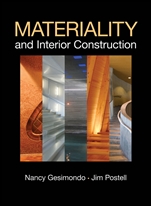
Materiality and Interior Construction
ISBN 9780470445440
Autor: Jim Postell, Nancy Gesimondo
Wydawca: Wiley
Dostępność: 3-6 tygodni
Cena: 449,40 zł
Przed złożeniem zamówienia prosimy o kontakt mailowy celem potwierdzenia ceny.
ISBN13: |
9780470445440 |
ISBN10: |
0470445440 |
Autor: |
Jim Postell, Nancy Gesimondo |
Oprawa: |
Hardback |
Rok Wydania: |
2011-07-01 |
Ilość stron: |
432 |
Wymiary: |
280x222 |
Tematy: |
AM |
A comprehensive reference of materials for interior designers and architects
Choosing the right material for the right purpose is a critical and often overlooked aspect in the larger context of designing buildings and interior spaces. When specified and executed properly, materials support and enhance a project′s overall theme, and infuse interior space with a solid foundation that balances visual poetry and functionality.
Materiality and Interior Construction imparts essential knowledge on how materials contribute to the construction and fabrication of floors, partitions, ceilings, and millwork, with thorough coverage of the important characteristics and properties of building materials and finishes. Individual coverage of the key characteristics of each material explores the advantages and disadvantages of using specific materials and construction assemblies, while helping readers discover how to make every building element count. In addition, Materiality and Interior Construction:
Is highly illustrated throughout to show material properties and building assemblies
Supplies rankings and information on the "green" attributes of each material so that designers can make informed decisions for specifications
Is organized by application for easy and quick access to information
Includes a companion website, featuring an extensive online image bank of materials and assemblies
Rather than a typical catalog of materials, Materiality and Interior Construction is efficiently organized so that the reader is guided directly to the options for the location or assembly they are considering. Reliable and easy to use, Materiality and Interior Construction is a one–stop, comprehensive reference for hundreds of commonly used materials and their integration as building components and an invaluable resource that every interior designer or architect should add to their set of tools.
PREFACE
ACKNOWLEDGEMENTS
FOREWORD
Chapter 1: WHY MATERIALS MATTER
DESIGN INTENTIONS
The Design Concept
Human Factors
Health, Safety, and Welfare
HISTORICAL OVERVIEW
Chronology and Technological Development
WHAT IT S MADE OF AND HOW IT S MADE
Material Extraction
ENVIRONMENTALLY SUSTAINABLE DESIGN CONSIDERATIONS
Biomimicry
Carbon–Neutral Design
Certifications
Downcycling
Embodied Energy
Life–Cycle Assessment
Local Materials
Natural and Synthetic Materials and Components
Rapidly Renewable Materials
Reclaimed/Repurposed Materials
Recycled Materials
Upcycling
Volatile Organic Compounds
MATERIAL PROPERTIES AND PERFORMANCE CHARACTERISTICS
Absorption Coefficient
Acoustics
Aging and Weathering
Cellular Structure
Compressive and Tensile Strength
Density
Dimensional Movement
Ductility
Durability
Elasticity
Emissivity
Fire Ratings
Stability
Surface Attributes
Thermal Conductivity
Thermal Transmittance
Workability and Joinery
APPLICATIONS
INSTALLATION METHODS
Existing Conditions
Construction and Fabrication
Substructures and Assemblies
MAINTENANCE REQUIREMENTS
Green Cleaning Policies and Products
RELATIVE MATERIAL COST
RESOURCES AND SOURCES
Chapter 2: FLOORING
DESIGN INTENTIONS
Human Factors
Health, Safety, and Welfare
Purpose and Performance
Structural Integrity and Engineering
CIRCULATION AND CONVEYANCE: STAIRS, RAMPS, AND SLOPES
Stairs: Accessibility and Egress
Ramps and Slopes: Accessibility and Egress
Subfloor Preparation Methods
INSTALLATION METHODS
Adhesion and Bonding
Asbestos Abatement Issues
Installing Floating Floors
Installing Tiles
MAINTENANCE REQUIREMENTS
RELATIVE COST OF MATERIALS FOR FLOORING
FLOORING MATERIALS
Bamboo
Brick
Carpet
Cementitious Top Coatings
Ceramic Tile
Composite Floor Tiles (Bio–Based, ESD, MCT, MVT, Polyester Resin Based, PVC–Free, Resin, VCT)
Concrete (Cast–in–Place, Precast, and Concrete Finishes)
Cork (Laminated Plank, Sheet, Tile)
Glass
Leather (Tile)
Linoleum (Laminated Plank, Sheet, Tile)
Metal (Flooring, Decking, Grating)
Rubber
Stone (Alabaster, Basalt, Bluestone, Dolostone, Fieldstone, Flagstone, Gabbro, Gneiss, Granite, Limestone, Marble, Onyx, Petrifi ed Wood, Quartzite, Sandstone, Serpentine, Schist, Slate, Travertine)
Terrazzo (Cementitious, Epoxy, and Polyester Matrices, Cast–in–Place Systems, Precast Tile)
Vinyl (Composition Tiles, Luxury Tiles and Strips, Rolled/Sheet Goods, Solid Vinyl Tiles, Safety Flooring, Specialty PVC–Free, Vinyl Sheets and Tiles)
Wood (Strip, Parquet, Plank, Block, Reclaimed Lumber, and Engineered Flooring)
Chapter 3: WALLS, PARTITIONS, AND VERTICAL COMPONENTS
DESIGN INTENTIONS
Acoustics and Sound Transmission
Dimensions: Height, Thickness, and Depth
Function and Use
Incorporation of Building Systems
Partitioning Space/Spatial Order
Structural Integrity/Load Bearing
WALLS AND PARTITIONS: CONSTRUCTION AND FABRICATION TYPES
Load Bearing, Non–Load–Bearing
Lateral Bracing
Modular Construction (CMU, Stacking, Masonry)
Wood and Metal Framing (Channel, Plate, Runner, Stud)
Integral and Integrated Assemblies
Structural Integrated Panels
Adhesives and Bonding
Hardware (Fasteners and Mechanical Attachments for Walls and Partitions)
Relative Cost of Materials for Walls
WALLS, PARTITIONS, AND VERTICAL COMPONENTS: MATERIALS
Bead Board
Brick Masonry (Brick, CMU)
Cement Fiberboard
Ceramic Tile
Compressed and Rammed Earth
Concrete
Fabric–Wrapped Panel Systems
Glass/Glazing (Annealed, Flat, Laminated, Restoration, Safety, Smart, Stained, Tempered)
Gypsum Wallboard (Blueboard, Core Board, Foil–backed, Greenboard, Paperless, Type X Wallboard)
Leather
Metal (Aluminum, Brass, Bronze, Copper, Galvanized Steel, Steel, Stainless Steel)
Paint and Decorative Finishes (Alkyd Paint, Antigraffiti Coatings, Ceramic Insulating Paints, Decorative Paint Techniques, Dry Paint, Electrostatic Paint, Intumescent Paint, Latex Paint, Milk–Based Paint, Oil Paint, Sprayed–On Paint Finishes)
Plaster (Finish Plaster, Gypsum Plaster, Venetian Plaster)
Plastics
Stone (Alabaster, Granite, Limestone, Marble, Onyx, Quartzite, Serpentine, Slate, Soapstone, Travertine)
Wallcovering (Cork, Dry–Erase, Fabric, Flock, Glass Bead, Glass Textile, Grass Cloth, Historical Prints, High–Performance, Magnetic, Paper, PVC–Free, Teldar Film, Vinyl, Wall Carpet, Wood Veneer)
Wood (Wall Veneer Panels, Wainscot, Moldings, Trim)
Chapter 4: CEILINGS
DESIGN INTENTIONS
Acoustics and Sound Transmission
Defining and Partitioning Space
Fire Protection, HVAC, Lighting, MEP, and Acoustic Systems Integration
CEILINGS: CONSTRUCTION AND FABRICATION CATEGORIES
Intermediate Floor Assemblies
Suspended and Nonsuspended Ceilings
Relative Cost of Materials for Ceilings
CEILING MATERIALS
Acoustic Ceiling Tiles (Glass Fiber and Mineral Fiber)
Ceramic Tile
Concrete
Glass/Glazing
Gypsum Wallboard and Gypsum Fiber
Metal Systems
Plaster
Plastics
Stone
Wood and Wood Systems
Chapter 5 MILLWORK
DESIGN INTENTIONS
Constructing Space
Function, Purpose, and Use
Durability
Relative Cost of Materials for Millwork
INTERIOR MILLWORK: MATERIALS
Agglomerates (Cambria, Celador, IceStone, River Rock, Riverstone, Trend Q)
Concrete
Glass
Linoleum
Metal
Plastics
Plastic Laminate
Solid Surface Materials (Avonite, CaesarStone, Corian, Fountainhead, Hanex, Swanstone, Zodiaq)
Stone (Alabaster, Granite, Limestone, Marble, Onyx, Quartzite, Serpentine, Slate, Soapstone, Travertine)
Wood and Wood Composite Boards
INTERIOR MILLWORK FINISHES
Aniline Dyes
Fire–Retardant and –Resistant Finishes
Nitrocellulose and Precatalyzed Lacquer
Oil–Based Finishes
Polyurethane/Spar Varnish
Shellac (Alcohol Based)
Stains
Varnishes
Waterborne Finishes
HARDWARE
Catches and Locks
Hinges
Screws (Wood and Machine)
Washers
Nails (Interior Construction)
Metal Connectors
Drawer Glides
Edge Profiles
Beads and Channels
Running and Standing Trim
Resources and Sources
WOOD JOINERY
APPENDIX: MATERIAL MATTERS
NOTES
GLOSSARY
BIBLIOGRAPHY
INDEX
Nancy Gesimondo is an Adjunct Professor at the Fashion Institute of Technology in New York City. She has taught design studio and materials courses in various Interior Design programs for ten years. She is currently the principal of a high–end residential design practice in New York City.
Jim Postell is an Associate Professor in the College of Design, Architecture, Art, and Planning at the University of Cincinnati. He has taught design studio and seminar courses for twenty–five years and maintains an active design practice. He is the author of Furniture Design, published by Wiley.
This comprehensive reference imparts essential knowledge on how materials contribute to the construction and fabrication of all interior aspects of buildings, with coverage of the characteristics and properties of building materials and finishes. The highly illustrated book addresses key characteristics, advantages and disadvantages of specific materials, helping readers discover how to make every building element count. Organized by application for easy access to information, the book also includes a companion website with an extensive image bank of materials and assemblies. (ICON Magazine)
Koszyk
Książek w koszyku: 0 szt.
Wartość zakupów: 0,00 zł
Informacje


Kontakt
Gambit
Centrum Oprogramowania
i Szkoleń Sp. z o.o.
Al. Pokoju 29b/22-24
31-564 Kraków
Siedziba Księgarni
ul. Kordylewskiego 1
31-542 Kraków
+48 12 410 5991
+48 12 410 5987
+48 12 410 5989
Subskrypcje
Administratorem danych osobowych jest firma Gambit COiS Sp. z o.o. Na podany adres będzie wysyłany wyłącznie biuletyn informacyjny.
Autoryzacja płatności

Informacje na temat autoryzacji płatności poprzez PayU.

© Copyright 2012: GAMBIT COiS Sp. z o.o. Wszelkie prawa zastrzeżone.
Projekt i wykonanie: Alchemia Studio Reklamy