


Wydawcy
Katalog tematyczny
- Archeologia (109)
- Ekonomia, finanse, business (13704)
- Filozofia (1445)
- Historia (3040)
- Języki i językoznawstwo (2356)
- Lifestyle, hobby i rozrywka (475)
- Medycyna (9704)
- Nauki humanistyczne (4)
- Nauki o Ziemi i środowisku (2638)
- Nauki ścisłe (20412)
- Nauki społeczne (8486)
- Nauki techniczne (13450)
- Budownictwo lądowe (1045)
- Chemia przemysłowa (2258)
- Elektronika i telekomunikacja (3287)
- Energetyka (1122)
- Inne nauki stosowane (363)
- Inżynieria biochemiczna (507)
- Inżynieria transportu (232)
- Mechanika i materiały (3316)
- Nauka o środowisku (321)
- Rolnictwo (507)
- Technika, ogólnie (475)
- Prawo (1696)
- Publikacje informacyjne i interdyscyplinarne (1288)
- Religia i wierzenia (917)
- Technika komputerowa (4067)
- Zdrowie, relacje międzyludzkie i rozwój osobisty (657)





Informacje szczegółowe o książce
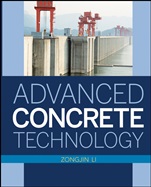
Advanced Concrete Technology
ISBN 9780470437438
Autor: Zongjin Li
Wydawca: Wiley
Dostępność: 3-6 tygodni
Cena: 746,55 zł
Przed złożeniem zamówienia prosimy o kontakt mailowy celem potwierdzenia ceny.
ISBN13: |
9780470437438 |
ISBN10: |
047043743X |
Autor: |
Zongjin Li |
Oprawa: |
Hardback |
Rok Wydania: |
2011-03-08 |
Ilość stron: |
528 |
Wymiary: |
240x192 |
Tematy: |
TG |
A detailed and in–depth guide on current state–of–the–art concrete technologies
The most common building material used around the world, concrete has enjoyed a renewed level of research and testing in the past two decades. Through the use of various additives, production techniques, and chemical processes, there is now a great degree of control over the properties of specific concretes for a wide range of applications.
The first book of its kind to focus on advanced, state–of–the–art concrete technologies, Advanced Concrete Technology serves as a practical primer on concrete′s important role in infrastructure and private building construction, as well as a handy reference for building professionals seeking better understanding of its basic behaviors and continued maturation through scientific enhancement. This book includes:
An insightful view of the latest developments advancing concrete technologies through coverage of new theories, models, and testing techniques
Coverage of non–Portland cement concrete such as geopolymer concrete, magnesium–based bonded concrete, and more
Examination of the newest nondestructive testing methods
Emphasizes a materials design philosophy based on the final application of the materials
Advanced Concrete Technology aims to bridge the gap between the traditional concrete technologies and the emerging cutting–edge technologies that are refining perspectives on concrete as not only an invaluable and fundamental building material, but a versatile one as well.
Cover image is of the Three Gorges Dam located in the Yiling District of Yichang, in Hubei province, China, which is the world′s largest dam. Constructed of 28 million cubic meters of concrete, it is 185 meters high and 3035 meters long and with a capacity to generate over 22,500,000 kilowatts of electricity.
Spis treści:
Preface.
1 Introduction to Concrete.
1.1 Concrete Definition and Historical Development.
1.2 Concrete as a Structural Material.
1.3 Characteristics of Concrete.
1.4 Types of Concrete.
1.5 Factors Influencing Concrete Properties.
1.6 Approaches to Study Concrete.
Discussion Topics.
References.
2 Materials for Making Concrete.
2.1 Aggregates.
2.2 Cementitious Binders.
2.3 Admixtures.
2.4 Water.
Discussion Topics.
Problems.
References.
3 Fresh Concrete.
3.1 Workability of Fresh Concrete.
3.2 Mix Design.
3.3 Procedures for Concrete Mix Design.
3.4 Manufacture of Concrete.
3.5 Delivery of Concrete.
3.6 Concrete Placing.
3.7 Early–Age Properties of Concrete.
Discussion Topics.
Problems.
References.
4 Structure of Concrete.
4.1 Introduction.
4.2 Structural Levels.
4.3 Structure of Concrete in Nanometer Scale: C–S–H Structure.
4.4 Transition Zone in Concrete.
4.5 Microstructural Engineering.
Discussion Topics.
References.
5 Hardened Concrete.
5.1 Strengths of Hardened Concrete.
5.2 Stress–Strain Relationship and Constitutive Equations.
5.3 Dimensional Stability—Shrinkage and Creep.
5.4 Durability.
Discussion Topics.
Problems.
References.
6 Advanced Cementitious Composites.
6.1 Fiber–Reinforced Cementitious Composites.
6.2 High–Strength Cementitious Composites.
6.3 Polymers in Concrete.
6.4 Shrinkage–Compensating Concrete.
6.5 Self–Compacting Concrete.
6.6 Engineered Cementitious Composite.
6.7 Tube–Reinforced Concrete.
6.8 High–Volume Fly Ash Concrete.
6.9 Structural Lightweight Concrete.
6.10 Heavyweight Concrete.
Discussion Topics.
Problems.
References.
7 Concrete Fracture Mechanics.
7.1 Introduction.
7.2 Linear Elastic Fracture Mechanics.
7.3 The Crack Tip Plastic Zone.
7.4 Crack Tip Opening Displacement.
7.5 Fracture Process in Concrete.
7.6 Nonlinear Fracture Mechanics for Concrete.
7.7 Two–Parameter Fracture Model.
7.8 Size Effect Model.
7.9 The Fictitious Model by Hillerborg.
7.10 R–Curve Method for Quasi–Brittle Materials.
Discussion Topics.
Problems.
References.
8 Nondestructive Testing in Concrete Engineering.
8.1 Introduction.
8.2 Review of Wave Theory for a 1D Case.
8.3 Reflected and Transmitted Waves.
8.4 Attenuation and Scattering.
8.5 Main Commonly Used NDT–CE Techniques.
8.6 Noncontacting Resistivity Measurement Method.
Discussion Topics.
Problems.
References.
9 The Future and Development Trends of Concrete.
9.1 Sustainability of Concrete.
9.2 Deep Understanding of the Nature of Hydration.
9.3 Load–Carrying Capability–Durability Unified Service Life Design Theory.
9.4 High Toughness and Ductile Concrete.
References.
Index.
Nota biograficzna:
Zongjin Li is a Professor in the Civil and Environmental Engineering Department at the Hong Kong University of Science and Technology. He is the chief scientist in a study of environmentally friendly contemporary concrete, a national key project in China.
Okładka tylna:
A detailed and in–depth guide on current state–of–the–art concrete technologies
The most common building material used around the world, concrete has enjoyed a renewed level of research and testing in the past two decades. Through the use of various additives, production techniques, and chemical processes, there is now a great degree of control over the properties of specific concretes for a wide range of applications.
The first book of its kind to focus on advanced, state–of–the–art concrete technologies, Advanced Concrete Technology serves as a practical primer on concrete&#
8242;s important role in infrastructure and private building construction, as well as a handy reference for building professionals seeking better understanding of its basic behaviors and continued maturation through scientific enhancement. This book includes:
An insightful view of the latest developments advancing concrete technologies through coverage of new theories, models, and testing techniques
Coverage of non–Portland cement concrete such as geopolymer concrete, magnesium–based bonded concrete, and more
Examination of the newest nondestructive testing methods
Emphasizes a materials design philosophy based on the final application of the materials
Advanced Concrete Technology aims to bridge the gap between the traditional concrete technologies and the emerging cutting–edge technologies that are refining perspectives on concrete as not only an invaluable and fundamental building material, but a versatile one as well.
Cover image is of the Three Gorges Dam located in the Yiling District of Yichang, in Hubei province, China, which is the world′s largest dam. Constructed of 28 million cubic meters of concrete, it is 185 meters high and 3035 meters long and with a capacity to generate over 22,500,000 kilowatts of electricity.
Koszyk
Książek w koszyku: 0 szt.
Wartość zakupów: 0,00 zł
Informacje


Kontakt
Gambit
Centrum Oprogramowania
i Szkoleń Sp. z o.o.
Al. Pokoju 29b/22-24
31-564 Kraków
Siedziba Księgarni
ul. Kordylewskiego 1
31-542 Kraków
+48 12 410 5991
+48 12 410 5987
+48 12 410 5989
Subskrypcje
Administratorem danych osobowych jest firma Gambit COiS Sp. z o.o. Na podany adres będzie wysyłany wyłącznie biuletyn informacyjny.
Autoryzacja płatności

Informacje na temat autoryzacji płatności poprzez PayU.

© Copyright 2012: GAMBIT COiS Sp. z o.o. Wszelkie prawa zastrzeżone.
Projekt i wykonanie: Alchemia Studio Reklamy