


Wydawcy
Katalog tematyczny
- Archeologia (109)
- Ekonomia, finanse, business (13704)
- Filozofia (1445)
- Historia (3040)
- Języki i językoznawstwo (2356)
- Lifestyle, hobby i rozrywka (475)
- Medycyna (9704)
- Nauki humanistyczne (4)
- Nauki o Ziemi i środowisku (2638)
- Nauki ścisłe (20412)
- Astronomia (294)
- Biologia (5119)
- Chemia (6540)
- Chemia analityczna (361)
- Chemia fizyczna (346)
- Chemia nieorganiczna (137)
- Chemia organiczna (535)
- Krystalografia (27)
- Minerologia (46)
- Fizyka (3309)
- Matematyka (4574)
- Nauki ścisłe, ogólnie (503)
- Nauki społeczne (8486)
- Nauki techniczne (13450)
- Prawo (1696)
- Publikacje informacyjne i interdyscyplinarne (1288)
- Religia i wierzenia (917)
- Technika komputerowa (4067)
- Zdrowie, relacje międzyludzkie i rozwój osobisty (657)





Informacje szczegółowe o książce
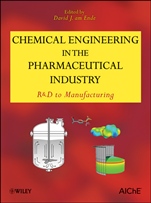
Chemical Engineering in the Pharmaceutical Industry: R&D to Manufacturing
ISBN 9780470426692
Autor: David J. am Ende
Wydawca: Wiley
Dostępność: 3-6 tygodni
Cena: 979,65 zł
Przed złożeniem zamówienia prosimy o kontakt mailowy celem potwierdzenia ceny.
ISBN13: |
9780470426692 |
ISBN10: |
0470426691 |
Autor: |
David J. am Ende |
Oprawa: |
Hardback |
Rok Wydania: |
2010-11-30 |
Ilość stron: |
904 |
Wymiary: |
285x225 |
Tematy: |
PN |
The book that helps bridge the gap between chemists and engineers in the pharmaceutical industry
Today′s college classrooms underemphasize the unique and vital role chemical engineering plays in the drug development process. In fact, most pharmaceutical R&D professionals outside of engineering enter this field with little familiarity with the concepts and applications of chemical engineering science. Chemical Engineering in the Pharmaceutical Industry seeks to bridge this gap by highlighting key subjects related to chemical engineering essential for chemists, analysts, technologists, operations and management teams—and all those who bring pharmaceuticals successfully to market. With clarity and insight on challenging industry practices, it provides coverage on a wide range of topics, including scale–up of unit operations, process modeling, pilot and manufacturing equipment, and quality by design. In addition, Chemical Engineering in the Pharmaceutical Industry:Provides practical guidance, not just theory in the field of chemical engineeringProvides coverage of both the development of active pharmaceutical ingredient (API) and drug product (DP)Introduces mathematics and modern software approaches that are used in design and modeling of experiments for pharmaceutical developmentExamines the role of chemical engineering in biologicsCovers analytics such as HPLC, FTIR, and NMR methods that are useful in material balances and kinetic analysis problems
Delivering a well–defined overview of procedures essential for students entering the pharmaceutical industry, as a well as being a dependable guide for experienced practitioners, Chemical Engineering in the Pharmaceutical Industry recognizes that moving drugs from the laboratory to the manufacturing plant is a complex task, and offers valuable solutions for synchronizing efforts more efficiently to help in the creation of more ro
bust, better understood, and lower cost processes.
Spis treści:
PREFACE.
CONTRIBUTORS.
CONVERSION TABLE.
PART I INTRODUCTION.
1 Chemical Engineering in the Pharmaceutical Industry: An Introduction (David J. am Ende).
2 Current Challenges and Opportunities in the Pharmaceutical Industry (Joseph L. Kukura and Michael Paul Thien).
3 Chemical Engineering Principles in Biologics: Unique Challenges and Applications (Sourav Kundu, Vivek Bhatnagar, Naveen Pathak, and Cenk Undey).
4 Designing a Sustainable Pharmaceutical Industry: The Role of Chemical Engineers (Concepcion Jimenez–Gonzalez, Celia S. Ponder, Robert E. Hannah, and James R. Hagan).
5 Scientific Opportunities Through Quality by Design (Timothy J. Watson and Roger Nosal).
PART II ACTIVE PHARMACEUTICAL INGREDIENT (API).
6 The Role of Chemical Engineering in Pharmaceutical API Process R&D (Edward L. Paul).
7 Reaction Kinetics and Characterization (Utpal K. Singh and Charles J. Orella).
8 Understanding Rate Processes in Catalytic Hydrogenation Reactions (Yongkui Sun and Carl LeBlond).
9 Characterization and First Principles Prediction of API Reaction Systems (Joe Hannon).
10 Modeling, Optimization, and Applications of Kinetic Mechanisms with OpenChem (John E. Tolsma, Brian Simpson, Taeshin Park, and Jason Mustakis).
11 Process Safety and Reaction Hazard Assessment (Wim Dermaut).
12 Design of Distillation and Extraction Operations (Eric M. Cordi).
13 Crystallization Design and Scale–Up (Robert Rahn McKeown, James T. Wertman, and Philip C. Dell′Orco).
14 Scale–Up of Mixing Processes: A Primer (Francis X. McConville and Stephen B. Kessler).
15 Stirred Vessels: Computational Modeling of Multiphase Flows and Mixing (Avinash R. Khopkar and Vivek V. Ranade).
16 Membrane Systems for Pharmaceuti
cal Applications (Dimitrios Zarkadas and Kamalesh K. Sirkar).
17 Design of Filtration and Drying Operations (Saravanababu Murugesan, Praveen K. Sharma, and Jose E. Tabora).
18 The Design and Economics of Large–Scale Chromatographic Separations (Firoz D. Antia).
19 Milling Operations in the Pharmaceutical Industry (Kevin D. Seibert, Paul C. Collins, and Elizabeth Fisher).
20 Process Scale–Up and Assessment (Alan D. Braem, Jason T. Sweeney, and Jean W. Tom).
21 Scale–Up Dos and Don.ts (Francis X. McConville).
22 Kilo Lab and Pilot Plant Manufacturing (Jason C. Hamm, Melanie M. Miller, Thomas Ramsey, Richard L. Schild, Andrew Stewart, and Jean W. Tom).
23 Process Development and Case Studies of Continuous Reactor Systems for Production of API and Pharmaceutical Intermediates (Thomas L. LaPorte, Chenchi Wang, and G. Scott Jones).
24 Drug Solubility and Reaction Thermodynamics (Karin Wichmann and Andreas Klamt).
25 Thermodynamics and Relative Solubility Prediction of Polymorphic Systems (Yuriy A. Abramov and Klimentina Pencheva).
26 Toward a Rational Solvent Selection for Conformational Polymorph Screening (Yuriy A. Abramov, Mark Zell, and Joseph F. Krzyzaniak).
27 Molecular Thermodynamics for Pharmaceutical Process Modeling and Simulation (Chau–Chyun Chen).
28 The Role of Simulation and Scheduling Tools in the Development and Manufacturing of Active Pharmaceutical Ingredients (Demetri Petrides, Alexandros Koulouris, Charles Siletti, Jose O. Jimenez, and Pericles T. Lagonikos).
PART III ANALYTICAL METHODS AND APPLIED STATISTICS.
29 Quality by Design for Analytical Methods (Timothy W. Graul, Kimber L. Barnett, Simon J. Bale, Imogen Gill, and Melissa Hanna–Brown).
30 Analytical Chemistry for API Process Engineering (Matthew L. Jorgensen).
31 Quantitative Applications of NMR Spectroscop
y (Brian L. Marquez and R. Thomas Williamson).
32 Experimental Design for Pharmaceutical Development (Gregory S. Steeno).
33 Multivariate Analysis for Pharmaceutical Development (Frederick H. Long).
PART IV DRUG PRODUCTS.
34 Process Modeling Techniques and Applications for Solid Oral Drug Products (Mary T. am Ende, Rahul Bharadwaj, Salvador Garcı´a–Mun˜oz, William Ketterhagen, Andrew Prpich, and Pankaj Doshi).
35 Process Design and Development for Novel Pharmaceutical Dosage Forms (Leah Appel, Joshua Shockey, Matthew Shaffer, and Jennifer Chu).
36 Design of Solid Dosage Formulations (Kevin J. Bittorf, Tapan Sanghvi, and Jeffrey P. Katstra).
37 Controlled Release Technology and Design of Oral Controlled Release Dosage Forms (Avinash G. Thombre, Mary T. am Ende, and Xiao Yu (Shirley) Wu).
38 Design and Scale–Up of Dry Granulation Processes (Omar L. Sprockel and Howard J. Stamato).
39 Wet Granulation Processes (Karen P. Hapgood and James D. Litster).
40 Spray Atomization Modeling for Tablet Film Coating Processes (Alberto Aliseda, Alfred Berchielli, Pankaj Doshi, and Juan C. Lasheras).
41 The Freeze–Drying Process: The Use of Mathematical Modeling in Process Design, Understanding, and Scale–Up (Venkat Koganti, Sumit Luthra, and Michael J. Pikal).
42 Achieving a Hot Melt Extrusion Design Space for the Production of Solid Solutions (Luke Schenck, Gregory M. Troup, Mike Lowinger, Li Li, and Craig McKelvey).
43 Continuous Processing in Secondary Production (Martin Warman).
44 Pharmaceutical Manufacturing: The Role of Multivariate Analysis in Design Space, Control Strategy, Process Understanding, Troubleshooting, and Optimization (Theodora Kourti).
INDEX.
Nota biograficzna:
DAVID J. AM ENDE is a Research Fellow with over fifteen years experience in chemical resear
ch and development with Pfizer, Inc. in Groton, Connecticut.
Okładka tylna:
The book that helps bridge the gap between chemists and engineers in the pharmaceutical industry
Today′s college classrooms underemphasize the unique and vital role chemical engineering plays in the drug development process. In fact, most pharmaceutical R&D professionals outside of engineering enter this field with little familiarity with the concepts and applications of chemical engineering science. Chemical Engineering in the Pharmaceutical Industry seeks to bridge this gap by highlighting key subjects related to chemical engineering essential for chemists, analysts, technologists, operations and management teams—and all those who bring pharmaceuticals successfully to market. With clarity and insight on challenging industry practices, it provides coverage on a wide range of topics, including scale–up of unit operations, process modeling, pilot and manufacturing equipment, and quality by design. In addition, Chemical Engineering in the Pharmaceutical Industry:Provides practical guidance, not just theory in the field of chemical engineeringProvides coverage of both the development of active pharmaceutical ingredient (API) and drug product (DP)Introduces mathematics and modern software approaches that are used in design and modeling of experiments for pharmaceutical developmentExamines the role of chemical engineering in biologicsCovers analytics such as HPLC, FTIR, and NMR methods that are useful in material balances and kinetic analysis problems
Delivering a well–defined overview of procedures essential for students entering the pharmaceutical industry, as a well as being a dependable guide for experienced practitioners, Chemical Engineering in the Pharmaceutical Industry recognizes that moving drugs from the laboratory to the manufacturing plant is a complex task, and offer
s valuable solutions for synchronizing efforts more efficiently to help in the creation of more robust, better understood, and lower cost processes.
Koszyk
Książek w koszyku: 0 szt.
Wartość zakupów: 0,00 zł
Informacje


Kontakt
Gambit
Centrum Oprogramowania
i Szkoleń Sp. z o.o.
Al. Pokoju 29b/22-24
31-564 Kraków
Siedziba Księgarni
ul. Kordylewskiego 1
31-542 Kraków
+48 12 410 5991
+48 12 410 5987
+48 12 410 5989
Subskrypcje
Administratorem danych osobowych jest firma Gambit COiS Sp. z o.o. Na podany adres będzie wysyłany wyłącznie biuletyn informacyjny.
Autoryzacja płatności

Informacje na temat autoryzacji płatności poprzez PayU.

© Copyright 2012: GAMBIT COiS Sp. z o.o. Wszelkie prawa zastrzeżone.
Projekt i wykonanie: Alchemia Studio Reklamy