


Wydawcy
Katalog tematyczny
- Archeologia (109)
- Ekonomia, finanse, business (13704)
- Filozofia (1445)
- Historia (3040)
- Języki i językoznawstwo (2356)
- Lifestyle, hobby i rozrywka (475)
- Medycyna (9704)
- Nauki humanistyczne (4)
- Nauki o Ziemi i środowisku (2638)
- Nauki ścisłe (20412)
- Nauki społeczne (8486)
- Nauki techniczne (13450)
- Prawo (1696)
- Publikacje informacyjne i interdyscyplinarne (1288)
- Religia i wierzenia (917)
- Technika komputerowa (4067)
- Zdrowie, relacje międzyludzkie i rozwój osobisty (657)





Informacje szczegółowe o książce
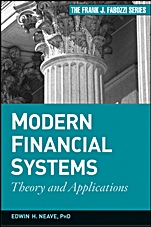
Modern Financial Systems: Theory and Applications
ISBN 9780470419731
Autor: Edwin H. Neave
Wydawca: Wiley
Dostępność: 3-6 tygodni
Cena: 530,25 zł
Przed złożeniem zamówienia prosimy o kontakt mailowy celem potwierdzenia ceny.
ISBN13: |
9780470419731 |
ISBN10: |
0470419733 |
Autor: |
Edwin H. Neave |
Oprawa: |
Hardback |
Rok Wydania: |
2010-01-12 |
Ilość stron: |
558 |
Wymiary: |
234x156 |
Tematy: |
KF |
The Frank J. Fabozzi Series
Modern Financial Systems
Theory And Applications
Edwin H. Neave, Phd
Praise for Modern Financial Systems
"Modern financial systems play a vital role in our global economy and, given the rapid evolution of modern finance, it is vital that participants in this system have a thorough understanding of the material in this text. This is an important and timely synthesis of the theory that drives modern finance."
—Mike Durland, Co–CEO, Scotia Capital
"This book clearly presents all the material that is necessary to achieve a comprehensive understanding of modern financial systems. It′s an essential topic, more important now than ever, yet many of the traditional approaches to teaching finance lack emphasis on it. This is unfortunate because the events of the past year underscore how important it is for financial professionals, regulators, and scholars to have a comprehensive understanding of modern financial systems as a set of constituent parts operating together as a complex whole. Professor Neave′s book is an essential tool for those wishing to achieve that goal."
—Michael L. McIntyre, PhD, Associate Professor, Finance,Sprott School of Business, Carleton University
"This impressive book by Professor E.H. Neave on financial systems is a good introduction for anyone interested in how financial systems are organized. A book for the present times!"
—A.M. Herzberg, Professor Emeritus, Queen′s University
"Edwin Neave shows how classical, simple no–arbitrage arguments and common sense models of decision–making on the lattice get results, and if you′re looking for more in–depth, advanced treatment you can follow the references at the end of each chapter. He explains exactly how financial systems are symbiotic; how various players depend on each other to survive and prosper—something that the entire world has come to realize given the recent cris
is. Contrary to what many had thought about the world markets being so large, infinitely liquid, and robust that it would be impossible to bring them down, we have seen first–hand that financial systems are not self–correcting. The author shows that thoughtful regulation, skillful deal screening, and corporate governance structure with proper rewards and penalties (i.e., not restrictions but rather good incentives management) are all extremely important to financial systems performing their intended functions. This book will be useful to students of finance who want to learn about markets, as well as seasoned practitioners who want to better understand microeconomic forces that shape modern financial systems."
—Serge Slavinsky, Associate Director, Scotia Capital
Spis treści:
Preface.
Part One: Theoretical Overview.
Chapter 1. Introduction.
Chapter 2. Financial System Functions.
Chapter 3. Financial System Governance.
Chapter 4. Financial System Organization and Change.
Part Two: Market Versus NonMarket Governance.
Chapter 5. Market Governance.
Chapter 6. Intermediation and Internal Governance.
Chapter 7. Terms Of Deals.
Part Three: Asset Prices And Market Relations.
Chapter 8. Pricing Stocks and Bonds.
Chapter 9. Pricing Derivatives By Arbitrage.
Chapter 10. Markets With Impediments To Arbitrage.
Part Four: Applications: Market Activity.
Chapter 11. Securities, Bond And Mortgage Markets.
Chapter 12. Markets For Trading Risks.
Chapter 13. Exchange Rates and Markets.
Part Five: Applications: Pooled Investments.
Chapter 14. Marketable Securities Portfolios.
Chapter 15. Nonmarketable Securities Portfolios.
Part Six: Applications: Intermediation.
Chapter 16. Principles of Intermediation.
Chapter 17. Management Practice: Domestic Institutions.
Chapter 18. International Banking and Banking Markets.
Part Seven: In
dustry Organization And Regulation.
Chapter 19. Banking Market Structure: Models and Empirical Research.
Chapter 20. Bank Runs And Systemic Risk.
Chapter 21. Financial Activity And Capital Formation.
Chapter 22. Financial Regulation.
References.
Index.
Nota biograficzna:
Edwin H. Neave, PhD, is a former departmental editor of finance for Management Science. He has written more than fifty articles and fifteen books focusing on asset pricing, derivatives pricing, financial system theory, and financial system practice. Neave is the sole academic who is an Honorary Fellow of the Institute of Canadian Bankers, and his banking education programs are currently used in more than forty countries. Neave has held positions as associate professor, Northwestern University; Bank of Montreal Professor of Business and Finance, School of Business, Queen′s University; as well as director, Queen′s Financial Economics, and professor of economics, both at Queen′s University.
Okładka tylna:
The Frank J. Fabozzi Series
Modern Financial Systems
Theory And Applications
Edwin H. Neave, Phd
Praise for Modern Financial Systems
"Modern financial systems play a vital role in our global economy and, given the rapid evolution of modern finance, it is vital that participants in this system have a thorough understanding of the material in this text. This is an important and timely synthesis of the theory that drives modern finance."
—Mike Durland, Co–CEO, Scotia Capital
"This book clearly presents all the material that is necessary to achieve a comprehensive understanding of modern financial systems. It′s an essential topic, more important now than ever, yet many of the traditional approaches to teaching finance lack emphasis on it. This is unfortunate because the events of the past year underscore how important it is for financial professionals, regulators, and scholars t
o have a comprehensive understanding of modern financial systems as a set of constituent parts operating together as a complex whole. Professor Neave′s book is an essential tool for those wishing to achieve that goal."
—Michael L. McIntyre, PhD, Associate Professor, Finance,Sprott School of Business, Carleton University
"This impressive book by Professor E.H. Neave on financial systems is a good introduction for anyone interested in how financial systems are organized. A book for the present times!"
—A.M. Herzberg, Professor Emeritus, Queen′s University
"Edwin Neave shows how classical, simple no–arbitrage arguments and common sense models of decision–making on the lattice get results, and if you′re looking for more in–depth, advanced treatment you can follow the references at the end of each chapter. He explains exactly how financial systems are symbiotic; how various players depend on each other to survive and prosper—something that the entire world has come to realize given the recent crisis. Contrary to what many had thought about the world markets being so large, infinitely liquid, and robust that it would be impossible to bring them down, we have seen first–hand that financial systems are not self–correcting. The author shows that thoughtful regulation, skillful deal screening, and corporate governance structure with proper rewards and penalties (i.e., not restrictions but rather good incentives management) are all extremely important to financial systems performing their intended functions. This book will be useful to students of finance who want to learn about markets, as well as seasoned practitioners who want to better understand microeconomic forces that shape modern financial systems."
—Serge Slavinsky, Associate Director, Scotia Capital
Koszyk
Książek w koszyku: 0 szt.
Wartość zakupów: 0,00 zł
Informacje


Kontakt
Gambit
Centrum Oprogramowania
i Szkoleń Sp. z o.o.
Al. Pokoju 29b/22-24
31-564 Kraków
Siedziba Księgarni
ul. Kordylewskiego 1
31-542 Kraków
+48 12 410 5991
+48 12 410 5987
+48 12 410 5989
Subskrypcje
Administratorem danych osobowych jest firma Gambit COiS Sp. z o.o. Na podany adres będzie wysyłany wyłącznie biuletyn informacyjny.
Autoryzacja płatności

Informacje na temat autoryzacji płatności poprzez PayU.

© Copyright 2012: GAMBIT COiS Sp. z o.o. Wszelkie prawa zastrzeżone.
Projekt i wykonanie: Alchemia Studio Reklamy