


Wydawcy
Katalog tematyczny
- Archeologia (109)
- Ekonomia, finanse, business (13704)
- Filozofia (1445)
- Historia (3040)
- Języki i językoznawstwo (2356)
- Lifestyle, hobby i rozrywka (475)
- Medycyna (9704)
- Chirurgia (272)
- Inne gałęzie medycyny (1871)
- Medycyna kliniczna (4187)
- Choroby wewnętrzne (514)
- Dermatologia (51)
- Diagnostyka medyczna (3)
- Endokrynologia (144)
- Gastroenterologia (27)
- Geriatria (50)
- Ginekologia i położnictwo (134)
- Hematologia (46)
- Hepatologia (10)
- Kardiologia (71)
- Laryngologia (12)
- Nefrologia (10)
- Neurologia (500)
- Oftalmologia (50)
- Pediatria (33)
- Pulmunologia (32)
- Reumatologia (14)
- Terapia genowa (1)
- Układ mięśniowo-szkieletowy (1)
- Urologia (14)
- Medycyna niekonwencjonalna (14)
- Medycyna przedkliniczna (269)
- Medycyna, ogólnie (1740)
- Medyczne służby pomocnicze (745)
- Studia medyczne (16)
- Weterynaria (548)
- Nauki humanistyczne (4)
- Nauki o Ziemi i środowisku (2638)
- Nauki ścisłe (20412)
- Nauki społeczne (8486)
- Nauki techniczne (13450)
- Prawo (1696)
- Publikacje informacyjne i interdyscyplinarne (1288)
- Religia i wierzenia (917)
- Technika komputerowa (4067)
- Zdrowie, relacje międzyludzkie i rozwój osobisty (657)





Informacje szczegółowe o książce
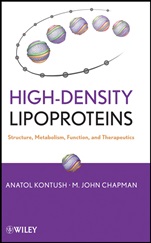
High–Density Lipoproteins: Structure, Metabolism, Function and Therapeutics
ISBN 9780470408216
Autor: Anatol Kontush, M. John Chapman
Wydawca: Wiley
Dostępność: 3-6 tygodni
Cena: 718,20 zł
Przed złożeniem zamówienia prosimy o kontakt mailowy celem potwierdzenia ceny.
ISBN13: |
9780470408216 |
ISBN10: |
0470408219 |
Autor: |
Anatol Kontush, M. John Chapman |
Oprawa: |
Hardback |
Rok Wydania: |
2012-02-20 |
Ilość stron: |
648 |
Wymiary: |
239x161 |
Tematy: |
MJ |
A complete guide to the role of high–density lipoproteins (HDL)in new and emerging therapies
With high–density lipoproteins (HDL) playing an increasing rolein cardiovascular disease prevention, there is a growing need foran in–depth look at HDL and its clinical value. This booksummarizes the current state of knowledge in the field, providingfor the first time a comprehensive, systematic, stylisticallycoherent, and up–to–date review of the composition, structure,heterogeneity, metabolism, epidemiology, genetics, and function ofHDL.
Divided into three main parts, High–Density Lipoproteins firstexamines normal HDL particles, then describes defective HDL, andfinally addresses the therapeutic normalization of subnormal levelsand defective biological activities of this lipoprotein class. Thebook highlights the functional properties of HDL, which arerelevant to the pathophysiology of atherosclerosis and thrombosis,and discusses the compositional and metabolic heterogeneity of HDLparticles.
Readers will come away with a clear understanding of the role ofHDL in biological processes, the potential value of functional HDLas a therapeutic target, and how current and emerging therapies arepoised to influence the treatment of heart disease in thefuture.
PREFACE xv
ACKNOWLEDGMENTS xxxi
ABBREVIATIONS xxxiii
SECTION 1 NORMAL FUNCTIONAL HIGH–DENSITY LIPOPROTEIN 1
1 COMPOSITION 3
1.1 Proteome / 9
Apolipoproteins / 9
Apolipoprotein A–I / 9
ApoA–II / 9
ApoA–IV / 9
ApoA–V / 10
ApoC–I, ApoC–II, ApoC–III, ApoC–IV / 12
ApoD / 12
ApoE / 13
ApoF / 14
ApoH / 14
ApoJ / 14
ApoL–I / 15
ApoM / 15
Other Apolipoproteins / 15
Enzymes / 16
LCAT / 16
PON1 and PON3 / 16
PAF–AH (LpPLA2) / 17
GSPx–3 / 18
Lipid Transfer Proteins / 18
PLTP / 18
CETP / 19
Acute–Phase Response Proteins / 19
Serum Amyloid A / 19
Other Proteins / 20
Complement Components / 21
Proteinase Inhibitors and Related Proteins / 23
Other Protein Components / 25
1.2 Lipidome / 27
Phospholipids / 27
Steroids / 28
Cholesteryl Esters / 28
Triglycerides / 28
Minor Lipids / 28
2 HETEROGENEITY 39
2.1 Heterogeneity in Physicochemical Properties / 42
Heterogeneity in Density / 42
Heterogeneity in Electrophoretic Mobility / 43
Heterogeneity in Size / 45
2.2 Heterogeneity in Chemical Composition / 47
Heterogeneity in Proteins / 47
Heterogeneity in Lipids / 49
2.3 Relationships Between HDL Subfractions Separated byDifferent Methods / 50
3 STRUCTURE 59
3.1 Lipid–Free ApoA–I / 59
3.2 Discoid HDL / 62
3.3 Spherical HDL / 66
4 METABOLISM 74
4.1 Formation and Intravascular Remodeling / 74
ABC Transporters / 77
ABCA1 / 77
ABCG1 / 85
Enzymes / 86
LCAT / 86
Lipases / 88
Lipid Transfer Proteins / 90
CETP / 90
PLTP / 92
Receptors / 93
SR–BI / 93
4.2 Catabolism / 96
5 EPIDEMIOLOGY 113
5.1 Epidemiology of HDL–C / 113
HDL–C and Cardiovascular Risk / 113
Relevance Across Multiple Populations and Disease States /116
HDL–C and Other Cardiovascular Risk Factors / 120
Prevalence of Low HDL–C / 122
HDL–C and Cardiovascular Risk in Patients Receiving Statins /123
HDL–C and Other Major Diseases / 125
5.2 Epidemiology of HDL–Associated Proteins and Enzymes /126
ApoA–I / 126
Other Apolipoproteins / 129
SAA / 130
PON1 / 130
PAF–AH / 131
Other Enzymes / 133
Lipid Transfer Proteins / 133
5.3 Epidemiology of HDL Particle Subpopulations / 134
Separated by Density / 134
Separated by Electrophoretic Mobility / 135
Separated by Composition / 135
Separated by Size / 135
6 GENETICS 161
6.1 ABC Transporters and Other Receptors / 165
ABCA1 / 165
SR–BI / 167
LDL Receptor / 167
6.2 Apolipoproteins / 167
ApoA–I / 167
ApoA–V / 168
ApoC–III / 168
ApoE / 168
6.3 Enzymes / 169
LCAT / 169
PON1 / 169
LPL / 170
Hepatic Lipase / 171
Endothelial Lipase / 171
6.4 Lipid Transfer Proteins / 172
CETP / 172
6.5 Other Genes / 174
6.6 Gene Interactions / 176
7 BIOLOGIC ACTIVITIES 192
7.1 Cholesterol Efflux Capacity / 197
Mechanisms of Cellular Cholesterol Efflux / 199
ABCA1–Mediated Efflux / 199
ABCG1–Mediated Efflux / 203
SR–BI–Mediated Efflux / 204
Other Pathways / 205
Role of HDL Components / 206
Proteins / 206
Lipids / 208
Functional Heterogeneity of HDL / 210
7.2 Antioxidative Activity / 213
Mechanisms of Protection Against Oxidative Stress / 216
Role of HDL Components / 219
Apolipoproteins / 219
Enzymes / 220
Lipids / 223
Functional Heterogeneity of HDL / 224
7.3 Anti–Inflammatory Activity / 226
Mechanisms of Anti–Inflammatory Protection / 231
Role of HDL Components / 234
Proteome / 234
Lipidome / 235
Functional Heterogeneity of HDL / 236
7.4 Cytoprotective Activity / 236
Mechanisms of Cytoprotection / 238
Role of HDL Components / 241
Proteome / 241
Lipidome / 241
Functional Heterogeneity of HDL / 242
7.5 Anti–Infectious Activity / 243
Mechanisms of Protection from Infection / 245
Role of HDL Components / 246
Proteome / 246
Lipids / 248
Functional Heterogeneity of HDL / 248
7.6 Vasodilatory Activity / 249
Mechanisms of Vasodilatory Activity / 250
Role of HDL Components / 252
Proteins / 252
Lipids / 252
Functional Heterogeneity of HDL / 253
7.7 Antithrombotic Activity / 253
Mechanisms of Antithrombotic Effects / 256
Role of HDL Components / 257
Functional Heterogeneity of HDL / 258
7.8 Antidiabetic Activity / 259
SECTION 2 FUNCTIONALLY DEFECTIVE HDL 305
8 ALTERED COMPOSITION 307
8.1 Proteome / 307
8.2 Lipidome / 311
8.3 Enzymatic Activities / 313
9 ABNORMAL METABOLISM 329
9.1 Dyslipidemias / 329
9.2 Insulin–Resistant States / 337
9.3 Inflammatory States / 339
9.4 Infectious Diseases / 341
9.5 Cardiovascular Disease / 342
9.6 Post–Prandial State / 343
9.7 Smoking / 344
10 IMPAIRED BIOLOGIC ACTIVITIES 360
10.1 Cholesterol Efflux Capacity / 361
Dyslipidemia / 361
Role of HDL Components / 364
Insulin Resistance / 365
Role of HDL Components / 367
Inflammation / 369
Cardiovascular Disease / 372
Pathophysiologic Relevance / 373
10.2 Antioxidative Activity / 373
Dyslipidemia / 373
Role of HDL Components / 374
Insulin Resistance / 376
Role of HDL Components / 376
Inflammation / 379
Infection / 380
Cardiovascular Disease / 380
Pathophysiologic Relevance / 381
10.3 Anti–Inflammatory Activity / 382
Dyslipidemia / 382
Insulin Resistance / 385
Inflammation / 386
Cardiovascular Disease / 388
Pathophysiologic Relevance / 389
10.4 Cytoprotective Activity / 391
10.5 Vasodilatory Activity / 392
10.6 Anti–Infectious Activity / 394
10.7 Antithrombotic Activity / 395
SECTION 3 THERAPEUTIC NORMALIZATION OF SUBNORMAL LEVELS ANDDEFECTIVE BIOLOGIC ACTIVITIES OF HDL 417
11 ENHANCEMENT OF HDL FORMATION AND NORMALIZATION OFINTRAVASCULAR HDL REMODELING 423
11.1 Apolipoproteins / 423
11.2 Reconstituted HDL / 428
Effects on HDL Levels and Metabolism / 428
Effects on HDL Functionality / 430
Role of HDL Components / 432
11.3 Apolipoprotein–Mimetic Peptides / 434
Effects on HDL Levels and Metabolism / 434
Effects on HDL Functionality / 434
11.4 Statins / 440
Effects on HDL Levels and Metabolism / 440
Effects on HDL Functionality / 444
Clinical Trials / 446
11.5 PPAR Alpha Agonists / 447
Effects on HDL Levels / 447
Mechanisms of Action / 448
Effects on HDL Functionality / 451
Clinical Trials / 452
11.6 Nicotinic Acid / 454
Mechanisms of Action / 455
Clinical Trials / 458
Effects on HDL Functionality / 460
Adverse Effects / 461
11.7 CETP Inhibitors / 463
Torcetrapib / 464
Dalcetrapib / 467
Anacetrapib / 467
Effects on RCT / 469
Clinical Trials / 471
Effects on HDL Functionality / 474
11.8 Other Agents / 477
LXR Agonists / 477
PPAR Gamma Agonists / 478
Lipase Inhibitors / 479
sPLA2 Inhibitors / 480
Endothelial Lipase Inhibitors / 481
LpPLA2 Inhibitors / 481
SR–BI Inhibitors / 482
Others / 483
12 COMBINATION THERAPIES 524
12.1 Niacin and Statins / 524
12.2 Fibrates and Statins / 527
12.3 Other Combinations / 528
13 OTHER PHARMACOLOGIC APPROACHES 533
13.1 Cannabinoid Type 1 Receptor Antagonists / 533
13.2 Estrogens / 536
13.3 Others / 538
14 LIFESTYLE MODIFICATIONS 542
14.1 Exercise / 542
14.2 Alcohol / 546
14.3 Nutritional Factors / 548
Dietary Fats / 548
Cholesterol / 548
Phospholipids / 549
Saturated Fatty Acids / 549
Monounsaturated Fatty Acids / 550
PUFAs / 550
Carbohydrates / 552
Proteins / 553
Minor Dietary Components / 554
Polyphenols / 554
Vitamins / 556
Other Minor Components / 556
CONCLUSIONS AND PERSPECTIVES 572
INDEX 577
Anatol Kontush, BSc (Hons), PhD, is Research Director at theDyslipidemia and Atherosclerosis Research Unit of the NationalInstitute of Health and Medical Research (INSERM) at thePitié–Salpêtrière Hospital, Paris, France. Anaward–winning scientist, Dr. Kontush has authored more than 100original papers and book chapters.
M. John Chapman, BSc, PhD, DSc, FESC, is President of theEuropean Atherosclerosis Society and Director of the Dyslipidemiaand Atherosclerosis Research Unit of the National Institute ofHealth and Medical Research (INSERM) at thePitié–Salpêtrière Hospital in Paris, France,affiliated with the medical faculty of the Pierre and Marie CurieUniversity, Paris. He has authored more than 400 articles and bookchapters.
In summary, the need for this book is immense: It is anencyclopedia where everyone working in or near the field canquickly find the fact or reference they need. It is a textbook onecan give to a student on the first day in the lab. It is a novelthat can be read when running out of controversies in your ownfield. (ChemMedChem, 1 April 2013)
Koszyk
Książek w koszyku: 0 szt.
Wartość zakupów: 0,00 zł
Informacje


Kontakt
Gambit
Centrum Oprogramowania
i Szkoleń Sp. z o.o.
Al. Pokoju 29b/22-24
31-564 Kraków
Siedziba Księgarni
ul. Kordylewskiego 1
31-542 Kraków
+48 12 410 5991
+48 12 410 5987
+48 12 410 5989
Subskrypcje
Administratorem danych osobowych jest firma Gambit COiS Sp. z o.o. Na podany adres będzie wysyłany wyłącznie biuletyn informacyjny.
Autoryzacja płatności

Informacje na temat autoryzacji płatności poprzez PayU.

© Copyright 2012: GAMBIT COiS Sp. z o.o. Wszelkie prawa zastrzeżone.
Projekt i wykonanie: Alchemia Studio Reklamy