


Wydawcy
Katalog tematyczny
- Archeologia (109)
- Ekonomia, finanse, business (13704)
- Filozofia (1445)
- Historia (3040)
- Języki i językoznawstwo (2356)
- Lifestyle, hobby i rozrywka (475)
- Medycyna (9704)
- Nauki humanistyczne (4)
- Nauki o Ziemi i środowisku (2638)
- Nauki ścisłe (20412)
- Nauki społeczne (8486)
- Nauki techniczne (13450)
- Budownictwo lądowe (1045)
- Chemia przemysłowa (2258)
- Elektronika i telekomunikacja (3287)
- Energetyka (1122)
- Inne nauki stosowane (363)
- Inżynieria biochemiczna (507)
- Inżynieria transportu (232)
- Mechanika i materiały (3316)
- Nauka o środowisku (321)
- Rolnictwo (507)
- Technika, ogólnie (475)
- Prawo (1696)
- Publikacje informacyjne i interdyscyplinarne (1288)
- Religia i wierzenia (917)
- Technika komputerowa (4067)
- Zdrowie, relacje międzyludzkie i rozwój osobisty (657)





Informacje szczegółowe o książce
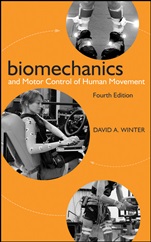
Biomechanics and Motor Control of Human Movement
ISBN 9780470398180
Autor: David A. Winter
Wydawca: Wiley
Dostępność: 3-6 tygodni
Cena: 693,00 zł
Przed złożeniem zamówienia prosimy o kontakt mailowy celem potwierdzenia ceny.
ISBN13: |
9780470398180 |
ISBN10: |
0470398183 |
Autor: |
David A. Winter |
Oprawa: |
Hardback |
Rok Wydania: |
2009-10-23 |
Numer Wydania: |
4th Edition |
Ilość stron: |
384 |
Wymiary: |
251x157 |
Tematy: |
TCB |
The classic book on human movement in biomechanics, newly updated
Widely used and referenced, David Winter’s Biomechanics and Motor Control of Human Movement is a classic examination of techniques used to measure and analyze all body movements as mechanical systems, including such everyday movements as walking. It fills the gap in human movement science area where modern science and technology are integrated with anatomy, muscle physiology, and electromyography to assess and understand human movement.
In light of the explosive growth of the field, this new edition updates and enhances the text with:Expanded coverage of 3D kinematics and kineticsNew materials on biomechanical movement synergies and signal processing, including auto and cross correlation, frequency analysis, analog and digital filtering, and ensemble averaging techniquesPresentation of a wide spectrum of measurement and analysis techniquesUpdates to all existing chaptersBasic physical and physiological principles in capsule form for quick reference
An essential resource for researchers and student in kinesiology, bioengineering (rehabilitation engineering), physical education, ergonomics, and physical and occupational therapy, this text will also provide valuable to professionals in orthopedics, muscle physiology, and rehabilitation medicine. In response to many requests, the extensive numerical tables contained in Appendix A: "Kinematic, Kinetic, and Energy Data" can also be found at the following Web site: www.wiley.com/go/biomechanics
Spis treści:
Preface to the Fourth Edition.
1 Biomechanics as an Interdiscipline.
1.0 Introduction.
1.1 Measurement, Description, Analysis, and Assessment.
1.2 Biomechanics and its Relationship with Physiology and Anatomy.
1.3 Scope of the Textbook.
1.4 References.
2 Signal Processing.
2.0 Introduction.
2.1 Auto– and Cross–Correl
ation Analyses.
2.2 Frequency Analysis.
2.3 Ensemble Averaging of Repetitive Waveforms.
2.4 References.
3 Kinematics.
3.0 Historical Development and Complexity of Problem.
3.1 Kinematic Conventions.
3.2 Direct Measurement Techniques.
3.3 Imaging Measurement Techniques.
3.4 Processing of Raw Kinematic Data.
3.5 Calculation of Other Kinematic Variables.
3.6 Problems Based on Kinematic Data.
3.7 References.
4 Anthropometry.
4.0 Scope of Anthropometry in Movement Biomechanics.
4.1 Density, Mass, and Inertial Properties.
4.2 Direct Experimental Measures.
4.3 Muscle Anthropometry.
4.4 Problems Based on Anthropometric Data.
4.5 References.
5 Kinetics: Forces and Moments of Force.
5.0 Biomechanical Models.
5.1 Basic Link–Segment Equations—the Free–Body Diagram.
5.2 Force Transducers and Force Plates.
5.3 Bone–on–Bone Forces During Dynamic Conditions.
5.4 Problems Based on Kinetic and Kinematic Data.
5.5 References.
6 Mechanical Work, Energy, and Power.
6.0 Introduction.
6.1 Efficiency.
6.2 Forms of Energy Storage.
6.3 Calculation of Internal and External Work.
6.4 Power Balances at Joints and Within Segments.
6.5 Problems Based on Kinetic and Kinematic Data.
6.6 References.
7 Three–Dimensional Kinematics and Kinetics.
7.0 Introduction.
7.1 Axes Systems.
7.2 Marker and Anatomical Axes Systems.
7.3 Determination of Segment Angular Velocities and Accelerations.
7.4 Kinetic Analysis of Reaction Forces and Moments.
7.5 Suggested Further Reading.
7.6 References.
8 Synthesis of Human Movement—Forward Solutions.
8.0 Introduction.
8.1 Review of Forward Solution Models.
8.2 Mathematical Formulation.
8.3 System Energy.
8.4 External Forces and Torques.
8.5 Designation of Joints.
8.6 Illustrative Example.
8.7 Conclusions.
8.8 References.
9 Musc
le Mechanics.
9.0 Introduction.
9.1 Force–Length Characteristics of Muscles.
9.2 Force–Velocity Characteristics.
9.3 Muscle Modeling.
9.4 References.
10 Kinesiological Electromyography.
10.0 Introduction.
10.1 Electrophysiology of Muscle Contraction.
10.2 Recording of the Electromyogram.
10.3 Processing of the Electromyogram,.
10.4 Relationship between Electromyogram and Biomechanical Variables.
10.5 References.
11 Biomechanical Movement Synergies.
11.0 Introduction.
11.1 The Support Moment Synergy.
11.2 Medial/Lateral and Anterior/Posterior Balance in Standing.
11.3 Dynamic Balance during Walking.
11.4 References.
APPENDICES.
A. Kinematic, Kinetic, and Energy Data.
Figure A.1 Walking Trial—Marker Locations and Mass and Frame Rate Information.
Table A.1 Raw Coordinate Data (cm).
Table A.2(a) Filtered Marker Kinematics—Rib Cage and Greater Trochanter (Hip).
Table A.2(b) Filtered Marker Kinematics—Femoral Lateral Epicondyle (Knee) and Head of Fibula.
Table A.2(c) Filtered Marker Kinematics—Lateral Malleolus (Ankle) and Heel.
Table A.2(d) Filtered Marker Kinematics—Fifth Metatarsal and Toe.
Table A.3(a) Linear and Angular Kinematics—Foot.
Table A.3(b) Linear and Angular Kinematics—Leg.
Table A.3(c) Linear and Angular Kinematics—Thigh.
Table A.3(d) Linear and Angular Kinematics—1/2 HAT.
Table A.4 Relative Joint Angular Kinematics—Ankle, Knee, and Hip.
Table A.5(a) Reaction Forces and Moments of Force—Ankle and Knee.
Table A.5(b) Reaction Forces and Moments of Force—Hip.
Table A.6 Segment Potential, Kinetic, and Total Energies—Foot, Leg, Thigh, and1/2 HAT.
Table A.7 Power Generation/Absorption and Transfer—Ankle, Knee, and Hip.
B. Units and Definitions Related to Bio
mechanical and Electromyographical Measurements.
Table B.1 Base SI Units.
Table B.2 Derived SI Units.
Index.
Nota biograficzna:
Considered one of the founding fathers of biomechanics as we know it today, DAVID A. WINTER, PHD, is Distinguished Professor Emeritus in Kinesiology at the University of Waterloo. His many distinctions include Fellow of the Institute of Electrical and Electronics Engineers and the Canadian Society for Biomechanics. He was the first recipient of the Career Investigators Award by the Canadian Society of Biomechanics, the Lifetime Achievement Award by the Gait and Clinical Movement Analysis Society, and the Muybridge Medal by the International Society of Biomechanics. In addition to this text, he is author of three other texts on the biomechanics and electromyography of normal and pathological gait, balance during standing and walking, and signal processing in the movement sciences.
Okładka tylna:
The classic book on human movement in biomechanics, newly updated
Widely used and referenced, David Winter’s Biomechanics and Motor Control of Human Movement is a classic examination of techniques used to measure and analyze all body movements as mechanical systems, including such everyday movements as walking. It fills the gap in human movement science area where modern science and technology are integrated with anatomy, muscle physiology, and electromyography to assess and understand human movement.
In light of the explosive growth of the field, this new edition updates and enhances the text with:Expanded coverage of 3D kinematics and kineticsNew materials on biomechanical movement synergies and signal processing, including auto and cross correlation, frequency analysis, analog and digital filtering, and ensemble averaging techniquesPresentation of a wide spectrum of measurement and analysis techniquesUpdates to all existing chapters
Koszyk
Książek w koszyku: 0 szt.
Wartość zakupów: 0,00 zł
Informacje


Kontakt
Gambit
Centrum Oprogramowania
i Szkoleń Sp. z o.o.
Al. Pokoju 29b/22-24
31-564 Kraków
Siedziba Księgarni
ul. Kordylewskiego 1
31-542 Kraków
+48 12 410 5991
+48 12 410 5987
+48 12 410 5989
Subskrypcje
Administratorem danych osobowych jest firma Gambit COiS Sp. z o.o. Na podany adres będzie wysyłany wyłącznie biuletyn informacyjny.
Autoryzacja płatności

Informacje na temat autoryzacji płatności poprzez PayU.

© Copyright 2012: GAMBIT COiS Sp. z o.o. Wszelkie prawa zastrzeżone.
Projekt i wykonanie: Alchemia Studio Reklamy