


Wydawcy
Katalog tematyczny
- Archeologia (109)
- Ekonomia, finanse, business (13704)
- Filozofia (1445)
- Historia (3040)
- Języki i językoznawstwo (2356)
- Lifestyle, hobby i rozrywka (475)
- Medycyna (9704)
- Nauki humanistyczne (4)
- Nauki o Ziemi i środowisku (2638)
- Nauki ścisłe (20412)
- Nauki społeczne (8486)
- Edukacja (229)
- Kryminologia, opieka spełeczna (284)
- Obronność (10)
- Polityka (1389)
- Psychologia (777)
- Socjologia (410)
- Społeczeństwo i kultura (187)
- Nauki techniczne (13450)
- Prawo (1696)
- Publikacje informacyjne i interdyscyplinarne (1288)
- Religia i wierzenia (917)
- Technika komputerowa (4067)
- Zdrowie, relacje międzyludzkie i rozwój osobisty (657)





Informacje szczegółowe o książce
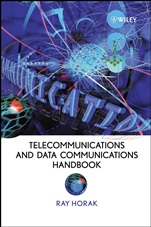
Telecommunications and Data Communications Handbook
ISBN 9780470396070
Autor: Ray Horak
Wydawca: Wiley
Dostępność: 3-6 tygodni
Cena: 622,65 zł
Przed złożeniem zamówienia prosimy o kontakt mailowy celem potwierdzenia ceny.
ISBN13: |
9780470396070 |
ISBN10: |
0470396075 |
Autor: |
Ray Horak |
Oprawa: |
Hardback |
Rok Wydania: |
2008-08-01 |
Numer Wydania: |
2nd Edition |
Ilość stron: |
832 |
Wymiary: |
263x186 |
Tematy: |
JD |
A practical, accessible survey of telecommunications and data communications services and technologies
Finally, there is a commonsense guide to telecommunications and data communications that non–engineers can understand. Popular author Ray Horak provides comprehensive, up–to–date information in plain English, instead of confusing technotalk. Recent developments covered include:
802.16 and WiMAX
Passive Optical Network (PON)
802.11g/n
Multiple Input Multiple Output (MIMO)
Broadband over Power Line (BPL)
Instant Messaging
ZigBee
In addition, Telecommunications and Data Communications Handbook expands on topics of increasing interest, including:
Fiber Optics
Storage Area Networks (SANs)
Digital Subscriber Line (DSL)
CATV Networks
Wireless, including Bluetooth
Cellular, including 2.5G and 3G, photos, video, and ring tones and ring–back tones
Voice over Internet Protocol (VoIP), including IP PBX and IP Centrex
Session Initiation Protocol (SIP) vs. H.323
Complete with a discussion of the current regulatory and business environments, including divestiture and revestiture as well as mergers and acquisitions, this is the ideal reference for non–engineering professionals in the end–user, carrier, content or service provider, manufacturing, regulatory, or financial communities.
Spis treści:
Preface.
Acknowledgments.
About the Author.
1 FUNDAMENTALS OF THE TECHNOLOGY: CONCEPTS AND DEFINITIONS.
1.1 Fundamental Definitions.
1.2 Dedicated, Switched, and Virtual Circuits.
1.3 Two–Wire versus Four–Wire Circuits.
1.4 Bandwidth.
1.5 Analog versus Digital.
1.6 Loading Coils, Amplifiers, and Repeaters.
1.7 Conversion Process: Modems and Codecs.
1.8 Multiplexers (Muxes).
1.9 Switches and Switching: The Basics . . . an
d Then Some.
1.10 Signaling and Control.
References.
2 FUNDAMENTALS OF TRANSMISSION SYSTEMS: TECHNOLOGIES AND APPLICATIONS.
2.1 Electromagnetic Spectrum.
2.2 Transmission Media Selection Criteria.
2.3 Twisted Pair: Introduction to Telephone Wire.
2.4 Shielded Copper.
2.5 Coaxial Cable.
2.6 Microwave Radio.
2.7 Satellite Radio.
2.8 Free Space Optics.
2.9 Fiber Optics.
2.10 Powerline Carrier.
2.11 Hybrid Transmission Systems.
References.
3 VOICE COMMUNICATIONS SYSTEMS: KTS, PBX, CENTREX, AND ACD.
3.1 Key Telephone Systems.
3.2 Private Branch Exchanges.
3.3 Centrex.
3.4 Automatic Call Distributors.
3.5 Computer Telephony.
3.6 IP Systems.
3.7 Futures.
References.
4 MESSAGING SYSTEMS.
4.1 Facsimile (Fax) Systems.
4.2 Voice Processing Systems.
4.3 Electronic Mail (E–Mail).
4.4 Instant Messaging.
4.5 Mobile Messaging: SMS and MMS.
4.6 Unified Messaging and Unified Communications.
References.
5 PUBLIC SWITCHED TELEPHONE NETWORK.
5.1 Network Characteristics.
5.2 Numbering Plan Administration.
5.3 Domains.
5.4 Signaling and Control: Expanded View.
5.5 Network Services.
5.6 Portability: A Special Issue.
5.7 Equal Access: Another Special Issue.
5.8 VoIP: Next–Generation PSTN.
References.
6 FUNDAMENTALS OF DATA COMMUNICATIONS.
6.1 Functional Domains.
6.2 DCE: Expanded View.
6.3 Protocol Basics.
6.4 Network Architectures.
6.5 Security.
References.
7 CONVENTIONAL DIGITAL AND DATA NETWORKS.
7.1 Dataphone Digital Service.
7.2 Switched 56.
7.3 Virtual Private Networks: In the Classic Sense.
7.4 Digital Carrier Systems and Networks.
7.5 X.25 and Packet Switching.
7.6 Integrated Services Digital Network.
References.
8 LOCAL AREA NETWORKS: CONNECTIVITY AND INTERNETWORKING.
8.1 LANs Defined.
8.2 LAN Dimensions.
8.3 LAN Equipment.
8.4 LAN Operat
ing Systems.
8.5 Virtual LANs.
8.6 Remote LAN Access.
8.7 LAN Standards and Standards Bodies.
8.8 Life in the Fast LAN: The Need for Speed.
8.9 Wireless LANs.
8.10 Minding Your Ps and Qs.
8.11 IEEE 1394 and FireWire.
8.12 Nonstandard LANs.
8.13 Broadband over Power Line.
8.14 Storage Area Networks.
References.
9 BROADBAND NETWORK INFRASTRUCTURE.
9.1 Access Technologies.
9.2 SONET/SDH.
9.3 IEEE 802.17, Resilient Packet Ring.
References.
10 BROADBAND NETWORK SERVICES.
10.1 Frame Relay.
10.2 Switched Multimegabit Data Service.
10.3 Asynchronous Transfer Mode.
10.4 Metropolitan Ethernet.
10.5 Broadband ISDN.
10.6 Advanced Intelligent Networks (AINs).
References.
11 WIRELESS NETWORKING: EMPHASIS ON MOBILITY.
11.1 Wireless Defined.
11.2 Standards and Regulations.
11.3 Advantages and Disadvantages of Wireless.
11.4 Cell Concept: Frequency Reuse.
11.5 Multiplexing and Access Techniques.
11.6 Specialized Mobile Radio.
11.7 Paging.
11.8 Cordless Telephony and Wireless Office Telecommunications Systems.
11.9 Cellular Radio.
11.10 Packet Data Radio Networks.
11.11 Satellite Systems: LEOs, MEOs, and GEOs.
11.12 And That’s Not All.
References.
12 VIDEO AND MULTIMEDIA NETWORKING.
12.1 Video Communications: Defined and Evolved.
12.2 Video Basics.
12.3 Analog TV Standards.
12.4 Digital TV and High–Definition TV.
12.5 Bandwidth and Compression.
12.6 Video Standards.
12.7 Internet Protocol TeleVision (IPTV).
12.8 The H.320 Family of Multimedia Standards.
12.9 Session Initiation Protocol.
12.10 H.248: Media Gateway Control.
12.11 Videoconferencing Systems.
12.12 Videoconferencing Equipment.
12.13 WAN Videoconferencing Networks.
12.14 Video over IP.
12.15 Multimedia Conferencing.
Applications and Benefits.
References.
13 THE INTERNET AND WORLD WIDE WEB.
13.1 The Intern
et Defined.
13.2 Internet Physical Topology.
13.3 Internet Access.
13.4 Internet Standards, Administration, and Regulation.
13.5 IP Addressing.
13.6 Domain Name System.
13.7 Internet Protocols.
13.8 Internet Applications.
13.10 Internet2.
13.11 World Wide Web.
13.12 Intranets and Extranets.
13.13 Internet Security: A Special Issue.
13.14 Misuse and Content.
13.15 Internet Oddities, Screwball Applications, and Some Really Good Ideas.
13.16 The Dark Side: An Editorial.
References.
14 NETWORK CONVERGENCE.
14.1 Convergence Defined.
14.2 Driving Forces.
14.3 Conventional Convergence: Wireline Networks.
14.4 The Race Is On: Mergers and Acquisitions (M&As).
14.5 One Potato, Two Potato, Three Potatoe, Four . . . .
14.6 NexGen Convergence: Wireline and Wireless Networks.
References.
15 REGULATION: ISSUES AND (SOME) ANSWERS.
15.1 Telecommunications Act of 1996.
15.2 Rates and Tariffs.
15.3 The Internet.
15.4 Number Portability.
15.5 Laws and Sausages.
References.
APPENDIX A ACRONYMS, ABBREVIATIONS, CONTRACTIONS, INITIALISMS, AND SYMBOLS.
APPENDIX B STANDARDS ORGANIZATIONS AND SPECIAL INTEREST GROUPS (SIGs).
INDEX.
Nota biograficzna:
Ray Horak held management and executive management positions with Southwestern Bell, Continental Telephone Company (CONTEL), and Communications Group Inc. An independent consultant and popular speaker, trainer, author, columnist, and writer, he is the author of the bestselling Communications Systems and Networks, published most recently by Wiley and now in its third edition. Mr. Horak teaches seminars around the world on a variety of telecommunications subjects. He also has considerable experience as a consulting technical expert and expert witness in litigation involving patents, copyrights, trademarks, and other intellectual property matters.
Okładka tylna:
Koszyk
Książek w koszyku: 0 szt.
Wartość zakupów: 0,00 zł
Informacje


Kontakt
Gambit
Centrum Oprogramowania
i Szkoleń Sp. z o.o.
Al. Pokoju 29b/22-24
31-564 Kraków
Siedziba Księgarni
ul. Kordylewskiego 1
31-542 Kraków
+48 12 410 5991
+48 12 410 5987
+48 12 410 5989
Subskrypcje
Administratorem danych osobowych jest firma Gambit COiS Sp. z o.o. Na podany adres będzie wysyłany wyłącznie biuletyn informacyjny.
Autoryzacja płatności

Informacje na temat autoryzacji płatności poprzez PayU.

© Copyright 2012: GAMBIT COiS Sp. z o.o. Wszelkie prawa zastrzeżone.
Projekt i wykonanie: Alchemia Studio Reklamy