


Wydawcy
Katalog tematyczny
- Archeologia (109)
- Ekonomia, finanse, business (13704)
- Filozofia (1445)
- Historia (3040)
- Języki i językoznawstwo (2356)
- Lifestyle, hobby i rozrywka (475)
- Medycyna (9704)
- Nauki humanistyczne (4)
- Nauki o Ziemi i środowisku (2638)
- Nauki ścisłe (20412)
- Astronomia (294)
- Biologia (5119)
- Chemia (6540)
- Fizyka (3309)
- Elektryczność i magnetyzm (90)
- Fizyka atomowa i molekularna (110)
- Fizyka cząstek elementarnych (36)
- Fizyka jądra atomowego (36)
- Fizyka kwantowa (210)
- Fizyka matematyczna (121)
- Fizyka relatywistyczna (36)
- Fizyka statystyczna (51)
- Fizyka stosowana (498)
- Mechanika klasyczna (186)
- Optyka i światło (133)
- Stany materii (202)
- Matematyka (4574)
- Nauki ścisłe, ogólnie (503)
- Nauki społeczne (8486)
- Nauki techniczne (13450)
- Prawo (1696)
- Publikacje informacyjne i interdyscyplinarne (1288)
- Religia i wierzenia (917)
- Technika komputerowa (4067)
- Zdrowie, relacje międzyludzkie i rozwój osobisty (657)





Informacje szczegółowe o książce
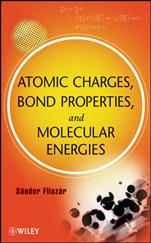
Atomic Charges, Bond Properties, and Molecular Energies
ISBN 9780470376225
Autor: Sandor Fliszar
Wydawca: Wiley
Dostępność: 3-6 tygodni
Cena: 625,80 zł
Przed złożeniem zamówienia prosimy o kontakt mailowy celem potwierdzenia ceny.
ISBN13: |
9780470376225 |
ISBN10: |
0470376228 |
Autor: |
Sandor Fliszar |
Oprawa: |
Hardback |
Rok Wydania: |
2008-12-16 |
Ilość stron: |
248 |
Wymiary: |
241x155 |
Tematy: |
PH |
New and groundbreaking applications of conceptual quantum chemistry
This groundbreaking book is about chemical bonds, their intrinsic energies, and the corresponding dissociation energies relevant to reactivity problems. It is the first book dedicated to conceptual quantum chemistry that helps researchers understand chemical principles and predict chemical properties based on the relationship between intrinsic and dissociation energies. It therefore offers new insights into how the environment of a molecule can modify its destiny.
The book is divided into three sections:
Section One, Charge Distributions, defines the quantum mechanical variables used in a formula that features the electronic charges carried by bond–forming atoms. The author describes the partitioning of ground–state atoms into core and valence regions in real space as well as a similar core–valence partitioning in molecules. Next, atomic charges are discussed, followed by their correlation with NMR shifts. Lastly, the author offers a brief investigation of the ionization of alkanes and population analyses.
Section Two, Chemical Bonds. Energy Calculations, presents thermochemical formulas and the description of saturated systems. Next, the author examines the derivation for unsaturated systems and discusses the energy of dissociation.
Section Three, Applications, compares calculated and experimental enthalpy results for a body of 224 molecules. Examples of applications to deoxyadenosine and deoxyguanosine help readers understand the depurination of DNA structures that occurs with cancer.
All formula derivations were developed in the author′s laboratories and are presented in their entirety. Atomic Charges, Bond Properties, and Molecular Energies opens new avenues of investigation for researchers and students who use quantum chemical techniques, including organic chemists, biochemists, molecular biologists, materials scientists, and nanoscientists.
Spis treści:
Preface.
I. CHARGE DISTRIBUTIONS.
1. Introduction.
1.1 The Bond Energy Model.
1.2 Scope.
2. Theoretical Background.
2.1 The Hartree –Fock Approximation.
2.2 Hartree –Fock –Roothaan Orbitals.
2.3 Configuration Interaction Calculations.
3. Core and Valence Electrons.
3.1 Introduction.
3.2 Atomic Core and Valence Regions.
3.3 The Valence Region Energy of Atoms.
3.4 Summary.
4. The Valence Region of Molecules.
4.1 Model.
4.2 The Core –Valence Separation in Real Space.
4.3 Formula for the Valence –Region Energy.
4.4 Interface with the Orbital Model.
4.5 Approximation for the Valence Energy.
4.6 Perturbation of the Valence Region.
4.7 Summary.
5. Inductive Effects; Atomic Charges.
5.1 Introduction.
5.2 The Inductive Effects.
5.3 Meaningful Atomic Charges.
5.4 Selected Reference Net Atomic Charges.
6. Atomic Charges and NMR Shifts.
6.1 Scope.
6.2 Introduction.
6.3 Merits of Charge –Shift Relationships.
6.4 Aromatic Hydrocarbons.
6.5 Relationships Involving sp3 Carbon Atoms.
6.6 Relationships Involving Olefinic Carbons.
6.7 Carbon Bonded to Nitrogen or Oxygen.
6.8 Correlations Involving N–15 NMR Shifts.
6.9 Correlations Involving O–17 Atoms.
6.10 Summary.
7. Charges and Ionization Potentials.
7.1 Conclusion.
8. Population Analysis.
8.1 The Standard Mulliken Formula.
8.2 Modified Population Analysis.
8.3 An Adequate Approximation.
8.4 Conclusions.
II. CHEMICAL BONDS. ENERGY CALCULATIONS.
9. Thermochemical Formulas.
9.1 Basic Formulas.
9.2 Zero –Point and Heat –Content Energies.
9.3 Concluding Remarks.
10. The Chemical Bond: Theory (I).
10.1 Synopsis.
10.2 Nonbonded Interactions.
10.3 Reference Bonds.
10.4 Bond Energy: Working Formulas.
10.5
Basic Theoretical Parameters.
10.6 Saturated Molecules.
11. The Chemical Bond: Theory (II).
11.1 Valence Atomic Orbital Centroids.
11.2 Unsaturated Systems.
11.3 Recapitulation.
12. Bond Dissociation Energies.
12.1 Scope.
12.2 Theory.
12.3 Nonbonded Interactions.
12.4 Selected Reorganizational Energies.
12.5 Applications.
12.6 Conclusion.
III. APPLICATIONS.
13. Saturated Hydrocarbons.
13.1 Acyclic Alkanes.
13.2 Cycloalkanes.
14. Unsaturated Hydrocarbons.
14.1 Olefins.
14.2 Aromatic Molecules.
15. Nitrogen –Containing Molecules.
15.1 Amines: Charges of the Carbon Atoms.
15.2 Nitrogen Charges and Bond Energies.
15.3 Results.
16. Oxygen Containing Molecules.
16.1 Ethers.
16.2 Alcohols.
16.3 Carbonyl Compounds.
17. Perspectives.
Nota biograficzna:
SÁNdor FliszÁr, PhD, is Emeritus Professor of Chemistry at the Université de Montréal. His research focuses on thermodynamics and quantum chemistry. Dr. Fliszár is the author of more than 140 publications, including two books. He has been an invited lecturer at the University of Ottawa, Université Pierre et Marie Curie, Université de Reims Champagne–Ardenne, Università degli Studi di Napoli Federico II, and Università della Calabria.
Okładka tylna:
New and groundbreaking applications of conceptual quantum chemistry
This groundbreaking book is about chemical bonds, their intrinsic energies, and the corresponding dissociation energies relevant to reactivity problems. It is the first book dedicated to conceptual quantum chemistry that helps researchers understand chemical principles and predict chemical properties based on the relationship between intrinsic and dissociation energies. It therefore offers new insights into how the environment of a molecule can modify its destiny.
The
book is divided into three sections:
Section One, Charge Distributions, defines the quantum mechanical variables used in a formula that features the electronic charges carried by bond–forming atoms. The author describes the partitioning of ground–state atoms into core and valence regions in real space as well as a similar core–valence partitioning in molecules. Next, atomic charges are discussed, followed by their correlation with NMR shifts. Lastly, the author offers a brief investigation of the ionization of alkanes and population analyses.
Section Two, Chemical Bonds. Energy Calculations, presents thermochemical formulas and the description of saturated systems. Next, the author examines the derivation for unsaturated systems and discusses the energy of dissociation.
Section Three, Applications, compares calculated and experimental enthalpy results for a body of 224 molecules. Examples of applications to deoxyadenosine and deoxyguanosine help readers understand the depurination of DNA structures that occurs with cancer.
All formula derivations were developed in the author′s laboratories and are presented in their entirety. Atomic Charges, Bond Properties, and Molecular Energies opens new avenues of investigation for researchers and students who use quantum chemical techniques, including organic chemists, biochemists, molecular biologists, materials scientists, and nanoscientists.
Koszyk
Książek w koszyku: 0 szt.
Wartość zakupów: 0,00 zł
Informacje


Kontakt
Gambit
Centrum Oprogramowania
i Szkoleń Sp. z o.o.
Al. Pokoju 29b/22-24
31-564 Kraków
Siedziba Księgarni
ul. Kordylewskiego 1
31-542 Kraków
+48 12 410 5991
+48 12 410 5987
+48 12 410 5989
Subskrypcje
Administratorem danych osobowych jest firma Gambit COiS Sp. z o.o. Na podany adres będzie wysyłany wyłącznie biuletyn informacyjny.
Autoryzacja płatności

Informacje na temat autoryzacji płatności poprzez PayU.

© Copyright 2012: GAMBIT COiS Sp. z o.o. Wszelkie prawa zastrzeżone.
Projekt i wykonanie: Alchemia Studio Reklamy