


Wydawcy
Katalog tematyczny
- Archeologia (109)
- Ekonomia, finanse, business (13704)
- Filozofia (1445)
- Historia (3040)
- Języki i językoznawstwo (2356)
- Lifestyle, hobby i rozrywka (475)
- Medycyna (9704)
- Nauki humanistyczne (4)
- Nauki o Ziemi i środowisku (2638)
- Nauki ścisłe (20412)
- Astronomia (294)
- Biologia (5119)
- Chemia (6540)
- Chemia analityczna (361)
- Chemia fizyczna (346)
- Chemia nieorganiczna (137)
- Chemia organiczna (535)
- Krystalografia (27)
- Minerologia (46)
- Fizyka (3309)
- Matematyka (4574)
- Nauki ścisłe, ogólnie (503)
- Nauki społeczne (8486)
- Nauki techniczne (13450)
- Prawo (1696)
- Publikacje informacyjne i interdyscyplinarne (1288)
- Religia i wierzenia (917)
- Technika komputerowa (4067)
- Zdrowie, relacje międzyludzkie i rozwój osobisty (657)





Informacje szczegółowe o książce
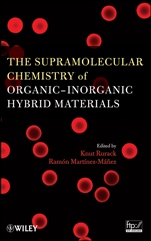
The Supramolecular Chemistry of Organic–Inorganic Hybrid Materials
ISBN 9780470376218
Autor: Knut Rurack, Ramon Martinez–Manez
Wydawca: Wiley
Dostępność: 3-6 tygodni
Cena: 795,90 zł
Przed złożeniem zamówienia prosimy o kontakt mailowy celem potwierdzenia ceny.
ISBN13: |
9780470376218 |
ISBN10: |
047037621X |
Autor: |
Knut Rurack, Ramon Martinez–Manez |
Oprawa: |
Hardback |
Rok Wydania: |
2010-04-16 |
Ilość stron: |
800 |
Wymiary: |
240x157 |
Tematy: |
PN |
An introduction to concepts and applications of
supramolecular hybrid materials
The combination of supramolecular chemistry, inorganic solids, and nanotechnology has already led to significant advances in many areas such as sensing, controlled motion, and delivery. By making possible an unprecedented tunability of the properties of nanomaterials, these techniques open up whole new areas of application for future supramolecular concepts. The Supramolecular Chemistry of Organic–Inorganic Hybrid Materials gathers current knowledge on the subject and provides an overview of the present state and upcoming challenges in this rapidly growing, highly cross– or interdisciplinary research field.
Chapters cover:
Basic materials design along with synthesis, characterization, and fundamental properties
Supramolecular chemistry strategies and processes
Signaling mechanisms and signal generation
Applications in many diverse areas
Future possibilities and potential trends in supramolecular hybrid materials
The book details how these designed materials can improve existing materials or generate novel functional features such as chemical amplification, cooperative binding and signal enhancement that are difficult or not at all achievable by classical organic supramolecular chemistry. It also discusses issues related to nanofabrication or nanotechnology such as the directed and controlled assembly or disassembly, biomimetic functions and strategies, and the gating and switching of surface functions or morphology.
Collecting exciting recent work on the fusion of two topical fields of research—supramolecular chemistry and hybrid materials design—this pioneering study provides an important reference for supramolecular chemists, materials scientists, analytical chemists, and high–level students in these fields.
Spis treści:
Preface.
List of Contrib
utors.
1. Hybrid (Nano)Materials Meet Supramolecular Chemistry––A Brief Introduction To Basic Terms And Concepts (Knut Rurack and Ramón Martínez–Máñez).
2. Supramolecular Chemistry at the Mesoscale (Katsuhiko Ariga, Gary J. Richards, Jonathan P. Hill, Ajayan Vinu and Toshiyuki Mori).
ORGANIC–INORGANIC HYBRID NANOMATERIALS.
3. Silica–Based Mesoporous Organic–Inorganic Hybrid Materials (Frank Hoffmann and Michael Fröba).
4. Modified Gold Nanoparticles and Surfaces (Paolo Pengo and Lucia Pasquato).
5. Organically Functionalized Semiconductor Nanocrystals: Synthesis, Properties and System Design for Optoelectronic Applications (Peter Reiss, Julia De Girolamo and Adam Pron).
6. Functionalized Carbon Nanotubes for Bioapplications (Lingrong Gu, Fushen Lu, Pengju G. Luo, Haifang Wang, Mohammed J. Meziani and Ya–Ping Sun).
7. Metal–Organic Frameworks (MOFs) and Coordination Polymers (Susumu Kitagawa and Shin–ichiro Noro).
IMPROVEMENT OF SIGNALING AND SENSING BY ORGANIZATION ON SURFACES.
8. Nanoparticle and Biomolecular–Nanoparticle Hybrid Supramolecular Complexes for Electrochemical Signaling (Ronen Polsky, Jason C. Harper and Susan M. Brozik).
9. Modified Nanoparticles as Nanoelectrocatalysts and Amplifying Sensors (Shaojun Guo, Erkang Wang and Xiurong Yang).
10. Signal Generation with Gold Nanoparticles: Photophysical Properties for Sensor and Imaging Applications (Qingshan Wei and Alexander Wei).
11. Optical Signaling with Silica Nanoparticles (Umberto Tonellato, Fabrizio Mancin and Paolo Tecilla).
12. Organically Modified Quantum Dots in Chemical and Biochemical Analysis (María Teresa Fernández Argüelles, José M. Costa–Fernández, Rosario Pereiro and Alfredo Sanz–Medel).
CONTROL OF SUPRAMOLECULAR NANOFABRICA
TION, MOTION AND MORPHOLOGY.
13. Chemically Directed Self–Assembly of Nanoparticle Structures on Surfaces (Xing Yi Ling, David N. Reinhoudt and Jurriaan Huskens).
14. Immobilization and Patterning of Biomolecules on Surfaces (Dorota I. Rozkiewicz, Bart Jan Ravoo and David N. Reinhoudt).
15. Switchable Host–Guest Chemistry on Surfaces (Jilie Kong, Chunmin Jiang and Li Mu).
16. Nanogated Mesoporous Silica Materials (Igor I. Slowing, Brian G. Trewyn and Victor S.–Y. Lin).
17. Building Molecular Machines on Surfaces (Alberto Credi, Serena Silvi and Margherita Venturi).
18. Control of Morphology in Mesoporous and Mesostructured Hybrid Materials (Darren Dunphy, Bernd Smarsly and C. Jeffrey Brinker).
BIOMIMETIC CHEMISTRY.
19. Biomimetically Inspired Signaling (Knut Rurack, Ramón Martínez–Máñez, Félix Sancenón and Ana B. Descalzo).
20. Imprinted Functionalized Silica (Maryanne M. Collinson).
21. Bioinspired Block Copolymer–Based Hybrid Materials (Marleen Kamperman and Ulrich Wiesner).
INTERFACIAL CHEMISTRY, MULTIFUNCTIONALITY AND INTERDISCIPLINARITY.
22. Emerging Concepts in Interfacial Chemistry of Hybrid Materials: Nanocontainer–Based Self–Healing Coatings (Dmitry Shchukin, Daria Andreeva, Katja Skorb and Helmuth Möhwald).
23. Molecular Schizophrenics––Switchable Materials with Multiple Functions (Robert Byrne and Dermot Diamond).
24. Hybrid Nanomaterials Research––Is It Really Interdisciplinary (Ismael Rafols, Martin Meyer and Jae–Hwan Park).
25. Supramolecular Chemistry Meets Hybrid (Nano)Materials––A Brief Look Ahead (Knut Rurack and Ramón Martínez–Máñez).
Nota biograficzna:
Knut Rurack received his PhD from Humboldt University of Berlin and then joined
the BAM Federal Institute for Materials Research and Testing where he currently leads a group in the Bioanalytics Division. The coauthor of over 70 research publications and one patent, he is a member of the German and American Chemical Societies.
Ramón Martínez–Máñez received his PhD in chemistry from the University of Valencia and was a postdoctoral fellow at Cambridge University, UK. He is currently a full professor in the Department of Chemistry at the Polytechnic University of Valencia and the coauthor of more than 170 research publications and eight patents. He is a member of the American Chemical Society.
Okładka tylna:
An introduction to concepts and applications of
supramolecular hybrid materials
The combination of supramolecular chemistry, inorganic solids, and nanotechnology has already led to significant advances in many areas such as sensing, controlled motion, and delivery. By making possible an unprecedented tunability of the properties of nanomaterials, these techniques open up whole new areas of application for future supramolecular concepts. The Supramolecular Chemistry of Organic–Inorganic Hybrid Materials gathers current knowledge on the subject and provides an overview of the present state and upcoming challenges in this rapidly growing, highly cross– or interdisciplinary research field.
Chapters cover:
Basic materials design along with synthesis, characterization, and fundamental properties
Supramolecular chemistry strategies and processes
Signaling mechanisms and signal generation
Applications in many diverse areas
Future possibilities and potential trends in supramolecular hybrid materials
The book details how these designed materials can improve existing materials or generate novel functional features such as chemical amplification, cooperative binding and signal enhancement that are difficult
or not at all achievable by classical organic supramolecular chemistry. It also discusses issues related to nanofabrication or nanotechnology such as the directed and controlled assembly or disassembly, biomimetic functions and strategies, and the gating and switching of surface functions or morphology.
Collecting exciting recent work on the fusion of two topical fields of research—supramolecular chemistry and hybrid materials design—this pioneering study provides an important reference for supramolecular chemists, materials scientists, analytical chemists, and high–level students in these fields.
Koszyk
Książek w koszyku: 0 szt.
Wartość zakupów: 0,00 zł
Informacje


Kontakt
Gambit
Centrum Oprogramowania
i Szkoleń Sp. z o.o.
Al. Pokoju 29b/22-24
31-564 Kraków
Siedziba Księgarni
ul. Kordylewskiego 1
31-542 Kraków
+48 12 410 5991
+48 12 410 5987
+48 12 410 5989
Subskrypcje
Administratorem danych osobowych jest firma Gambit COiS Sp. z o.o. Na podany adres będzie wysyłany wyłącznie biuletyn informacyjny.
Autoryzacja płatności

Informacje na temat autoryzacji płatności poprzez PayU.

© Copyright 2012: GAMBIT COiS Sp. z o.o. Wszelkie prawa zastrzeżone.
Projekt i wykonanie: Alchemia Studio Reklamy