


Wydawcy
Katalog tematyczny
- Archeologia (109)
- Ekonomia, finanse, business (13704)
- Filozofia (1445)
- Historia (3040)
- Języki i językoznawstwo (2356)
- Lifestyle, hobby i rozrywka (475)
- Medycyna (9704)
- Nauki humanistyczne (4)
- Nauki o Ziemi i środowisku (2638)
- Nauki ścisłe (20412)
- Nauki społeczne (8486)
- Edukacja (229)
- Kryminologia, opieka spełeczna (284)
- Obronność (10)
- Polityka (1389)
- Psychologia (777)
- Socjologia (410)
- Społeczeństwo i kultura (187)
- Nauki techniczne (13450)
- Prawo (1696)
- Publikacje informacyjne i interdyscyplinarne (1288)
- Religia i wierzenia (917)
- Technika komputerowa (4067)
- Zdrowie, relacje międzyludzkie i rozwój osobisty (657)





Informacje szczegółowe o książce
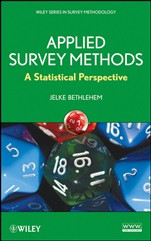
Applied Survey Methods: A Statistical Perspective
ISBN 9780470373088
Autor: Jelke Bethlehem
Wydawca: Wiley
Dostępność: 3-6 tygodni
Cena: 681,45 zł
Przed złożeniem zamówienia prosimy o kontakt mailowy celem potwierdzenia ceny.
ISBN13: |
9780470373088 |
ISBN10: |
0470373083 |
Autor: |
Jelke Bethlehem |
Oprawa: |
Hardback |
Rok Wydania: |
2009-07-21 |
Ilość stron: |
392 |
Wymiary: |
239x159 |
Tematy: |
JB |
A complete, hands–on guide to the use of statistical methods for obtaining reliable and practical survey research
Applied Survey Methods provides a comprehensive outline of the complete survey process, from design to publication. Filling a gap in the current literature, this one–of–a–kind book describes both the theory and practical applications of survey research with an emphasis on the statistical aspects of survey methods.
The book begins with a brief historic overview of survey research methods followed by a discussion that details the needed first steps for carrying out a survey, including the definition of a target population, the selection of a sampling frame, and the outline of a questionnaire with several examples that include common errors to avoid in the wording of questions. Throughout the book, the author provides an accessible discussion on the methodological problems that are associated with the survey process, outlining real data and examples while also providing insight on the future of survey research. Chapter coverage explores the various aspects of the survey process and the accompanying numerical techniques, including:Simple and composite sampling designsEstimatorsData collection and editingThe quality of resultsThe non–response problemWeighting adjustments and methodsDisclosure control
The final chapter addresses the growing popularity of Web surveys, and the associated methodological problems are discussed, including solutions to common pitfalls. Exercises are provided throughout with selected answers included at the end of the book, while a related Web site features additional solutions to exercises and a downloadable demo version of the Blaise system of computer–assisted interviewing. Access to the freely available SimSam software is also available on the related Web site and provides readers with the tools needed to simulate samples from finite
populations as well as visualize the effects of sample size, non–response, and the use of different estimation procedures.
Applied Survey Methods is an excellent book for courses on survey research and non–response in surveys at the upper–undergraduate and graduate levels. It is also a useful reference for practicing statisticians and survey methodologists who work in both government and private research sectors.
Spis treści:
Preface.
1. The Survey Process.
1.1. About Surveys.
1.2. A Survey, Step–by–Step.
1.3. Some History of Survey Research.
1.4. This Book.
1.5. Samplonia.
Exercises.
2. Basic Concepts.
2.1. The Survey Objectives.
2.2. The Target Population.
2.3. The Sampling Frame.
2.4. Sampling.
2.5. Estimation.
Exercises.
3. Questionnaire Design.
3.1. The Questionnaire.
3.2. Factual and Nonfactual Questions.
3.3. The Question Text.
3.4. Answer Types.
3.5. Question Order.
3.6. Questionnaire Testing.
Exercises.
4. Single Sampling Designs.
4.1. Simple Random Sampling.
4.2. Systematic Sampling.
4.3. Unequal Probability Sampling.
4.4. Systematic Sampling with Unequal Probabilities.
Exercises.
5. Composite Sampling Designs.
5.1. Stratified Sampling.
5.2. Cluster Sampling.
5.3. Two–Stage Sampling.
5.4. Two–Dimensional Sampling.
Exercises.
6. Estimators.
6.1. Use of Auxiliary Information.
6.2. A Descriptive Model.
6.3. The Direct Estimator.
6.4. The Ratio Estimator.
6.5. The Regression Estimator.
6.6. The Poststratification Estimator.
Exercises.
7. Data Collection.
7.1. Traditional Data Collection.
7.2. Computer–Assisted Interviewing.
7.3. Mixed–Mode Data Collection.
7.4. Electronic Questionnaires.
7.5. Data Collection with Blaise.
Exercises.
8. The Quality of the Results.
8.1. Er
rors in Surveys.
8.2. Detection and Correction of Errors.
8.3. Imputation Techniques.
8.4. Data Editing Strategies.
Exercises.
9. The Nonresponse Problem.
9.1. Nonresponse.
9.2. Response Rates.
9.3. Models for Nonresponse.
9.4. Analysis of Nonresponse.
9.5. Nonresponse Correction Techniques.
Exercises.
10. Weighting Adjustment.
10.1. Introduction.
10.2. Poststratification.
10.3. Linear Weighting.
10.4. Multiplicative Weighting.
10.5. Calibration Estimation.
10.6. Other Weighting Issues.
10.7. Use of Propensity Scores.
10.8. A Practical Example.
Exercises.
11. Online Surveys.
11.1. The Popularity of Online Research.
11.2. Errors in Online Surveys.
11.3. The Theoretical Framework.
11.4. Correction by Adjustment Weighting.
11.5. Correction Using a Reference Survey.
11.6. Sampling the Non–Internet Population.
11.7. Propensity Weighting.
11.8. Simulating the Effects of Undercoverage.
11.9. Simulating the Effects of Self–Selection.
11.10. About the Use of Online Surveys.
Exercises.
12. Analysis and Publication.
12.1. About Data Analysis.
12.2. The Analysis of Dirty Data.
12.3. Preparing a Survey Report.
12.4. Use of Graphs.
Exercises.
13. Statistical Disclosure Control.
13.1. Introduction.
13.2. The Basic Disclosure Problem.
13.3. The Concept of Uniqueness.
13.4. Disclosure Scenarios.
13.5. Models for the Disclosure Risk.
13.6. Practical Disclosure Protection.
Exercises.
References.
Index.
Nota biograficzna:
Jelke Bethlehem, PhD, is Senior Advisor in the Department of Statistical Methods at Statistics Netherlands and Professor of Statistical Information Processing at the University of Amsterdam. Dr. Bethlehem′s current research interests include Web surveys, computer–assisted survey information collection, graphical techniques in statistics, and
user–friendly software for statistical analysis. He is coeditor of Computer Assisted Survey Information Collection, also published by Wiley.
Okładka tylna:
A complete, hands–on guide to the use of statistical methods for obtaining reliable and practical survey research
Applied Survey Methods provides a comprehensive outline of the complete survey process, from design to publication. Filling a gap in the current literature, this one–of–a–kind book describes both the theory and practical applications of survey research with an emphasis on the statistical aspects of survey methods.
The book begins with a brief historic overview of survey research methods followed by a discussion that details the needed first steps for carrying out a survey, including the definition of a target population, the selection of a sampling frame, and the outline of a questionnaire with several examples that include common errors to avoid in the wording of questions. Throughout the book, the author provides an accessible discussion on the methodological problems that are associated with the survey process, outlining real data and examples while also providing insight on the future of survey research. Chapter coverage explores the various aspects of the survey process and the accompanying numerical techniques, including:Simple and composite sampling designsEstimatorsData collection and editingThe quality of resultsThe non–response problemWeighting adjustments and methodsDisclosure control
The final chapter addresses the growing popularity of Web surveys, and the associated methodological problems are discussed, including solutions to common pitfalls. Exercises are provided throughout with selected answers included at the end of the book, while a related Web site features additional solutions to exercises and a downloadable demo version of the Blaise system of computer&#
Koszyk
Książek w koszyku: 0 szt.
Wartość zakupów: 0,00 zł
Informacje


Kontakt
Gambit
Centrum Oprogramowania
i Szkoleń Sp. z o.o.
Al. Pokoju 29b/22-24
31-564 Kraków
Siedziba Księgarni
ul. Kordylewskiego 1
31-542 Kraków
+48 12 410 5991
+48 12 410 5987
+48 12 410 5989
Subskrypcje
Administratorem danych osobowych jest firma Gambit COiS Sp. z o.o. Na podany adres będzie wysyłany wyłącznie biuletyn informacyjny.
Autoryzacja płatności

Informacje na temat autoryzacji płatności poprzez PayU.

© Copyright 2012: GAMBIT COiS Sp. z o.o. Wszelkie prawa zastrzeżone.
Projekt i wykonanie: Alchemia Studio Reklamy