


Wydawcy
Katalog tematyczny
- Archeologia (109)
- Ekonomia, finanse, business (13704)
- Filozofia (1445)
- Historia (3040)
- Języki i językoznawstwo (2356)
- Lifestyle, hobby i rozrywka (475)
- Medycyna (9704)
- Nauki humanistyczne (4)
- Nauki o Ziemi i środowisku (2638)
- Nauki ścisłe (20412)
- Astronomia (294)
- Biologia (5119)
- Chemia (6540)
- Chemia analityczna (361)
- Chemia fizyczna (346)
- Chemia nieorganiczna (137)
- Chemia organiczna (535)
- Krystalografia (27)
- Minerologia (46)
- Fizyka (3309)
- Matematyka (4574)
- Nauki ścisłe, ogólnie (503)
- Nauki społeczne (8486)
- Nauki techniczne (13450)
- Prawo (1696)
- Publikacje informacyjne i interdyscyplinarne (1288)
- Religia i wierzenia (917)
- Technika komputerowa (4067)
- Zdrowie, relacje międzyludzkie i rozwój osobisty (657)





Informacje szczegółowe o książce
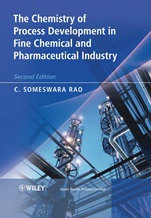
The Chemistry of Process Development in Fine Chemical and Pharmaceutical Industry
ISBN 9780470319956
Autor: Someswara Rao
Wydawca: Wiley
Dostępność: 3-6 tygodni
Cena: 1 353,45 zł
Przed złożeniem zamówienia prosimy o kontakt mailowy celem potwierdzenia ceny.
ISBN13: |
9780470319956 |
ISBN10: |
047031995X |
Autor: |
Someswara Rao |
Oprawa: |
Hardback |
Rok Wydania: |
2007-02-23 |
Numer Wydania: |
2nd Edition |
Ilość stron: |
1328 |
Wymiary: |
245x188 |
Tematy: |
PN |
This book brings together the chemical strategies used in the optimisation of organic reactions and processes, and highlights the practical and technological options available. This book offers: an encyclopedic treatment of organic chemistry from an industrial, process research and development, and manufacturing point of viewplenty of examples to illustrate the scope and limitation of the strategiesa comprehensive index organised by topic, reaction type, and reagentan extensive literature survey.
This is an essential and comprehensive guide for experienced practitioners of chemical process research and development, fresh recruits to chemical industry R&D divisions, and academics who are interested in interacting with the chemical industry, optimising their synthetic strategies, and enriching the field of atom economy.
Spis treści:
Preface.
Acknowledgements.
Abbreviations.
1. The Nature of Process Development.
1.1 Introduction.
1.2 Desirable Goals of Process Development.
1.3 Evolution of an R & D Process into a Process Technology.
1.4 Scope and Limitations of Process Development.
1.5 The Role of Chemical Engineers.
1.6 Exploratory (Investigative) Approach to Optimization.
1.7 Statistical Approaches and Automated Works Stations.
1.8 Scale–up Considerations.
1.9 Process Development in Relation to Plant Equipment.
2. Survey of Some Organic Reactions in Relation to Process Development.
2.1 Introduction.
2.2 Preparation of Acid Chlorides from Carboxylic Acids.
2.3 Friedel–Crafts Acylations Acylations.
2.4 Grignard Reagents.
2.5 The Wittig Reaction.
2.6 Ozonolysis.
2.7 The Mitsunobu Reaction.
2.8 Photochemistry in Process Industry.
2.9 Very Low Temperature (Cryogenic) Chemistry (–70° to –100°).
2.10 Reactions Under Very High Pressures.
3. Chiral Technology.
3
.1 Introduction.
3.2 Nature of Chirality.
3.3 Basic Assumptions of Chiral Technology.
3.4 Factors Responsible for the Rapid Growth of Chiral Technology.
3.5 Techniques for Obtaining Single Enantiomers.
3.6 The Chiral Pool.
3.7 Biotechnology.
3.8 Racemate Resolution Strategies.
3.9 Simplified Methodologies for Optical Resolution.
3.9 A Other Strategies for Racemati Resolution.130–
3.9 B Asymmetric Synthesis.
4. Strategies for Simplification of Organic Reactions and Processes.
4.1 Introduction.
4.2 Reaction Simplification Through in situ Generation of components.
4.3 Process Simplification.
5. Reagent Modification and Rate and Order of Addition of Reagents.
5.1 Introduction.
5.2 Supported Regents.
5.3 Complex formation to Modify Reagent Reactivity.
5.4 Effect of Aging of Reagents on Reactivity.
5.5 Rate of Addition of Reagents.
5.6 Order of Addition of Reagents.
6. Additives for Reagents–Fine Tuning of Organic Reactions.
6.1 Introduction.
6.2 Water as an Additive.
6.3 Covalent Organic Compounds as Additives.
6.4 Ionic Organic Compounds as Additives.
6.5 Metallorganics and Organolithiums as Additives.
6.6 Inorganics as additives.
7. Choosing A Reagent.
7.1 Introduction.
7.2 Safety Issues.
7.3 Toxicity Consideration.
7.4 Cost Consideration.
7.5 Nasty By–products.
7.6 Efficacy Rather Than Cost.
7.7 Strategy Rather Than Reagent.
7.8 Operational and Work–up Convenience.
7.9 Improved Performance.
7.9A Environmental Options in choosing a Reagent.
8. By–Products from Side Reactions.
8.1 Introduction.
8.2 Sources of By–product Formation.
9. Solvents and Solvents Effects.
9.1 Introduction.
9.2 Solvation and its Effect on Solubility and Reactivity.
9.3 Solvent effects in Organic Reactions.
9.4 Choosing a Solvent.
9.5 Impurities in Solvents.
9.6 Utility of M
ixed Solvents.
9.7 Liquid Products as Solvents.
9.8 Some Relatively New Solvents.
9.9 Aqueons Medium for Organic Reactions.
9.10 No solvent is The Best Solvent.
9.11 Molten Salts as Solvents.
9.12 Room Temperature Ionic Liquids as Solvents.
9.13 Supercritical Carbon Dioxide–a Safe and Green Solvent.
10. Phase Transfer Catalysis.
10.1 Introduction.
10.2 Nature of PTC Reactions.
10.3 Mechanistic Aspects.
10.4 Factors Affecting PTC Reactions.
10.5 Choosing a Phase Transfer Catalyst.
10.6 Phase Transfer of Neutral Uncharged Molecules.
10.7 Organometallic PTC.
10.8 Exercising the PTC Option.
11. Work–up, Purity, and Purification.
11.1 Introduction.
11.2 Classical Work–up.
11.3 Environmental Problems.
11.4 Two Typical Reactions Involving Classical Work–up.
11.5 Work–up Procedures for a Variety of Reactions.
11.6 Simplification of Reaction Work–up.
11.7 Aqueous Biphasic Liquid Systems for Reactions.
11.8 Other Types of Aqueous Biphasic Liquid Systems.
11.9 Fluorous Biphasic Catalysis and Synthesis.
11.10 Purity.
11.11 Purification.
12. Safety Assessment of Chemical Process Technology.
12.1 Introduction.
12.2 Early Detection and Prevention of Chemical Accidents.
12.3 Principles of Chemical Process Safety.
12.4 Reaction Runaway Scenarios.
12.5 Chemical Reaction Hazards.
12.6 Quantification of Chemical Hazards.
References.
Index.
General.
Reaction Type.
Reagents.
Koszyk
Książek w koszyku: 0 szt.
Wartość zakupów: 0,00 zł
Informacje


Kontakt
Gambit
Centrum Oprogramowania
i Szkoleń Sp. z o.o.
Al. Pokoju 29b/22-24
31-564 Kraków
Siedziba Księgarni
ul. Kordylewskiego 1
31-542 Kraków
+48 12 410 5991
+48 12 410 5987
+48 12 410 5989
Subskrypcje
Administratorem danych osobowych jest firma Gambit COiS Sp. z o.o. Na podany adres będzie wysyłany wyłącznie biuletyn informacyjny.
Autoryzacja płatności

Informacje na temat autoryzacji płatności poprzez PayU.

© Copyright 2012: GAMBIT COiS Sp. z o.o. Wszelkie prawa zastrzeżone.
Projekt i wykonanie: Alchemia Studio Reklamy