


Wydawcy
Katalog tematyczny
- Archeologia (109)
- Ekonomia, finanse, business (13704)
- Filozofia (1445)
- Historia (3040)
- Języki i językoznawstwo (2356)
- Lifestyle, hobby i rozrywka (475)
- Medycyna (9704)
- Chirurgia (272)
- Inne gałęzie medycyny (1871)
- Medycyna kliniczna (4187)
- Choroby wewnętrzne (514)
- Dermatologia (51)
- Diagnostyka medyczna (3)
- Endokrynologia (144)
- Gastroenterologia (27)
- Geriatria (50)
- Ginekologia i położnictwo (134)
- Hematologia (46)
- Hepatologia (10)
- Kardiologia (71)
- Laryngologia (12)
- Nefrologia (10)
- Neurologia (500)
- Oftalmologia (50)
- Pediatria (33)
- Pulmunologia (32)
- Reumatologia (14)
- Terapia genowa (1)
- Układ mięśniowo-szkieletowy (1)
- Urologia (14)
- Medycyna niekonwencjonalna (14)
- Medycyna przedkliniczna (269)
- Medycyna, ogólnie (1740)
- Medyczne służby pomocnicze (745)
- Studia medyczne (16)
- Weterynaria (548)
- Nauki humanistyczne (4)
- Nauki o Ziemi i środowisku (2638)
- Nauki ścisłe (20412)
- Nauki społeczne (8486)
- Nauki techniczne (13450)
- Prawo (1696)
- Publikacje informacyjne i interdyscyplinarne (1288)
- Religia i wierzenia (917)
- Technika komputerowa (4067)
- Zdrowie, relacje międzyludzkie i rozwój osobisty (657)





Informacje szczegółowe o książce
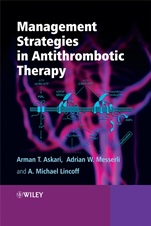
Management Strategies in Antithrombotic Therapy
ISBN 9780470319383
Autor: Arman Askari, Michael Lincoff, Adrian Messerli
Wydawca: Wiley
Dostępność: 3-6 tygodni
Cena: 741,30 zł
Przed złożeniem zamówienia prosimy o kontakt mailowy celem potwierdzenia ceny.
ISBN13: |
9780470319383 |
ISBN10: |
0470319380 |
Autor: |
Arman Askari, Michael Lincoff, Adrian Messerli |
Oprawa: |
Hardback |
Rok Wydania: |
2007-11-02 |
Ilość stron: |
366 |
Wymiary: |
253x175 |
Tematy: |
MJ |
Intravascular thrombus formation remains one of the most significant problems in cardiovascular medicine and a major risk in many interventional procedures. Today, clinicians have a wide choice of antithrombotic and anticoagulant agents available, including aspirin, thienopyridines, platelet glycoprotein IIb/IIIa inhibitors, low molecular weight heparins, thrombin inhibitors, and fibrinolytic agents. Though effective, all of these agents possess limitations, the most common being an increased risk of bleeding. Implementing the most appropriate, and safe, anticoagulation therapy across the spectrum of cardiovascular disease, in the presence of a wide range of other risk factors, remains a challenge.
Incorporating the most up to date evidence–based review of each class of agents, this book acquaints readers with the data behind the commonly used anti–thrombotic agents and will assist them in formulating a sound, therapeutic strategy appropriate for each patient.
Spis treści:
Abbreviations and Acronyms.
Preface.
Chapter 1. Thrombosis and Antithrombotics in Vascular Disease.
1.1 The Burden of Thrombosis.
1.2 Essential components of thrombosis.
1.3 Thrombosis in the acute ischemic syndromes.
1.4 Venous thromboembolic disease.
1.5 The ideal antithrombotic agent.
Chapter 2. Aspirin.
2.1 Introduction.
2.2 Pharmacology.
2.3 Clinical uses of aspirin.
2.4 Conclusions.
Chapter 3. Thienopyridines – Ticlopidine and Clopidogrel.
3.1 Introduction.
3.2 Pharmacology.
3.3 Clinical uses of the thienopyridines.
3.4 Conclusions.
Chapter 4. Platelet Glycoprotein IIb/IIIa Inhibitors.
4.1 Introduction.
4.2 GP IIb/IIIa receptor inhibitors.
4.3 GP IIb/IIIa inhibitors during percutaneous coronary revascularization.
4.4 GP IIb/IIIa inhibitors in the management of non–st–elevation ACS.
4.5 GP IIb/IIIa inhibitors in the manageme
nt of acute STEMI.
4.6 Safety of GP IIb/IIIa inhibitors.
4.7 Summary.
Chapter 5. Unfractionated Heparin.
5.1 Introduction.
5.2 Pharmacology.
5.3 Clinical uses of UH.
5.4 Clinical considerations.
5.5 Conclusions.
Chapter 6. Low–Molecular–Weight Heparins.
6.1 Introduction.
6.2 Comparisons between UH and LMWH.
6.3 Clinical uses of LMWH.
6.4 Conclusions.
Chapter 7 Direct Thrombin Inhibitors.
7.1 Introduction.
7.2 Overview of DTIs.
7.3 Clinical uses of DTIs.
7.4 Summary.
Chapter 8. Fibrinolytic agents.
8.1 Introduction.
8.2 Fibrinolytic agents for STEMI.
8.3 Fibrinolytics for VTE.
8.4 Conclusions.
Chapter 9. Acute ST–Segment–Elevation Myocardial Infarction.
9.1 Introduction.
9.2 Definitive therapy.
9.3 Adjunctive therapy.
9.4 Recommendations.
9.5 Conclusions.
Chapter 10. Acute Coronary Syndromes: Unstable Angina /Non–ST–Segment–Elevation Myocardial Infarction (NSTE ACS).
10.1 Introduction.
10.2 Antithrombotic approach to patients with ACS/NSTEMI.
10.3 Early invasive versus early conservative strategies.
10.4 Recommendations.
10.5 Conclusions.
Chapter 11 Anticoagulation Strategies for Patients Undergoing Percutaneous Coronary Intervention.
11.1 Introduction.
11.2 Antiplatelet therapy.
11.3 Antithrombotic therapy.
11.4 Special populations.
11.5 Recommendations.
11.6 Conclusions.
Chapter 12 Venous Thromboembolic Disease.
12.1 Introduction.
12.2 Risk of VTE.
12.3 Prevention of VTE.
12.4 Treatment of VTE.
12.5 Conclusions.
Chapter 13. Heparin–Induced Thrombocytopenia.
13.1 Introduction.
13.2 Incidence.
13.3 Pathogenesis.
13.4 Clinical manifestations.
13.5 Diagnosis.
13.6 Prevention.
13.7 Treatment.
13.8 Conclusions.
Index.
Nota biograficzna:
Arman T. Askari, MD. As
sociate Director, Cardiovascular Medicine Training Program, The Cleveland Clinic, Ohio, USA
Dr Michael A. Lincoff, MD. Department of Cardiovascular Medicine, Cleveland Clinic Heart Center, The Cleveland Clinic, Ohio, USA
Okładka tylna:
Intravascular thrombus formation remains one of the most significant problems in cardiovascular medicine and a major risk in many interventional procedures. Today, clinicians have a wide choice of antithrombotic and anticoagulant agents available, including aspirin, thienopyridines, platelet glycoprotein IIb/IIIa inhibitors, low molecular weight heparins, thrombin inhibitors, and fibrinolytic agents. Though effective, all of these agents possess limitations, the most common being an increased risk of bleeding. Implementing the most appropriate, and safe, anticoagulation therapy across the spectrum of cardiovascular disease, in the presence of a wide range of other risk factors, remains a challenge.
Incorporating the most up to date evidence–based review of each class of agents, this book acquaints readers with the data behind the commonly used anti–thrombotic agents and will assist them in formulating a sound, therapeutic strategy appropriate for each patient.
Koszyk
Książek w koszyku: 0 szt.
Wartość zakupów: 0,00 zł
Informacje


Kontakt
Gambit
Centrum Oprogramowania
i Szkoleń Sp. z o.o.
Al. Pokoju 29b/22-24
31-564 Kraków
Siedziba Księgarni
ul. Kordylewskiego 1
31-542 Kraków
+48 12 410 5991
+48 12 410 5987
+48 12 410 5989
Subskrypcje
Administratorem danych osobowych jest firma Gambit COiS Sp. z o.o. Na podany adres będzie wysyłany wyłącznie biuletyn informacyjny.
Autoryzacja płatności

Informacje na temat autoryzacji płatności poprzez PayU.

© Copyright 2012: GAMBIT COiS Sp. z o.o. Wszelkie prawa zastrzeżone.
Projekt i wykonanie: Alchemia Studio Reklamy