


Wydawcy
Katalog tematyczny
- Archeologia (109)
- Ekonomia, finanse, business (13704)
- Filozofia (1445)
- Historia (3040)
- Języki i językoznawstwo (2356)
- Lifestyle, hobby i rozrywka (475)
- Medycyna (9704)
- Nauki humanistyczne (4)
- Nauki o Ziemi i środowisku (2638)
- Nauki ścisłe (20412)
- Nauki społeczne (8486)
- Edukacja (229)
- Kryminologia, opieka spełeczna (284)
- Obronność (10)
- Polityka (1389)
- Psychologia (777)
- Socjologia (410)
- Społeczeństwo i kultura (187)
- Nauki techniczne (13450)
- Prawo (1696)
- Publikacje informacyjne i interdyscyplinarne (1288)
- Religia i wierzenia (917)
- Technika komputerowa (4067)
- Zdrowie, relacje międzyludzkie i rozwój osobisty (657)





Informacje szczegółowe o książce
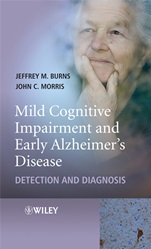
Mild Cognitive Impairment and Early Alzheimers Disease: Detection and Diagnosis
ISBN 9780470319369
Autor: Jeffrey M. Burns, John C. Morris
Wydawca: Wiley
Dostępność: 3-6 tygodni
Cena: 379,05 zł
Przed złożeniem zamówienia prosimy o kontakt mailowy celem potwierdzenia ceny.
ISBN13: |
9780470319369 |
ISBN10: |
0470319364 |
Autor: |
Jeffrey M. Burns, John C. Morris |
Oprawa: |
Hardback |
Rok Wydania: |
2008-04-18 |
Ilość stron: |
156 |
Wymiary: |
220x153 |
Tematy: |
JC |
Alzheimer′s disease is by far the most common dementing disorder in later life, but discriminating the initial manifestations of Alzheimer′s from the cognitive changes that accompany usual aging is, in many instances, a difficult task. The term "mild cognitive impairment" (MCI) has been proposed to represent the border zone between aging–related changes and frank dementia.
The purpose of this book is to describe the cognitive changes associated with age, the earliest detectable stages of Alzheimer′s, and the relationship of these conditions to MCI. The authors review the latest advances in our understanding of MCI, its prevalence, evaluation, management, and outcomes. In so–doing they provide practising physicians with a useful resource that will assist them in identifying those MCI patients who will progress to recognized Alzheimer′s Disease. The ability to identify these individuals, as opposed to those with MCI who do not have an underlying dementing illness, will allow the earliest symptomatic stages of true dementia to more easily recognized and treated.
Spis treści:
1. Introduction.
What is mild cognitive impairment?
Epidemiological studies of MCI.
The border zone between aging and dementia: cognitive and neuropathological changes.
Aging and cognitive performance.
2. Neuropathology of Alzheimer’s disease, non–demented aging and MCI.
Histopathological features.
Plaques.
Neurofibrillary pathology.
Neuronal loss.
Topography of neuropathological changes.
Neuropathological AD diagnosis.
Neuropathology of aging.
Neuropathology of MCI.
Does a subset of MCI patients actually have early Alzheimer’s disease?
Clinical studies.
Neuroimaging.
3. Detecting and diagnosing MCI and early AD.
Early detection.
Recognition of MCI and early AD.
Informant–based history.
Neurological examination.
Laboratory and r
adiological evaluation.
Psychometric/mental status testing.
Dementia–screening instruments.
Mini–mental state examination.
Clock–drawing test.
Seven–minute screen.
Dementia staging instruments.
CDR.
Global deterioration scale.
4. Etiology of MCI: differential diagnosis.
“Worried–well”.
Depression.
Other etiologies.
Neurodegenerative dementias.
Overlap disorders.
Dementia with Lewy bodies.
Vascular dementia.
Frontotemporal lobar dementias.
Identifying the subset of MCI that is AD.
5. Treatment of MCI and dementia.
MCI.
The case for early treatment.
Non–pharmacological treatment.
Dementia therapy.
Approved therapies.
Cholinergic hypothesis.
Cholinesterase inhibitors.
Donepezil.
Rivastigmine.
Galantamine.
Memantine.
Agents under investigation for AD treatment and prevention.
Vitamin E and selegiline.
Estrogen.
Anti–inflammatory agents.
Cholesterol–reducing agents.
Chelation therapy.
6. Future therapeutic and diagnostic strategies.
Amyloid hypothesis.
Secretase inhibitors.
Amyloid vaccine.
Potential biomarkers.
CSF biomarkers.
CSF amyloid beta (Aβ).
CSF tau.
CSF sulfatide.
CSF markers of inflammation.
CSF markers of oxidative stress.
Serum biomarkers.
Structural imaging.
Functional neuroimaging.
PET and SPECT.
Functional MRI (fMRI).
Imaging amyloid.
Genetic testing.
Early–onset familial AD.
Amyloid precursor protein.
Presenilin genes.
Late–onset AD.
Apolipoprotein E.
7. Case studies.
Case report 1: MCI as early–stage Alzheimer’s disease.
Comment.
Case report 2: Diagnosis of dementia prior to impairment sufficient for MCI.
Comment.
Case report 3: Memory complaints associated with non–demented aging.
Comment.
References.
Index.
<
b>Nota biograficzna:
Dr Burns is an Assistant Professor in the Department of Neurology at the University of Kansas Medical Center. He is the Director of the Alzheimer and Memory Center and the Alzheimer’s Disease Clinical Research Program and serves as the Principal Investigator of the Brain Aging Program.
Okładka tylna:
Alzheimer′s disease is by far the most common dementing disorder in later life, but discriminating the initial manifestations of Alzheimer′s from the cognitive changes that accompany usual aging is, in many instances, a difficult task. The term "mild cognitive impairment" (MCI) has been proposed to represent the border zone between aging–related changes and frank dementia.
The purpose of this book is to describe the cognitive changes associated with age, the earliest detectable stages of Alzheimer′s, and the relationship of these conditions to MCI. The authors review the latest advances in our understanding of MCI, its prevalence, evaluation, management, and outcomes. In so–doing they provide practising physicians with a useful resource that will assist them in identifying those MCI patients who will progress to recognized Alzheimer′s Disease. The ability to identify these individuals, as opposed to those with MCI who do not have an underlying dementing illness, will allow the earliest symptomatic stages of true dementia to more easily recognized and treated.
Koszyk
Książek w koszyku: 0 szt.
Wartość zakupów: 0,00 zł
Informacje


Kontakt
Gambit
Centrum Oprogramowania
i Szkoleń Sp. z o.o.
Al. Pokoju 29b/22-24
31-564 Kraków
Siedziba Księgarni
ul. Kordylewskiego 1
31-542 Kraków
+48 12 410 5991
+48 12 410 5987
+48 12 410 5989
Subskrypcje
Administratorem danych osobowych jest firma Gambit COiS Sp. z o.o. Na podany adres będzie wysyłany wyłącznie biuletyn informacyjny.
Autoryzacja płatności

Informacje na temat autoryzacji płatności poprzez PayU.

© Copyright 2012: GAMBIT COiS Sp. z o.o. Wszelkie prawa zastrzeżone.
Projekt i wykonanie: Alchemia Studio Reklamy