


Wydawcy
Katalog tematyczny
- Archeologia (109)
- Ekonomia, finanse, business (13704)
- Filozofia (1445)
- Historia (3040)
- Języki i językoznawstwo (2356)
- Lifestyle, hobby i rozrywka (475)
- Medycyna (9704)
- Nauki humanistyczne (4)
- Nauki o Ziemi i środowisku (2638)
- Nauki ścisłe (20412)
- Astronomia (294)
- Biologia (5119)
- Chemia (6540)
- Chemia analityczna (361)
- Chemia fizyczna (346)
- Chemia nieorganiczna (137)
- Chemia organiczna (535)
- Krystalografia (27)
- Minerologia (46)
- Fizyka (3309)
- Matematyka (4574)
- Nauki ścisłe, ogólnie (503)
- Nauki społeczne (8486)
- Nauki techniczne (13450)
- Prawo (1696)
- Publikacje informacyjne i interdyscyplinarne (1288)
- Religia i wierzenia (917)
- Technika komputerowa (4067)
- Zdrowie, relacje międzyludzkie i rozwój osobisty (657)





Informacje szczegółowe o książce
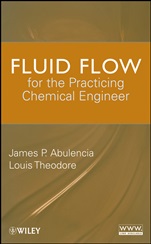
Fluid Flow for the Practicing Chemical Engineer
ISBN 9780470317631
Autor: James Patrick Abulencia, Louis Theodore
Wydawca: Wiley
Dostępność: 3-6 tygodni
Cena: 643,65 zł
Przed złożeniem zamówienia prosimy o kontakt mailowy celem potwierdzenia ceny.
ISBN13: |
9780470317631 |
ISBN10: |
0470317639 |
Autor: |
James Patrick Abulencia, Louis Theodore |
Oprawa: |
Hardback |
Rok Wydania: |
2009-07-21 |
Ilość stron: |
600 |
Wymiary: |
241x158 |
Tematy: |
PN |
Enables you to easily advance from fluid flow principles to applications
Fluid Flow for the Practicing Chemical Engineer helps readers move comfortably from fluid flow principles to fluid flow applications. From elementary flow mechanics to the laws of conservation of mass, energy, and momentum, the book covers all the basic principles of fluid flow. The book also demonstrates how these principles underlie a broad range of applications, from laminar flow to filtration and ventilation. Lastly, the book explores special related topics, including environmental concerns, biomedical engineering, open–ended problems, and the economics of fluid flow applications.
This text is divided into six parts, enabling readers to easily gain a foundation in basic principles and then learn how to apply them in practice:
Part One: Introduction to Fluid Flow
Part Two: Basic Laws
Part Three: Fluid Transport Classification
Part Four: Fluid Flow Applications
Part Five: Fluid–Particle Applications
Part Six: Special Topics
Throughout the text, numerous detailed examples demonstrate how principles are put into practice. Practice problems for each chapter, located on the text′s accompanying Web site, enable readers to solve real–world problems similar to the ones that they will encounter on the job.
Readers will gain a solid working knowledge of fluid flow principles and applications upon successful completion of this text. They will also be better prepared to address more advanced material and solve more complex problems.
Spis treści:
Preface.
Introduction.
I. Introduction to Fluid Flow.
1. History of Chemical Engineering—Fluid Flow.
1.1 Introduction.
1.2 Fluid Flow.
1.3 Chemical Engineering.
References.
2. Units and Dimensional Analysis.
2.1 Introduction.
2.2 Dimensi
onal Analysis.
2.3 Buckingham Pi (π) Theorem.
2.4 Scale–Up and Similarity.
References.
3. Key Terms and Definitions.
3.1 Introduction.
3.2 Definitions.
References.
4. Transport Phenomena Versus Unit Operations.
4.1 Introduction.
4.2 The Differences.
4.3 What is Engineering?
References.
5. Newtonian Fluids.
5.1 Introduction.
5.2 Newton’s Law of Viscosity.
5.3 Viscosity Measurements.
5.4 Microscopic Approach.
References.
6. Non–Newtonian Flow.
6.1 Introduction.
6.2 Classification of Non–Newtonian Fluids.
6.3 Microscopic Approach.
References.
II. Basic Laws.
7. Conservation Law for Mass.
7.1 Introduction.
7.2 Conversation of Mass.
7.3 Microscopic Approach.
References.
8. Conservation Law for Energy.
8.1 Introduction.
8.2 Conservation of Energy.
8.3 Total Energy Balance Equation.
References.
9. Conservation Law for Momentum.
9.1 Momentum Balances.
9.2 Microscopic Approach: Equation of Momentum Transfer.
References.
10. Law of Hydrostatics.
10.1 Introduction.
10.2 Pressure Principles.
10.3 Manometry Principles.
Reference.
11. Ideal Gas Law.
11.1 Introduction.
11.2 Boyle’s and Charles’ Laws.
11.3 The Ideal Gas Law.
11.4 Non–Ideal Gas Behavior.
References.
III. Fluid Flow Classification.
12. Flow Mechanisms.
12. 1 Introduction.
12.2 The Reynolds Number.
12.3 Strain Rate, Shear Rare, and Velocity Profile.
12.4 Velocity Profile and Average Velocity.
Reference.
13. Laminar Flow in Pipes.
13.1 Introduction.
13.2 Friction Losses.
13.3 Tube Size.
13.4 Other Considerations.
13.5 Microscopic Approach.
References.
14. Turbulent Flow in Pipes.
14.1 Introduction.
14.2 Describing Equations.
14.3 Relative Roughness in Pipes.
14.4 Fricti
on Factor Equations.
14.5 Other Cosiderations.
14.6 Flow Through Several Pipes.
14.7 General Predictive and Design Approaches.
14.8 Microscopic Approach.
References.
15. Compressible and Sonic Flow.
15.1 Introduction.
15.2 Compressible Flow.
15.3 Sonic Flow.
15.4 Pressure Drop Equations.
References.
16. Two–Phase Flow.
16.1 Introduction.
16.2. Gas (G)–Liquid (L) Flow Principles: Generalized Approach.
16.3 Gas (Turbulent) Flow—Liquid (Turbulent) Flow.
16.4 Gas (Turbulent) Flow–Liquid (Viscous) Flow.
16.5 Gas (Viscous) Flow–Liquid (Viscous) Flow.
16.6 Gas – Solid Flow.
References.
IV. Fluid Flow Transport and Applications.
17. Prime Movers.
17.1 Introduction.
17.2 Fans.
17.3 Pumps.
17.4 Compressors.
References.
18. Valves and Fittings.
18.1 Valves.
18.2 Fittings.
18.3 Expansion and Contraction Effects.
18.4 Calculating Losses of Valves and Fittings.
18.5 Fluid Flow Experiment: Data and Calculations.
References.
19. Flow Measurement.
19.1 Introduction.
19.2 Manometry and Pressure Measurements.
19.3 Pitot Tube.
19.4 Venturi Meter.
19.5 Orifice Meter.
19.6 Selection Process.
Reference.
20. Ventilation.
20.1 Introduction.
20.2 Indoor Air Quality.
20.3 Indoor Air/Ambient Air Comparison.
20.4 Industrial Ventilation Systems.
References.
21. Academic Applications.
References.
22. Industrial Applications.
References.
V. Fluid–Particle Applications.
23. Particle Dynamics.
23.1 Introduction.
23.2 Particle Classification and Measurement.
23.3 Drag Force.
23.4 Particle Force Balance.
23.5 Cunningham Correction.
23.6 Liquid–Particle Systems.
23.7 Drag on a Flat Plate.
References.
24. Sedimentation, Centrifugation, Flotation.
24.1 Sedimentation.
24.2 Centrifugatio
n.
24.3 Hydrostatic Equilibrium in Centrifugation.
24.4 Flotation.
References.
25. Porous Media and Packed Beds.
25.1 Introduction.
25.2 Definitions.
25.3 Flow Regimes.
References.
26. Fluidization.
26.1 Introduction.
26.2 Fixed Beds.
26.3 Permeability.
26.4 Minimum Fluidization Velocity.
26.5 Bed Height, Pressure Drop and Porosity.
26.6 Fluidization Modes.
26.7 Fluidization Experiment Data and Calculations.
References.
27. Filtration.
27.1 Introduction.
27.2 Filtration Equipment.
27.3 Describing Equations.
27.4 Filtration Experimental Data and Calculations.
References.
VI. Special Topics.
28. Environmental Management.
28.1 Introduction.
28.2 Environmental Management History.
28.3 Environmental Management Topics.
28.4 Applications.
References.
29. Accident and Emergency Management.
29.1 Introduction.
29.2 Legislation.
29.3 Health Risk Assessment.
29.4 Hazard Risk Assessment.
29.5 Illustrative Examples.
References.
30. Ethics.
30.1 Introduction.
30.2 Teaching Ethics.
30.3 Case Study Approach.
30.4 Integrity.
30.5 Moral Issues.
30.6 Guardianship.
30.7 Engineering and Environmental Ethics.
30.8 Applications.
References.
31. Numerical Methods.
31.1 Introduction.
31.2 Early History.
31.3 Simultaneous Linear Algebraic Equations.
31.4 Nonlinear Algebraic Equations.
31.5 Numerical Integration.
References.
32. Economics and Finance.
32.1 Introduction.
32.2 The Need for Economic Analyses.
32.3 Definitions.
32.4 Principles of Accounting.
32.5 Applications.
References.
33. Biomedical Engineering.
33.1 Introduction.
33.2 Definitions.
33.3 Blood.
33.4 Blood Vessels.
33.5 Heart.
34.6 Plasma/Cell Flow.
34.7 Biomedical Engineering Opportunities.
References.
34. Open–Ended Problems.
34.1 I
Koszyk
Książek w koszyku: 0 szt.
Wartość zakupów: 0,00 zł
Informacje


Kontakt
Gambit
Centrum Oprogramowania
i Szkoleń Sp. z o.o.
Al. Pokoju 29b/22-24
31-564 Kraków
Siedziba Księgarni
ul. Kordylewskiego 1
31-542 Kraków
+48 12 410 5991
+48 12 410 5987
+48 12 410 5989
Subskrypcje
Administratorem danych osobowych jest firma Gambit COiS Sp. z o.o. Na podany adres będzie wysyłany wyłącznie biuletyn informacyjny.
Autoryzacja płatności

Informacje na temat autoryzacji płatności poprzez PayU.

© Copyright 2012: GAMBIT COiS Sp. z o.o. Wszelkie prawa zastrzeżone.
Projekt i wykonanie: Alchemia Studio Reklamy