


Wydawcy
Katalog tematyczny
- Archeologia (109)
- Ekonomia, finanse, business (13704)
- Filozofia (1445)
- Historia (3040)
- Języki i językoznawstwo (2356)
- Lifestyle, hobby i rozrywka (475)
- Medycyna (9704)
- Nauki humanistyczne (4)
- Nauki o Ziemi i środowisku (2638)
- Nauki ścisłe (20412)
- Astronomia (294)
- Biologia (5119)
- Chemia (6540)
- Chemia analityczna (361)
- Chemia fizyczna (346)
- Chemia nieorganiczna (137)
- Chemia organiczna (535)
- Krystalografia (27)
- Minerologia (46)
- Fizyka (3309)
- Matematyka (4574)
- Nauki ścisłe, ogólnie (503)
- Nauki społeczne (8486)
- Nauki techniczne (13450)
- Prawo (1696)
- Publikacje informacyjne i interdyscyplinarne (1288)
- Religia i wierzenia (917)
- Technika komputerowa (4067)
- Zdrowie, relacje międzyludzkie i rozwój osobisty (657)





Informacje szczegółowe o książce
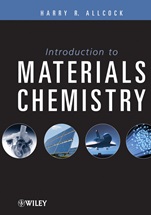
Introduction to Materials Chemistry
ISBN 9780470293331
Autor: Harry R. Allcock
Wydawca: Wiley
Dostępność: 3-6 tygodni
Cena: 508,20 zł
Przed złożeniem zamówienia prosimy o kontakt mailowy celem potwierdzenia ceny.
ISBN13: |
9780470293331 |
ISBN10: |
0470293330 |
Autor: |
Harry R. Allcock |
Oprawa: |
Hardback |
Rok Wydania: |
2008-09-26 |
Ilość stron: |
452 |
Wymiary: |
262x180 |
Tematy: |
PN |
THE IMPACT OF CHEMISTRY ON MODERN TECHNOLOGY
Classical chemistry courses emphasize fundamental science. Materials chemistry deals with how chemistry is utilized in modern technology. Introduction to Materials Chemistry gives readers a broad overview of how the fundamentals of chemistry are used to create sophisticated materials and devices that improve modern life. Proceeding logically from the basics to materials in advanced technology, it:
Covers the fundamentals of materials chemistry, including principles of materials synthesis and materials characterization methodsIntroduces readers to the various classes of materials, including small molecules in solids, organic and inorganic polymers, glasses and ceramics, metals, semi–conductors, superconductors, alloys, and composite materialsExplains how the various materials are produced and why they possess specific combinations of propertiesExamines how different materials are used in technology, covering semiconductors, superconductors, solid ionic conductors, membranes, optical and photonicmaterials, surface science of materials, biomedical materials, and materials innanoscience and nanotechnologyEmphasizes the principles of device design and fabricationIncludes a summary of the challenges in the different fields
The chapters on materials in advanced technology help to prepare students for careers in the design and development of materials for uses in the medical, energy, communications, aerospace, and other advanced technology sectors. This is an ideal text for advanced undergraduates and graduate students in chemistry, materials science, and chemical engineering. It also provides a general overview for professionals in research and/or industry, illustrating the relationships between different types of solids and how combinations of different materials are often usedto solve challenging technical problems.
Spis treści:
PREFACE.
PART I INTRODUCTION TO MATERIAL SCIENCE.
1. What Is Materials Chemistry?
A. Different Types of Materials.
B. Uses of Materials.
C. Approaches to Producing New Materials, New Properties, and Uses.
D. Devices and Machines.
E. The Role of Chemistry in Materials Science.
F. A Broader Perspective.
G. Terminology.
H. Example Journals Where Materials Science Publications Can be Found.
I. Study Questions.
2. Fundamental Principles that Underlie Materials Chemistry.
A. Why Are Different Materials Different.
B. The Role of Different Elements.
C. Different Types of Chemical Bonds.
D. Size of Molecular Units.
E. Different Shapes of Component Molecules and Infl uence of Solid–State Structure.
F. Suggestions for Further Reading.
G. Study Questions.
3. Basic Synthesis and Reaction Chemistry.
A. Underlying Principles.
B. Starting Points for Materials Synthesis—Isolation of Elements.
C. Principles that Underlie Materials Synthesis.
D. Illustrative Chemistry of Selected Nonmetallic Elements.
E. Suggestions for Further Reading.
F. Study Questions.
4. Structure Determination and Special Techniques for Materials Characterization.
A. Purpose.
B. Analysis of Bulk Materials.
C. Surface and Thin–Film Analysis Techniques.
D. Solution Analysis Techniques.
E. Suggestions for Further Reading.
F. Study Questions.
PART II DIFFERENT TYPES OF MATERIALS.
5. Small Molecules in Solids.
A. Importance of Small–Molecule Materials.
B. Packing of Small Molecules in the Solid State.
C. Self–Assembly by Crystallization.
D. Spherical Molecules Such as Fullerenes in the Solid State.
E. Disk–Shaped Molecules and Other Flat Structures.
F. Rod–Shaped Molecules.
G. Charge Transfer Complexes.
H. Clathrates—Molecular Inclusion Adducts.
I. Suggestions for Further Reading.
J. Study Questions.6. Polymers.
A. Overview.
B. Synthesis of Polymers.
C. Structure–Property Relationships and Polymer Design.
D. Polymers in the Solid State.
E. Fabrication of Polymers.
F. Example Polymeric Materials.
G. Future Challenges in Polymeric Materials Science.
H. Suggestions for Further Reading.
I. Study Questions.
7. Glasses and Ceramics.
A. Overview.
B. Oxide Ceramics and Glasses Obtained or Produced Directly from Mineralogical Materials.
C. Oxide Ceramics from Small–Molecule Inorganic and Organometallic Precursors.
D. Nonoxide Ceramics.
E. Fabrication of Ceramics and Glasses.
F. Future Challenges in Ceramics and Glass Science.
G. Suggestions for Further Reading.
H. Study Questions.
8. Metals.
A. Important Aspects of Metal Science and Technology.
B. Isolation of Specific Metals from Their Ores.
C. Corrosion.
D. Solid–State Structure of Metals and Alloys.
E. Electrical Conductivity.
F. The Color of Metals.
G. Thermal Conductivity of Metals.
H. Magnetic Properties of Metals.
I. Mechanical Properties of Metals.
J. Fabrication of Metals.
K. Future Challenges in Metallic Materials.
L. Suggestion for Further Reading.
M. Study Questions.
9. Alloys, Composites, and Defects.
A. Overview.
B. Pure Materials and Homogeneous Solid Solutions.
C. Heterophase Materials.
D. Suggestion for Further Reading.
E. Study Questions.
PART III MATERIALS IN ADVANCED TECHNOLOGY.
10. Semiconductors and Related Materials.
A. Importance of Semiconductors.
B. Semiconductor Theory.
C. Preparation of Semiconductor–Grade Silicon and Compound Semiconductors.
D. Organic Polymer Semiconductors.
E. Photolithography and Microlithography.
F. Photoresists.
G. Electron Beam Lithography.
H. X–Ray Lithography.
I. Circuit Wiring.
J. Semiconductor Devices.
K. Unsolved Problems in Semiconduct
or Materials Science.
L. Suggestions for Further Reading.
M. Study Questions.
11. Superconductors.
A. Overview.
B. Nomenclature.
C. Synthesis of High–Temperature Superconductors.
D. Solid–State Structure.
E. Theories of Superconduction.
F. Other Superconducting Systems.
G. Current and Proposed Uses for Superconductors.
H. Challenges for the Future.
I. Suggestions for Further Reading.
J. Study Questions.
12. Solid Ionic Conductors: Advanced Materials for Energy Generation and Energy Storage.
A. General Observations.
B. Fuel Cell Materials.
C. Battery Electrolyte Materials.
D. Capacitors and Supercapacitors.
E. Challenges for the Future.
F. Suggestions for Further Reading.
G. Study Questions.
13. Membranes.
A. Background.
B. Porous Membranes.
C. Membranes that Function by a Chemical Reaction.
D. Nonporous Membranes that Do Not React with Participating Molecules.
E. Specific Examples of Materials Used in Solid Polymeric Membranes.
F. Gel Membranes.
G. Testing of Membranes.
H. Sound Transducer Membranes.
I. Challenges for the Future.
J. Suggestions for Further Reading.
K. Study Questions.
14. Optical and Photonic Materials.
A. Overview.
B. Passive Optical Materials.
C. Responsive Optical Materials.
D. Challenges for the Future.
E. Final Comments.
F. Suggestions for Further Reading.
G. Study Questions.
15. Surface Science of Materials.
A. Perspective.
B. Summary of Characterization Methods.
C. Surfaces of Metals.
D. Ceramic Surfaces.
E. Polymer Surfaces.
F. Surfaces of Semiconductors.
G. Assembly of Molecules on Surfaces.
H. Adhesion and Surface Chemistry.
I. Relationship to Other Materials Topics.
J. Suggestions for Further Reading.
K. Study Questions.
16. Biomedical Materials.
A. Special Requirements for Biomedical Materials.
B. Traditional Biome
dical Materials.
C. Materials for Specific Medical Applications.
E. Unsolved Problems in Biomedical Materials Science.
F. Suggestions for Further Reading.
G. Study Questions.
17. Materials in Nanoscience and Nanotechnology.
A. Background and Motivation.
B. Synthesis and Fabrication of Nanostructures.
C. Examples of Nanostructures.
D. Major Challenges in Nanoscience and Technology.
E. Suggestions for Further Reading.
F. Study Questions.
GLOSSARY.
INDEX.
Nota biograficzna:
HARRY R. ALLCOCK, PhD, is an Evan Pugh Professor of Chemistry at The Pennsylvania State University. His research interests include applications of chemical synthesis to polymer chemistry, materials science, energy research, and biomedicine; and thecorrelation of molecular structure with properties for hybrid inorganic–organic macromolecules and materials. Dr. Allcock has received numerous awards, including four American Chemical Society Awards for his work in polymers and materials science. He has authored or coauthored 530 peer–reviewed articles and has edited, coauthored, or written eight books, including the recent Chemistry and Applicationsof Polyphosphazenes (Wiley). More than 130 graduate students and postdoctoral scientists, as well as numerous undergraduates, have received their research training under his direction.
Okładka tylna:
THE IMPACT OF CHEMISTRY ON MODERN TECHNOLOGY
Classical chemistry courses emphasize fundamental science. Materials chemistry deals with how chemistry is utilized in modern technology. Introduction to Materials Chemistry gives readers a broad overview of how the fundamentals of chemistry are used to create sophisticated materials and devices that improve modern life. Proceeding logically from the basics to materials in advanced technology, it:
Covers the fundamentals of materials chemistry, including principles of materials synt
hesis and materials characterization methodsIntroduces readers to the various classes of materials, including small molecules in solids, organic and inorganic polymers, glasses and ceramics, metals, semi–conductors, superconductors, alloys, and composite materialsExplains how the various materials are produced and why they possess specific combinations of propertiesExamines how different materials are used in technology, covering semiconductors, superconductors, solid ionic conductors, membranes, optical and photonicmaterials, surface science of materials, biomedical materials, and materials innanoscience and nanotechnologyEmphasizes the principles of device design and fabricationIncludes a summary of the challenges in the different fields
The chapters on materials in advanced technology help to prepare students for careers in the design and development of materials for uses in the medical, energy, communications, aerospace, and other advanced technology sectors. This is an ideal text for advanced undergraduates and graduate students in chemistry, materials science, and chemical engineering. It also provides a general overview for professionals in research and/or industry, illustrating the relationships between different types of solids and how combinations of different materials are often usedto solve challenging technical problems.
Koszyk
Książek w koszyku: 0 szt.
Wartość zakupów: 0,00 zł
Informacje


Kontakt
Gambit
Centrum Oprogramowania
i Szkoleń Sp. z o.o.
Al. Pokoju 29b/22-24
31-564 Kraków
Siedziba Księgarni
ul. Kordylewskiego 1
31-542 Kraków
+48 12 410 5991
+48 12 410 5987
+48 12 410 5989
Subskrypcje
Administratorem danych osobowych jest firma Gambit COiS Sp. z o.o. Na podany adres będzie wysyłany wyłącznie biuletyn informacyjny.
Autoryzacja płatności

Informacje na temat autoryzacji płatności poprzez PayU.

© Copyright 2012: GAMBIT COiS Sp. z o.o. Wszelkie prawa zastrzeżone.
Projekt i wykonanie: Alchemia Studio Reklamy