


Wydawcy
Katalog tematyczny
- Archeologia (1)
- Ekonomia, finanse, business (698)
- Filozofia (20)
- Historia (57)
- Języki i językoznawstwo (4)
- Lifestyle, hobby i rozrywka (32)
- Medycyna (1025)
- Nauki humanistyczne (2)
- Nauki o Ziemi i środowisku (430)
- Nauki ścisłe (1681)
- Nauki społeczne (1297)
- Nauki techniczne (530)
- Prawo (1437)
- Publikacje informacyjne i interdyscyplinarne (32)
- Religia i wierzenia (15)
- Technika komputerowa (237)
- Zdrowie, relacje międzyludzkie i rozwój osobisty (4)





Informacje szczegółowe o książce
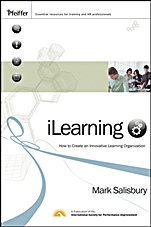
iLearning: How to Create an Innovative Learning Organization
ISBN 9780470292655
Autor: Mark H. Salisbury
Wydawca: Wiley
Dostępność: 3-6 tygodni
Cena: 286,65 zł
Przed złożeniem zamówienia prosimy o kontakt mailowy celem potwierdzenia ceny.
ISBN13: |
9780470292655 |
ISBN10: |
0470292652 |
Autor: |
Mark H. Salisbury |
Oprawa: |
Hardback |
Rok Wydania: |
2008-12-30 |
Ilość stron: |
288 |
Wymiary: |
233x164 |
Tematy: |
KM |
Praise for iLearning
"Mark Salisbury′s book arrives just in time. Recent developments in computer technology put the benefits of iLearning within easy reach of all organizations."
—David Olson, Ph.D., professor, Computer science, Western Oregon University
"Mark Salisbury works at the cutting edge of cognition and knowledge management. iLearning has set the bar high for the research community—there is nothing else in the field that comes close. Any organization aspiring to high–octane performance needs to pay attention to Dr. Salisbury′s book."
—David W. Hamon, principal, Analytic Services Inc.
"Dr. Salisbury has provided leaders in any organization with a ground–breaking job aid for the accelerated distribution and learning of knowledge through iLearning. Application of these integrated concepts and practices will contribute to improved individual and organizational performance in any business, government, or academic organization."
—Jay R. (Skip) Andersen, group leader, Central Training Division, Los Alamos National Laboratory
"iLearning is that rare combination of a cutting edge topic explained in a way that is both entertaining and accessible. More important, the practical methods explained in this book will allow organizations to start reaping the benefits of iLearning immediately."
—Dr. Judith Good, senior lecturer in informatics and director, the Interactive Digital Educational Applications (IDEAs) Laboratory, University of Sussex, England
"What is new about?this book?is that it brings all the information together in one place to enable organizations to build on what they know?for creating real innovation in their products and services."?
—Dr. James Tritten, former chief, Defense Threat Reduction University, Kirtland Air Force Base
"This book provides a unique perspective on innovative learning that includes both the necessary theoretical foundations as well as pra
ctical methods of managing knowledge workers in twenty–first century organizations."?—Jan L. Plass, Ph.D., associate professor, New York University
Spis treści:
Preface.
Acknowledgements.
Introduction: Getting the Most from This Book.
SECTION 1. FACILITATING COLLABORATIVE WORK.
1. Why iLearning?
iLearning – An Example.
Building on the Familiar.
The Life Cycle of Knowledge.
2. Becoming One Mind.
Expert Advice.
Concept.
Cognition is Distributed Across Individuals.
Cognition is Distributed in Artifacts.
Cognition is in the History of Artifacts.
Application.
How to Distribute Cognition Across Individuals.
How to Distribute Cognition in Artifacts.
How to Capture Cognition in the History of Artifacts.
3. Agreeing on the Workflow Process.
Expert Advice.
Concept.
Traditional Ways Fail to Define Processes.
Story Telling to Define Processes.
Application.
How to Recognize Failure to Define Processes.
How to Use Story Telling to Define Processes.
4. Defining the Roles within the Process.
Expert Advice.
Concept.
Identification of Roles.
"Rules of Engagement" Between Roles.
Application.
How to Identify Specific Roles.
How to Define "Rules of Engagement" Between Roles.
5. Working the Process.
Expert Advice.
Concept.
Knowledge Products have Performance Objectives.
Performance Objectives Support Collaborative Work.
Performance Objectives Provide Metrics.
Performance Objectives Improve Processes.
Application.
How to Identify Performance Objectives.
How to Support Collaborative Work.
How to Provide Metrics.
How to Improve Processes.
SECTION 2. FACILITATING INNOVATIVE LEARNING.
6. Visualizing Knowledge.
Expert Advice.
Concept.
Tacit–Explicit–Tacit Cycle.
Externalization of Knowledge.
Internalization of Knowledge.
Applicatio
n.
How to Identify Tacit–Explicit–Tacit Cycles.
How to Externalize Knowledge.
How to Internalize Knowledge.
7. Differentiating Knowledge.
Expert Advice.
Concept.
Knowledge is Factual.
Knowledge is Conceptual.
Knowledge is Procedural.
Knowledge is Metacognitive.
Application.
How to Identify Factual Knowledge.
How to Identify Conceptual Knowledge.
How to Identify Procedural Knowledge.
How to Identify Metacognitive Knowledge.
8. Differentiating Knowledge Assets.
Expert Advice.
Concept.
Documents Embody Factual Knowledge.
Instruction Embodies Conceptual Knowledge.
Examples Embody Procedural Knowledge.
Expert Advice Embodies Metacognitive Knowledge.
Management of Tacit Knowledge.
Application.
How to Provide Access to Factual Knowledge.
How to Provide Access to Conceptual Knowledge.
How to Provide Access to Procedural Knowledge.
How to Provide Access to Metacognitive Knowledge.
How to Manage Tacit Knowledge.
9. Differentiating Learners.
Expert Advice.
Concept.
Novices Understand and Remember Knowledge.
Practitioners Analyze and Apply Knowledge.
Experts Create and Evaluate Knowledge .
Learners Have Cognitive Needs.
Application 77.
How to Understand and Remember Knowledge.
How to Analyze and Apply Knowledge.
How to Create and Evaluate Knowledge .
How to Meet the Cognitive Needs of Learners.
SECTION 3. ENABLING AN ILEARNING ORGANIZATION.
10. Locating and Marshalling Expertise.
Expert Advice.
Concept.
Social Network Analysis for Locating Expertise .
Marshall Expertise for Knowledge Assets.
Application.
How to Use Social Network Analysis .
How to Marshall Expertise for Knowledge Assets.
11. Ensuring Incentives to Share.
Expert Advice.
Concept.
People Work in Their Own Self Interest.
Barriers to Knowledge Sharing.
Hard Rewards for Knowledge Sharing.
Soft R
ewards for Knowledge Sharing.
Application.
How to Align with People’s Self Interest.
How to Remove Barriers.
How to Develop Hard Rewards.
How to Develop Soft Rewards.
12. Measuring Individual Learning and Performance.
Expert Advice.
Concept.
Examples are a Performance Measure.
Documents are a Performance Measure .
Instruction is a Performance Measure.
Expert Advice is a Performance Measure.
Performance Objectives are a Performance Measure.
Total Knowledge Assets are a Performance Measure.
Application.
How to Measure Examples.
How to Measure Documents.
How to Measure Instruction.
How to Measure Expert Advice.
How to Measure Performance Objectives.
How to Measure Total Knowledge Assets .
13. Improving Team Learning and Performance.
Expert Advice.
Concept.
Single–Loop Learning.
Double–Loop Learning.
Team Learning.
Application.
How to Support Single Loop Learning .
How to Support Double Loop Learning .
How to Support Team Learning.
14. Managing Organizational Learning and Performance.
Expert Advice.
Concept.
Single–Loop Learning.
Double–Loop Learning .
Organizational Learning.
Application.
How to Support Single–Loop Learning .
How to Support Double–Loop Learning .
How to Support Organizational Learning.
Applying Methodologies and Deploying Technologies.
15. Reusing Knowledge Assets.
Expert Advice.
Concept.
Knowledge Assets are Organized.
Knowledge Assets are Reused.
Application.
How to Organize Knowledge Assets.
How to Reuse Knowledge Assets.
16. Repurposing Knowledge Assets.
Expert Advice.
Concept.
Knowledge Assets are Shared.
Knowledge Assets are Repurposed.
Application.
How to Share Knowledge Assets .
How to Repurpose Knowledge Assets.
17. Organizing Knowledge Assets.
Expert Advice.
Concept.
Knowledge
Koszyk
Książek w koszyku: 0 szt.
Wartość zakupów: 0,00 zł
Informacje


Kontakt
Gambit
Centrum Oprogramowania
i Szkoleń Sp. z o.o.
Al. Pokoju 29b/22-24
31-564 Kraków
Siedziba Księgarni
ul. Kordylewskiego 1
31-542 Kraków
+48 12 410 5991
+48 12 410 5987
+48 12 410 5989
Subskrypcje
Administratorem danych osobowych jest firma Gambit COiS Sp. z o.o. Na podany adres będzie wysyłany wyłącznie biuletyn informacyjny.
Autoryzacja płatności

Informacje na temat autoryzacji płatności poprzez PayU.

© Copyright 2012: GAMBIT COiS Sp. z o.o. Wszelkie prawa zastrzeżone.
Projekt i wykonanie: Alchemia Studio Reklamy