


Wydawcy
Katalog tematyczny
- Archeologia (109)
- Ekonomia, finanse, business (13704)
- Filozofia (1445)
- Historia (3040)
- Języki i językoznawstwo (2356)
- Lifestyle, hobby i rozrywka (475)
- Medycyna (9704)
- Nauki humanistyczne (4)
- Nauki o Ziemi i środowisku (2638)
- Nauki ścisłe (20412)
- Astronomia (294)
- Biologia (5119)
- Chemia (6540)
- Chemia analityczna (361)
- Chemia fizyczna (346)
- Chemia nieorganiczna (137)
- Chemia organiczna (535)
- Krystalografia (27)
- Minerologia (46)
- Fizyka (3309)
- Matematyka (4574)
- Nauki ścisłe, ogólnie (503)
- Nauki społeczne (8486)
- Nauki techniczne (13450)
- Prawo (1696)
- Publikacje informacyjne i interdyscyplinarne (1288)
- Religia i wierzenia (917)
- Technika komputerowa (4067)
- Zdrowie, relacje międzyludzkie i rozwój osobisty (657)





Informacje szczegółowe o książce
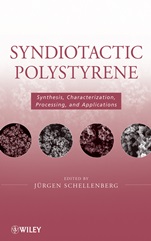
Syndiotactic Polystyrene: Synthesis, Characterization, Processing, and Applications
ISBN 9780470286883
Autor: Jürgen Schellenberg
Wydawca: Wiley
Dostępność: 3-6 tygodni
Cena: 730,80 zł
Przed złożeniem zamówienia prosimy o kontakt mailowy celem potwierdzenia ceny.
ISBN13: |
9780470286883 |
ISBN10: |
0470286881 |
Autor: |
Jürgen Schellenberg |
Oprawa: |
Hardback |
Rok Wydania: |
2009-12-08 |
Ilość stron: |
480 |
Wymiary: |
240x166 |
Tematy: |
PN |
Syndiotactic Polystyrene (SPS), synthesized in a laboratory for the first time in 1985, has become commercialized in a very short time, with wide acceptance on the global plastics market. Written by leading experts from academia and industry from all over the world, Syndiotactic Polystyrene offers a comprehensive review of all aspects of SPS of interest to both science and industry, from preparation and properties to applications.
This essential reference to SPS covers:
The preparation of syndiotactic polystyrene by half–metallocenes and other transition metal catalysts
The structure and fundamental properties, especially morphology and crystallization and solution behavior
The commercial process for SPS manufacturing
Properties, processing, and applications of syndiotactic polystyrenes
Polymers based on syndiotactic polystyrenes, for example, by functionalization and modification, and nanocomposites
Ideal for polymer chemists, physicists, plastics engineers, materials scientists, and all those dealing with plastics manufacturing and processing, this important resource provides the information one needs to compare, select, and integrate an appropriate materials solution for industrial use or research.
Spis treści:
PREFACE.
CONTRIBUTORS.
ABOUT THE EDITOR.
PART I INTRODUCTION.
1. Historical Overview and Commercialization of Syndiotactic Polystyrene (Michael Malanga, Osamu Isogai, Takeshi Yamada, Shigeo Iwasaki, and Masahiko Kuramoto).
1.1 Discovery of Syndiotactic Polystyrene (SPS).
1.2 Early Years of Development (1985–1989).
1.3 Intense Development Years (1989–1996).
1.4 Initial Commercial Launch Stage (1996–2001).
1.5 Years 2001–2007.
PART II PREPARATION OF SYNDIOTACTIC POLYSTYRENE.
2. Transition Metal Catalysts for Syndiotactic Polystyrene (Norio Tomotsu, Thom
as H. Newman, Mizutomo Takeuchi, Richard Campbell Jr., and Jürgen Schellenberg).
2.1 Introduction.
2.2 Transition Metal Compounds.
2.3 Summary.
References.
3. Cocatalysts for the Syndiospecific Styrene Polymerization (Norio Tomotsu, Hiroshi Maezawa, and Thomas H. Newman).
3.1 Introduction.
3.2 MAO.
3.3 Boron Compounds.
3.4 Other Chemicals.
3.5 Summary.
References.
4. Mechanisms for Stereochemical Control in the Syndiotactic Polymerization of Styrene (Norio Tomotsu, Thomas H. Newman, and Richard Campbell Jr.).
4.1 Introduction.
4.2 Insertion of the Growing Polymer Chain into the Double Bond of Styrene.
4.3 Stereochemistry of the Styrene Insertion.
4.4 Effects of Hydrogenation of the Catalyst.
4.5 Active Site Species.
4.6 Theoretical Analysis of the Catalyst.
4.7 Kinetic Analysis of Styrene Polymerization.
4.8 Conclusions.
References.
5. Copolymerization of Ethylene with Styrene: Design of Efficient Transition Metal Complex Catalysts (Kotohiro Nomura).
5.1 Introduction.
5.2 Ethylene/Styrene Copolymers: Microstructures, Thermal Properties, and Composition Analyses.
5.3 Ethylene/Styrene Copolymerization Using Transition Metal Complex–Cocatalyst Systems.
5.4 Summary and Outlook.
References.
6. Structure and Properties of Tetrabenzo[a,c,g,i]fl uorenyl–Based Titanium Catalysts (Rüdiger Beckhaus, Kai Schröder, and Jürgen Schellenberg).
6.1 Introduction.
6.2 The Tbf Ligand.
6.3 Tbf Lithium.
6.4 Tbf Titanium(III) Derivatives.
6.5 Tbf Titanium(IV) Derivatives.
6.6 Dynamic and Polymerization Behavior of Tetrabenzofluorenyl Titanium Complexes.
6.7 Conclusions.
References.
7. Rare–Earth Metal Complexes as Catalysts for Syndiospecific Styrene Polymerization (Klaus Beckerle and Jun Okuda).
7.1 Introduction.
7.2 Metallocene Catalysts.
7.3 Constrained Geometry Catalysts.
7.4 Half–Sandwich Catalysts.
7.5 Nonmetallocene Catalysts.
7.6 Conclusion.
References.
8. Syndiospecific Styrene Polymerization with Heterogenized Transition Metal Catalysts (Kyu Yong Choi).
8.1 Introduction.
8.2 Kinetics of Syndiospecific Polymerization with Heterogeneous Metallocene Catalysts.
8.3 Nascent Morphology of Syndiotactic Polystyrene.
8.4 Concluding Remarks.
References.
PART III STRUCTURE AND FUNDAMENTAL PROPERTIES OF SYNDIOTACTIC POLYSTYRENE.
9. Structure, Morphology, and Crystallization Behavior of Syndiotactic Polystyrene (Andrea Sorrentino and Vittoria Vittoria).
9.1 Introduction.
9.2 Polymorphic Behavior of SPS.
9.3 Morphology of the Zigzag Forms.
9.4 Morphology of the Mesomorphic Phases.
9.5 Thermodynamic and Kinetics of Crystallization.
9.6 Melting Behavior.
9.7 Structure and Properties of the Crystallized Samples.
References.
10. Preparation, Structure, Properties, and Applications of Co–Crystals and Nanoporous Crystalline Phases of Syndiotactic Polystyrene (Gaetano Guerra, Alexandra Romina Albunia, and Concetta D’Aniello).
10.1 Introduction.
10.2 Co–Crystals.
10.3 Nanoporous Crystalline Phases.
10.4 Conclusions and Perspectives.
10.5 Acknowledgments.
References.
11. Crystallization Thermodynamics and Kinetics of Syndiotactic Polystyrene (Tomoaki Takebe and Komei Yamasaki).
11.1 Introduction.
11.2 Theoretical Background.
11.3 Equilibrium Melting Point of SPS.
11.4 Analyses of Spherulitic Growth Rate G .
11.5 Comparison Between SPS and IPS.
References.
PART IV COMMERCIAL PROCESSES FOR MANUFACTURING OF SYNDIOTACTIC POLYSTYRENE.
12. Processes for the Production of Syndiotactic Polystyrene (Masao Aida, David Habermann, Hans–Joachim Lede
r, and Jürgen Schellenberg).
12.1 Introduction.
12.2 Monomer Purification Section.
12.3 Catalyst Section.
12.4 Polymerization Section.
12.5 Styrene Stripping Section.
12.6 Deactivating Section.
12.7 Pelletizing Section.
12.8 Blending Section.
12.9 Shipping Section.
References.
PART V PROPERTIES, PROCESSING, AND APPLICATIONS OF SYNDIOTACTIC POLYSTYRENE.
13. Properties of Syndiotactic Polystyrene (Tomoaki Takebe, Komei Yamasaki, Keisuke Funaki, and Michael Malanga).
13.1 Introduction.
13.2 Rheological Properties of SPS.
13.3 Basic Physical Mechanical Properties of SPS.
13.4 Orientation of SPS and Properties of Oriented SPS.
13.5 Other Important Properties of SPS.
References.
14. Melt Processing of Syndiotactic Polystyrene (David Bank, Kevin Nichols, Harold Fowler, Jason Reese, and Gerry Billovits).
14.1 Introduction.
14.2 Compounding.
14.3 Injection Molding.
14.4 Sheet and Film Extrusion.
14.5 Film Processing and Fabrication.
14.6 Fiber Spinning.
References.
15. Applications of Syndiotactic Polystyrene (Tom Fiola, Akihiko Okada, Masami Mihara, and Kevin Nichols).
15.1 Introduction.
15.2 The Performance Capabilities of SPS.
15.3 Connectors for Automotive and Electronic Applications.
15.4 Electronic Components: Plated and Non–Plated.
15.5 Industrial and Appliance Components.
References.
16. Blends of Syndiotactic Polystyrene with Polyamide (Kevin Nichols, Akihiko Okada, and Hiroki Fukui).
16.1 Introduction.
16.2 Composition of SPS/Nylon Blends.
16.3 Properties of SPS/Nylon Blends.
16.4 Applications of SPS/Nylon Blends.
References.
17. Blends of Syndiotactic Polystyrene with Polystyrenes (Tomoaki Takebe, Komei Yamasaki, Akihiko Okada, and Takuma Aoyama).
17.1 Introduction.
17.2 SANS Measurements.
17.3 Theoretica
l Background.
17.4 Tacticity Effect on Miscibility.
17.5 Properties of Blends of SPS and APS.
References.
18. Compatibilizers for Impact–Modifi ed Syndiotactic Polystyrene (Tomoaki Takebe, Akihiko Okada, and Nobuyuki Sato).
18.1 Introduction.
18.2 Morphological Analyses of HISPS.
18.3 Morphology of SPS/PPO Binary Blends.
18.4 Compatibilizer Effects.
References.
PART VI POLYMERS BASED ON SYNDIOTACTIC POLYSTYRENES.
19. Functionalization and Block/Graft Reactions of Syndiotactic Polystyrene Using Borane Comonomers and Chain Transfer Agents (T. C. Mike Chung).
19.1 Introduction.
19.2 Functionalization of SPS via Borane Comonomers.
19.3 Functionalization of SPS via Borane Chain Transfer Agents.
19.4 Summary.
19.5 Acknowledgment.
References.
20. Nanocomposites Based on Syndiotactic Polystyrene (O Ok Park and Mun Ho Kim).
20.1 Introduction.
20.2 Polymer Nanocomposites and Microstructure.
20.3 Fabrication of Polymer Nanocomposites.
20.4 Characterization of Polymer Nanocomposites.
20.5 Preparation of SPS Nanocomposites.
20.6 Properties of SPS Nanocomposites.
20.7 Final Remarks.
References.
INDEX.
Nota biograficzna:
Jürgen Schellenberg studied chemistry at the Technical University "Carl Schorlemmer" Leuna–Merseburg where he obtained a PhD in polymer science. He has worked in the polystyrene department of the plastics R&D division of the Chemische Werke Buna in Schkopau and at Dow Central Germany, Schkopau, where he was involved in the start up and operation of the first commercial SPS plant worldwide. Dr. Schellenberg holds more than seventy patents and has published over forty–seven scientific papers including reviews.
Okładka tylna:
Syndiotactic Polystyrene (SPS), synthesized in a laboratory for the first time in 1985, has become commercializ
ed in a very short time, with wide acceptance on the global plastics market. Written by leading experts from academia and industry from all over the world, Syndiotactic Polystyrene offers a comprehensive review of all aspects of SPS of interest to both science and industry, from preparation and properties to applications.
This essential reference to SPS covers:
The preparation of syndiotactic polystyrene by half–metallocenes and other transition metal catalysts
The structure and fundamental properties, especially morphology and crystallization and solution behavior
The commercial process for SPS manufacturing
Properties, processing, and applications of syndiotactic polystyrenes
Polymers based on syndiotactic polystyrenes, for example, by functionalization and modification, and nanocomposites
Ideal for polymer chemists, physicists, plastics engineers, materials scientists, and all those dealing with plastics manufacturing and processing, this important resource provides the information one needs to compare, select, and integrate an appropriate materials solution for industrial use or research.
Koszyk
Książek w koszyku: 0 szt.
Wartość zakupów: 0,00 zł
Informacje


Kontakt
Gambit
Centrum Oprogramowania
i Szkoleń Sp. z o.o.
Al. Pokoju 29b/22-24
31-564 Kraków
Siedziba Księgarni
ul. Kordylewskiego 1
31-542 Kraków
+48 12 410 5991
+48 12 410 5987
+48 12 410 5989
Subskrypcje
Administratorem danych osobowych jest firma Gambit COiS Sp. z o.o. Na podany adres będzie wysyłany wyłącznie biuletyn informacyjny.
Autoryzacja płatności

Informacje na temat autoryzacji płatności poprzez PayU.

© Copyright 2012: GAMBIT COiS Sp. z o.o. Wszelkie prawa zastrzeżone.
Projekt i wykonanie: Alchemia Studio Reklamy