


Wydawcy
Katalog tematyczny
- Archeologia (109)
- Ekonomia, finanse, business (13704)
- Filozofia (1445)
- Historia (3040)
- Języki i językoznawstwo (2356)
- Lifestyle, hobby i rozrywka (475)
- Medycyna (9704)
- Nauki humanistyczne (4)
- Nauki o Ziemi i środowisku (2638)
- Nauki ścisłe (20412)
- Astronomia (294)
- Biologia (5119)
- Chemia (6540)
- Chemia analityczna (361)
- Chemia fizyczna (346)
- Chemia nieorganiczna (137)
- Chemia organiczna (535)
- Krystalografia (27)
- Minerologia (46)
- Fizyka (3309)
- Matematyka (4574)
- Nauki ścisłe, ogólnie (503)
- Nauki społeczne (8486)
- Nauki techniczne (13450)
- Prawo (1696)
- Publikacje informacyjne i interdyscyplinarne (1288)
- Religia i wierzenia (917)
- Technika komputerowa (4067)
- Zdrowie, relacje międzyludzkie i rozwój osobisty (657)





Informacje szczegółowe o książce
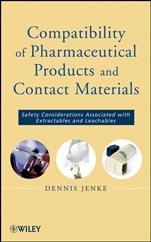
Compatibility of Pharmaceutical Solutions and Contact Materials: Safety Assessments of Extractables and Leachables for Pharmaceutical Products
ISBN 9780470281765
Autor: Dennis Jenke
Wydawca: Wiley
Dostępność: 3-6 tygodni
Cena: 643,65 zł
Przed złożeniem zamówienia prosimy o kontakt mailowy celem potwierdzenia ceny.
ISBN13: |
9780470281765 |
ISBN10: |
0470281766 |
Autor: |
Dennis Jenke |
Oprawa: |
Hardback |
Rok Wydania: |
2009-06-19 |
Ilość stron: |
400 |
Wymiary: |
234x165 |
Tematy: |
PN |
Compatibility of Pharmaceutical Products and Contact Materials
Dennis Jenke
Important safety aspects of compatibility for therapeutic products and their manufacturing systems, delivery devices, and containers
Compatibility of Pharmaceutical Products and Contact Materials helps pharmaceutical, toxicology, analytical, and regulatory affairs professionals assess the safety of leachable and extractable chemicals associated with drug product packaging, manufacturing systems, and devices. The most comprehensive resource available, its coverage includes the strategies, tactics, and regulatory requirements for performing safety assessments, along with the means for interpreting results.
Structured around a logical framework for an extractables and leachables safety assessment and closely linked to the pharmaceutical product development process, Compatibility of Pharmaceutical Products and Contact Materials directly addresses the fundamental questions of "what activities need to be performed to completely, efficiently, and effectively address the issue of product safety from an extractables and leachables perspective?" and "when do the various required activities need to be performed?" Specifically, the chapters describe:
Pertinent regulations and practical ways to meet guidelines
Coordinating manufacturing, storage, and delivery systems development and qualification with therapeutic product development
Materials characterization and the materials screening process
Component and/or system qualification (illustrated by several case studies)
Performing validation/migration studies and interpreting and reporting the results
Creating a product registration dossier and putting it through regulatory review
Product maintenance (Change Control) from an extractables and leachables perspective
Likely future developments in extractables and leachables assessment
Additionally, the bookR
42;s appendix provides a database, including CAS registry numbers, chemical formulas and molecular weights of extractable/leachable substances that have been reported in the chemical literature.
Detailing the interconnected roles played by analytical chemistry, biological science, toxicology, and regulatory science, Compatibility of Pharmaceutical Products and Contact Materials supplies a much–needed, comprehensive resource to all those in pharmaceutical product or medical device development.
Spis treści:
PREFACE AND ACKNOWLEDGMENTS.
PART A GENERAL CONCEPTS.
1. Introduction.
General Discussion.
Key Definitions.
The Interacting Parties.
Extractables versus Leachables.
Regulatory Perspectives for Performing Compatibility and/or Safety Assessments.
The U.S. Food and Drug Administration Guidance for Industry: Container Closure Systems for Packaging Human Drugs and Biologics.
European Medicines Agency (EMEA) Guideline on Plastic Immediate Packaging Materials.
FDA Guidance for Industry, Inhalation Products.
Medical Devices.
An Overview of Strategies for Performing Safety Assessments.
The Generalized Strategy for Safety Assessments.
Moving Forward.
References.
2. Nomenclature and General Concepts.
General.
Nomenclature.
Primary Definitions.
Constituents of a Material or Construct.
Classification of Extracting Media.
Classification of Extraction Strategies.
Example Extraction Conditions Applied to a Model System.
Correlation.
Factors That Influence the Linking of Extractables and Leachables.
A Hierarchy for Linkages between Extractables and Leachables.
Decisions Concerning the Required Rigor for Linkages.
Circumstances Requiring the Linking of Extractables and Leachables.
Identification and Quantitation.
Risks and Risk Management.
Risk Categories Related to Biological Assessment of Medical Devices.
Risk Categories
Related to Assessment of Primary Packaging and/or Container–Closure Systems.
The General Dimensions of Risk.
Utilization of Risk Classification Profiles.
Risk Classification in Indirect Contact Situations.
The Construct Itself as a Contributor to Risk.
References.
3. Extractables, Leachables, and the Product Life Cycle.
General.
Discussion of the Components of the Master Flow Diagram.
Observations.
Application of the Process Map.
PART B MATERIAL CHARACTERIZATION.
4. Material Screening and Characterization.
Overview.
General Principles.
Compendial Compliance.
United States Pharmacopeia.
Japanese Pharmaceopeia.
European Pharmacopeia.
Compositional Characterization, General Concepts.
Compositional Characterization by Collecting Available Material Information.
General.
Collecting Extractables Information from the Material Supplier.
Compositional Characterization by Material Testing, Extractables Survey.
Extractables Survey: Extraction.
Case Studies: The Influence of Extraction Medium on the Extractables Survey.
Extractables Survey: Extract Analysis.
Case Study: Extractables Survey for Plastic Tubing Materials.
Case Study: Extractables Survey for an Elastomer Used in OINDP.
Case Study: Extractables Survey for a Rubber Closure Used with Semisolid Drug Products.
Case Study: Extractables Survey for Filter Cartridges Used in Downstream Processing of Pharmaceuticals.
Bibliography of Analytical Methods.
Reconciliation as a Survey Tool.
Case Study: TOC Reconciliation; Characterization of a Polyolefin Material.
Use of Extractables Information in Safety Assessment: Extractables Profile, Total Pool, and Total Available Pool.
Extractions to Establish the Total Pool and Total Available Pool.
Case Study: Total Pool Determination by Successive Extraction.
Recap: Components of a Complete Extractables Assessment.
Caveats in Using Extractabl
es Information for Safety Assessment.
Chemical Characterization: Device Perspective per ISO 10993–18.
References.
PART C CONSTRUCT QUALIFICATION.
5. The Prototype Stage.
General Comments.
The Simulation Study.
Generating the Simulating Extract.
Simulating the Contact Parameters.
Simulating the Therapeutic Product.
Simulating the Exposure Parameters.
Analyzing the Simulating Extract.
Case Study: Modeling of the Impact of Solubilizing Agents on Leachables Accumulation.
Case Study: Accumulation of Organic Leachables from Plastic Biopharmaceutical Process Containers.
Case Study: Accumulation of Label–Related Leachables in a Solid Dosage Form.
Case Study: Accumulation of Caprolactam Oligomers Leached from Nylon–6 Material.
Application of the Analytical Threshold.
The Preliminary Toxicological Assessment.
Case Study: Assessment of Cyclohexanone Limits for Containers.
Exiting the Prototype Stage.
References.
6. The Early Development Stage.
General Comments.
Target Leachables.
Method Development, Evaluation, and Validation.
Method Development (Optimization).
Prerequisites to Method Optimization.
Overview of the Method Optimization Process.
Conduct of a Method Optimization Study.
Primary Performance Assessment.
Troubleshooting Guide.
Secondary Performance Assessment.
System Suitability.
Robustness.
Exiting Method Development–Optimization.
The Method Evaluation Process.
General.
Aspects of the Evaluation and Validation Processes.
Overview of the Method Evaluation Process.
Template for the Conduct of a Method Evaluation Study.
Validation.
Case Study: Validation of an LC/MS Method for the Quantitation of Leachables from a Packaging System.
General.
Experimental.
Validation Study.
Case Study: Validation of an HPLC Method For Quantitating Stopper Leachables in a Complex Surfactant Vehicle.
General.<
br>Validation.
Exiting the Early Development Stage.
References.
PART D CONSTRUCT VALIDATION.
7. Late Stage Product Development.
General: The Migration Study.
Design of the Migration Study.
EMEA Guideline on Plastic Immediate Packaging Materials.
FDA Guidance.
Optimal Design of a Migration Study.
Interpretation of the Migration Study: Toxicological Assessment.
Disaster Management.
Class A Disaster: Unusual or Unexpected Change in the Concentration of a Target Leachable.
Class B Disaster: A Previously Unobserved Response Is Obtained During Testing.
Documenting a Disaster Investigation.
Specificity Check in Drug Product Analysis Methods.
Product Stability Issues Associated with Leachables.
References.
8. Submission.
General Discussion.
Dossier Format: The Common Technical Document.
Contents of the CTD Sections Relevant to Container Closure Systems and Their Safety Assessment.
Section 3.2.P.7, Description.
Section 3.2.P.2.4, Suitability.
Closing Observations.
References.
9. Launch.
PART E PRODUCT MAINTENANCE.
10. Product Maintenance.
General Discussion.
Ongoing Quality Control.
General.
Incoming Raw Materials.
Manufactured In–Process Goods.
Finished Goods (Final Product).
Process of Developing–Implementing QC Extractables Specifications.
Change Control.
General.
Change Control Impact Assessment.
Evaluation Recommendation.
Factors to Consider When Contemplating Changes to Registered Products.
Case Study: Differential Approach.
Overview.
General Test Strategy.
Experimental.
Results and Discussion.
Principles for Judging Toxicological Equivalency.
Disaster Management During Product Maintenance.
Atypical Manufacturing During Product Maintenance.
Product Use Field Issues Encountered During Product Maintenance.
Changes in Product Registration Requirements During Product Main
tenance.
Exiting the Product Maintenance Stage.
References.
11. Retirement.
12. Focus on Emerging Concepts.
Overview.
Plastic Materials used in Manufacturing Applications.
General.
Regulatory Requirements.
Industry Recommendations.
Case Study: Leachables Evaluation for Bulk Drug Substance.
Process for Performing Extractables and Leachables Assessments for Disposable Materials Used in Bioprocessing.
A Matter of Semantics.
Best Demonstrated Practices in Extractables Assessments.
The Broader Context of Suitability for Use.
An Important Practical Consideration.
Future Considerations.
References.
Appendix: Materials Used in Pharmaceutical Constructs and Their Associated Extractables.
References.
Index.
Nota biograficzna:
Dennis Jenke is Principal Scientist in the Technology Resources Division of the Baxter Healthcare Corporation. He works with a team of analytical chemistry professionals in areas including the assessment of material/product compatibility, specifically with respect to leachables/extractables and product ingredient binding. He has published extensively in the areas of analytical chemistry, environmental science, and material/solution compatibility; serves as an expert reviewer for numerous pharmaceutical and analytical journals; is a frequently invited speaker in the general areas of analytical chemistry and material/solution compatibility; and is currently an active participant in ongoing collaborative activities designed to establish harmonized best demonstrated practices for extractables/leachables assessment.
Okładka tylna:
Compatibility of Pharmaceutical Products and Contact Materials
Dennis Jenke
Important safety aspects of compatibility for therapeutic products and their manufacturing systems, delivery devices, and containers
Compatibility of Pharmaceutical Products and Contact Materials helps pharmace
utical, toxicology, analytical, and regulatory affairs professionals assess the safety of leachable and extractable chemicals associated with drug product packaging, manufacturing systems, and devices. The most comprehensive resource available, its coverage includes the strategies, tactics, and regulatory requirements for performing safety assessments, along with the means for interpreting results.
Structured around a logical framework for an extractables and leachables safety assessment and closely linked to the pharmaceutical product development process, Compatibility of Pharmaceutical Products and Contact Materials directly addresses the fundamental questions of "what activities need to be performed to completely, efficiently, and effectively address the issue of product safety from an extractables and leachables perspective?" and "when do the various required activities need to be performed?" Specifically, the chapters describe:
Pertinent regulations and practical ways to meet guidelines
Coordinating manufacturing, storage, and delivery systems development and qualification with therapeutic product development
Materials characterization and the materials screening process
Component and/or system qualification (illustrated by several case studies)
Performing validation/migration studies and interpreting and reporting the results
Creating a product registration dossier and putting it through regulatory review
Product maintenance (Change Control) from an extractables and leachables perspective
Likely future developments in extractables and leachables assessment
Additionally, the book′s appendix provides a database, including CAS registry numbers, chemical formulas and molecular weights of extractable/leachable substances that have been reported in the chemical literature.
Detailing the interconnected roles played by analytical chemistry, biological science, toxicology, and r
egulatory science, Compatibility of Pharmaceutical Products and Contact Materials supplies a much–needed, comprehensive resource to all those in pharmaceutical product or medical device development.
Koszyk
Książek w koszyku: 0 szt.
Wartość zakupów: 0,00 zł
Informacje


Kontakt
Gambit
Centrum Oprogramowania
i Szkoleń Sp. z o.o.
Al. Pokoju 29b/22-24
31-564 Kraków
Siedziba Księgarni
ul. Kordylewskiego 1
31-542 Kraków
+48 12 410 5991
+48 12 410 5987
+48 12 410 5989
Subskrypcje
Administratorem danych osobowych jest firma Gambit COiS Sp. z o.o. Na podany adres będzie wysyłany wyłącznie biuletyn informacyjny.
Autoryzacja płatności

Informacje na temat autoryzacji płatności poprzez PayU.

© Copyright 2012: GAMBIT COiS Sp. z o.o. Wszelkie prawa zastrzeżone.
Projekt i wykonanie: Alchemia Studio Reklamy