


Wydawcy
Katalog tematyczny
- Archeologia (109)
- Ekonomia, finanse, business (13704)
- Filozofia (1445)
- Historia (3040)
- Języki i językoznawstwo (2356)
- Lifestyle, hobby i rozrywka (475)
- Medycyna (9704)
- Nauki humanistyczne (4)
- Nauki o Ziemi i środowisku (2638)
- Nauki ścisłe (20412)
- Nauki społeczne (8486)
- Edukacja (229)
- Kryminologia, opieka spełeczna (284)
- Obronność (10)
- Polityka (1389)
- Psychologia (777)
- Socjologia (410)
- Społeczeństwo i kultura (187)
- Nauki techniczne (13450)
- Prawo (1696)
- Publikacje informacyjne i interdyscyplinarne (1288)
- Religia i wierzenia (917)
- Technika komputerowa (4067)
- Zdrowie, relacje międzyludzkie i rozwój osobisty (657)





Informacje szczegółowe o książce
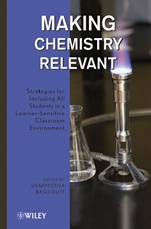
Making Chemistry Relevant: Strategies for Including All Students in a Learner–Sensitive Classroom Environment
ISBN 9780470278987
Autor: Sharmistha Basu–Dutt
Wydawca: Wiley
Dostępność: 3-6 tygodni
Cena: 484,05 zł
Przed złożeniem zamówienia prosimy o kontakt mailowy celem potwierdzenia ceny.
ISBN13: |
9780470278987 |
ISBN10: |
0470278986 |
Autor: |
Sharmistha Basu–Dutt |
Oprawa: |
Hardback |
Rok Wydania: |
2010-04-16 |
Ilość stron: |
304 |
Wymiary: |
239x161 |
Tematy: |
JD |
Unique new approaches for making chemistry accessible to diverse students
Students′ interest and achievement in academics improve dramatically when they make connections between what they are learning and the potential uses of that knowledge i n the workplace and/or in the world at large. Making Chemistry Relevant presents a unique collection of strategies that have been used successfully in chemistry classrooms to create a learner–sensitive environment that enhances academic achievement and social competence of students.
Rejecting rote memorization, the book proposes a cognitive constructivist philosophy that casts the teacher as a facilitator helping students to construct solutions to problems. Written by chemistry professors and research groups from a wide variety of colleges and universities, the book offers a number of creative ways to make chemistry relevant to the student, including:
Teaching science in the context of major life issues and STEM professions
Relating chemistry to current events such as global warming, pollution, and terrorism
Integrating science research into the undergraduate laboratory curriculum
Enriching the learning experience for students with a variety of learning styles as well as accommodating the visually challenged students
Using media, hypermedia, games, and puzzles in the teaching of chemistry
Both novice and experienced faculty alike will find valuable ideas ready to be applied and adapted to enhance the learning experience of all their students.
Spis treści:
Contributors.
Preface.
Editor Profile.
1. Philosophical, Cognitive, and Sociological Roots for Connections in Chemistry Teaching and Learning (Donald J. Wink).
2. Chemistry and the Environment: A SENCER Model Course (Amy M. Shachter).
3. CORD′s Applications in Biology/Chemistry: Teaching Science in the Context of Maj
or Life Issues (Bonnie Rinard and Mark Whitney).
4. The Science of Terrorism: An Interdisciplinary Course for Nonscience Majors (Laura Post Eisen).
5. Chemistry for the Twenty–First Century: Bringing the "Real World" into the Lab (Gautam Bhattacharyya).
6. Student–Centered, Active Learning Pedagogies in Chemistry Education (Gail Marshall).
7. Creating a Relevant, Learner–Centered Classroom for Allied Health Chemistry (Laura DeLong Frost).
8. Working with Chemistry: A Laboratory Inquiry Program (Julie Ellefson).
9. Making Chemistry Relevant to Science and Engineering Majors (Julie K. Bartley, Sharmistha Basu–Dutt, Victoria J. Geisler, Farooq A. Khan, and S. Swamy–Mruthinti).
10. The Center for Authentic Science Practice in Education: Integrating Science Research into the Undergraduate Laboratory Curriculum (Cianán B. Russell, Anne K. Bentley, Donald J. Wink, and Gabriela C. Weaver).
11. Enriching the Chemistry Experience for All Students: Sensorial Experiments That Include Visually Challenged Students (Maria Oliver–Hoyo).
12. Media in Chemistry Education (William J. Donovan).
13. A Walk on the Applied Side: Developing Hypermedia for Physical Chemistry (Erik M. Epp and Gabriela C. Weaver).
14. Effective Use of Games and Puzzles in the Chemistry Classroom (Thomas D. Crute III).
Index.
Nota biograficzna:
SHARMISTHA BASU–DUTT is an Associate Professor of Chemistry and Director of Engineering Studies at the University of West Georgia. She has received numerous grants and awards for her groundbreaking projects that integrate education, engineering, and chemistry.
Okładka tylna:
Unique new approaches for making chemistry accessible to diverse students
Students′ interest and achievement in academics improve dramatically when they make connections between
what they are learning and the potential uses of that knowledge i n the workplace and/or in the world at large. Making Chemistry Relevant presents a unique collection of strategies that have been used successfully in chemistry classrooms to create a learner–sensitive environment that enhances academic achievement and social competence of students.
Rejecting rote memorization, the book proposes a cognitive constructivist philosophy that casts the teacher as a facilitator helping students to construct solutions to problems. Written by chemistry professors and research groups from a wide variety of colleges and universities, the book offers a number of creative ways to make chemistry relevant to the student, including:
Teaching science in the context of major life issues and STEM professions
Relating chemistry to current events such as global warming, pollution, and terrorism
Integrating science research into the undergraduate laboratory curriculum
Enriching the learning experience for students with a variety of learning styles as well as accommodating the visually challenged students
Using media, hypermedia, games, and puzzles in the teaching of chemistry
Both novice and experienced faculty alike will find valuable ideas ready to be applied and adapted to enhance the learning experience of all their students.
Koszyk
Książek w koszyku: 0 szt.
Wartość zakupów: 0,00 zł
Informacje


Kontakt
Gambit
Centrum Oprogramowania
i Szkoleń Sp. z o.o.
Al. Pokoju 29b/22-24
31-564 Kraków
Siedziba Księgarni
ul. Kordylewskiego 1
31-542 Kraków
+48 12 410 5991
+48 12 410 5987
+48 12 410 5989
Subskrypcje
Administratorem danych osobowych jest firma Gambit COiS Sp. z o.o. Na podany adres będzie wysyłany wyłącznie biuletyn informacyjny.
Autoryzacja płatności

Informacje na temat autoryzacji płatności poprzez PayU.

© Copyright 2012: GAMBIT COiS Sp. z o.o. Wszelkie prawa zastrzeżone.
Projekt i wykonanie: Alchemia Studio Reklamy