


Wydawcy
Katalog tematyczny
- Archeologia (109)
- Ekonomia, finanse, business (13704)
- Filozofia (1445)
- Historia (3040)
- Języki i językoznawstwo (2356)
- Lifestyle, hobby i rozrywka (475)
- Medycyna (9704)
- Nauki humanistyczne (4)
- Nauki o Ziemi i środowisku (2638)
- Nauki ścisłe (20412)
- Nauki społeczne (8486)
- Nauki techniczne (13450)
- Prawo (1696)
- Publikacje informacyjne i interdyscyplinarne (1288)
- Religia i wierzenia (917)
- Technika komputerowa (4067)
- Zdrowie, relacje międzyludzkie i rozwój osobisty (657)





Informacje szczegółowe o książce
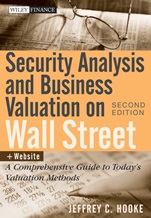
Security Analysis and Business Valuation on Wall Street: A Comprehensive Guide to Todays Valuation Methods + Companion Web Site
ISBN 9780470277348
Autor: Jeffrey C. Hooke
Wydawca: Wiley
Dostępność: 3-6 tygodni
Cena: 449,40 zł
Przed złożeniem zamówienia prosimy o kontakt mailowy celem potwierdzenia ceny.
ISBN13: |
9780470277348 |
ISBN10: |
0470277343 |
Autor: |
Jeffrey C. Hooke |
Oprawa: |
Hardback |
Rok Wydania: |
2010-05-28 |
Numer Wydania: |
2nd Edition |
Ilość stron: |
432 |
Wymiary: |
266x183 |
Tematy: |
KF |
Spis treści:
Preface
What Is Security Analysis?
Recent Trends.
Why Study Security Analysis?
Overview of the Contents.
What′s New in the Second Edition.
Part I The Investing Environment.
Chapter 1 Why Analyze a Security?
The Origins of Security Analysis.
No Profit Guarantee.
Day–to–Day Trading and Security Analysis.
Herd Psychology and Security Analysis.
Momentum Investors.
Game Theory and Security Analysis.
The Premise of Security Analysis.
Scientific Method.
Security Analysis Techniques.
Basic Valuation Approaches.
Other Valuation Approaches.
Summary.
Questions and Short Problems.
Adopt–a–Company Exercises.
Chapter 2 Who′s Practicing Security Analysis?
Securities Firms and Their Analysts.
Major Institutional Investors.
A Dying Art?
Index Funds and Exchange Traded Funds.
Small Money Management Firms.
Rating Agencies.
Individual Investors: A Special Category.
Summary.
Questions and Short Problems.
Adopt–a–Company Exercises.
Chapter 3 Seeking a Level Playing Field.
Brief History of Securities Regulation.
The Chief Regulator—The Securities and Exchange Commission.
Sales and Trading Practices.
Margin Regulation.
The Life Cycle of a New Security Issue.
Summary.
Questions and Short Problems.
Adopt–a–Company Exercises.
Chapter 4 Other Sources of Information.
The Business Media.
The Free Internet.
The Fee for Service Internet.
Trade Associations, Consulting Firms, Government Publications and Financial Organizations.
Credit Rating Agencies.
Securities Firm Research.
News Wires.
Independent Expert Services.
Summary.
Questions and Short Problems.
Adopt–a–Company Exercises.
Part II Performing the Analysis and Writing the Research Report.
Chapter 5 Starting the Analy
sis.
The Security Analysis Process.
Model Research Report.
The Analyst′s Responsibility.
The Cascade of Projections.
Selecting Stocks for Study: Top–Down vs. Bottoms–Up.
Limited Time and Resources.
The Margin of Safety.
Summary.
Questions and Short Problems.
Adopt–a–Company Exercises.
Chapter 6 Industry Analysis.
Background.
Organizing an Industry Analysis.
Industry Classification.
External Factors.
Demand Analysis.
Supply Analysis in the Industry Study.
Profitability, Pricing and the Industry Study.
International Competition and Markets.
Summary.
Questions and Short Problems.
Adopt–a–Company Exercises.
Chapter 7 Company–Specific Analysis.
Systematic Approach of a Business Analysis.
Overview and Business Description.
Products and Markets Section.
Production and Distribution.
Competition.
Other Topics Included in the Business Review.
Summary.
Questions and Short Problems.
Adopt–a–Company Exercises.
Chapter 8 Financial Statement Analysis of an Established Business.
Beginning the Investigation.
The Raw Materials of an Analysis.
Evolution of the Approach to Financial Statements.
Illustration of the Basic Approach.
Review of Neiman Marcus Financial Analysis.
Management′s Projections.
Summary.
Questions and Short Problems.
Adopt–a–Company Exercises.
Chapter 9 The Limitations of Accounting Data.
Basic Accounting Issues.
Global Issues.
Company–Specific Accounting Issues.
The Fundamental Objective of Public Companies.
Case Study: Stability Corp.
Summary.
Questions and Short Problems.
Adopt–a–Company Exercises.
Chapter 10: Financial Analysis and Company Classification.
Company Classifications.
The Mature Company.
The Growth Company.
The Cyclical Company.
The Declining Compan
y.
The Turnaround.
The Pioneer.
Financial Games.
Extra Shares Outstanding?
Summary.
Questions and Short Problems.
Adopt–a–Company Exercises.
Chapter 11 Financial Projection Pointers.
The Cascade of Projections.
The Typical Financial Projection.
Alternate Means of Forecasting.
Critiquing the Huntsman Chemical Projection.
Preparing Projections.
Cyclical Company Forecast.
Hockey Stick Phenomenon.
Summary.
Questions and Short Problems.
Adopt–a–Company Exercises.
Part III Valuation and the Investment Decision.
Chapter 12 Valuation Methodologies
Assessing Each Methodology.
Applying Multiple Methodologies.
Summary.
Questions and Short Problems.
Chapter 13 Intrinsic Value and Discounted Cash Flow.
Issues in Applying Discounted Cash Flow.
Discounted Cash Flow vs. Relative Value.
Discounted Cash Flow and the P/E Ratio.
The Discounted Cash Flow Valuation Process.
Summary.
Questions and Short Problems.
Chapter 14 Discounted Cash Flow: Choosing the Right Discount Rate.
Beta.
The Buildup Method for the Equity Rate of Return
Special Cases.
Summary.
Questions and Short Problems.
Adopt–a–Company Exercises.
Chapter 15 The Relative Value Approach.
Real Estate Analogy.
What′s the Right P/E Ratio?
Case Study: Temporary Staffing Services.
Valuing an Initial Public Offering.
Balance Sheet Items and Relative Value.
How High is Up?
Summary.
Questions and Short Problems.
Adopt–a–Company Exercises.
Chapter 16 Marginal Performers.
Defining the Problem Company.
Small Companies and Relative Value.
Summary.
Questions and Short Problems.
Adopt–a–Company Exercises.
Chapter 17 The M&A Market, Security Analysis, and Valuation.
Understanding Leveraged Buyouts.
LBO Mechanics.
Case Study: Keane, In
c.
How Much Can the PE Firm Pay?
LBO Valuation and the Security Analysis of a Publicly–Traded Company.
Strategic Takeover Values.
Summary.
Questions and Short Problems.
Adopt–a–Company Exercises.
Chapter 18 Sum–of–the–Parts Analysis.
Background.
Taxes Favor Spin–offs vs. Cash Sales.
Sample Sum–of–the–Parts Analysis.
Business Division Valuation.
Non–Operating Corporate Assets and Liabilities.
Unlocking Sum–of–the–Parts Values.
Summary.
Questions and Short Problems.
Adopt–a–Company Exercises.
Chapter 19 The Investment Recommendation.
Summary Top–Down Analysis.
Discounted Cash Flow Valuation.
Relative Value/Sum–of–the–Parts Valuation Approach.
Acquisition Value.
Leveraged Buyout Method.
Investment Recommendation.
Summary.
Questions and Short Problems.
Adopt–a–Company Exercises.
Part IV Special Cases.
Chapter 20 Private Equity.
Industry Segmentation.
One Trillion Plus Funds Under Management.
Private Equity Fund Investors.
Fee Structure.
Other Fees Charged to Clients.
Private Equity Does Not Beat the S&P 500.
Private Equity Funds and Information Collection.
Similar Accounting Information.
Private Equity Changes to the Public Company Valuation Methodology.
Liquidity and Control Adjustments.
Summary.
Questions and Short Problems.
Chapter 21 Natural Resource Companies.
General Methodology.
The Financial Reporting of Natural Resource Companies.
Case Study: Encore Acquisition Company.
Mining Companies.
Summary.
Questions and Short Problems.
Chapter 22 Financial Industry Stocks.
Product Lines.
The Nature of Financial Assets.
Two Sets of Skills.
Lending.
Large Commercial Banks.
Summary.
Questions and Short Problems.
Chapter 23 Ins
urance Companies.
General Background.
Principal Functions of an Insurance Company.
Insurance Company Regulation.
Financial Statement Analysis: P&C Company.
Financial Statement Ratios.
Life Insurance Companies.
Summary.
Questions and Short Problems.
Chapter 24 Highly Speculative Stocks.
Background.
Discounted Cash Flow.
Alternative Assumptions for Ballard Stock.
Summary.
Questions and Short Problems.
Chapter 25 Distressed Securities and Turnarounds.
Investment Opportunities.
Screening Technique.
Recognize the Options of an Unsuccessful Turnaround.
Financial Analysis of Company with Leverage Problems.
The Investment Decision.
Evaluating Turnarounds.
Liquidations.
Summary.
Questions and Short Problems.
Chapter 26 International Stocks.
The Role of Security Analysis.
American Depository Receipts.
Developed Country Markets.
Relative Value Multiples.
Summary.
Questions and Short Problems.
Chapter 27 The Emerging Markets.
Emerging Markets and Security Analysis.
Stockpricing Guidelines.
Financial Projections.
Emerging Market Equity Discount Rate.
Relative Value in the Emerging Markets.
Summary.
Questions and Short Problems.
Part V In Conclusion.
Chapter 28 Asset Booms and Busts.
The 2008 Crash: Contributing Causes.
Collapse of the U.S. Housing Bubble.
Failure of the Referees.
The Certainty of Another Crash.
How Might Security Analysis and Business Valuation Change?
Summary.
Questions and Short Problems
Chapter 29 Closing Thoughts.
Notes.
About the Author.
Index.
Nota biograficzna:
JEFFREY C. HOOKE is a Managing Director at Hooke Associates, LLC, a valuation firm, and FOCUS, LLC, an investment bank. He was formerly director of Emerging Markets Partnership (a $4 billion fund focusing on emerging markets), principal investment officer of the World
Bank Group, and an investment banker with Lehman Brothers and Schroder Wertheim. Hooke is also the author of M&A: A Practical Guide to Doing the Deal and Emerging Markets: A Practical Guide for Corporations, Lenders, and Investors, both from Wiley.
Visit www.wiley.com/go/hooke
Okładka tylna:
Koszyk
Książek w koszyku: 0 szt.
Wartość zakupów: 0,00 zł
Informacje


Kontakt
Gambit
Centrum Oprogramowania
i Szkoleń Sp. z o.o.
Al. Pokoju 29b/22-24
31-564 Kraków
Siedziba Księgarni
ul. Kordylewskiego 1
31-542 Kraków
+48 12 410 5991
+48 12 410 5987
+48 12 410 5989
Subskrypcje
Administratorem danych osobowych jest firma Gambit COiS Sp. z o.o. Na podany adres będzie wysyłany wyłącznie biuletyn informacyjny.
Autoryzacja płatności

Informacje na temat autoryzacji płatności poprzez PayU.

© Copyright 2012: GAMBIT COiS Sp. z o.o. Wszelkie prawa zastrzeżone.
Projekt i wykonanie: Alchemia Studio Reklamy