


Wydawcy
Katalog tematyczny
- Archeologia (109)
- Ekonomia, finanse, business (13704)
- Filozofia (1445)
- Historia (3040)
- Języki i językoznawstwo (2356)
- Lifestyle, hobby i rozrywka (475)
- Medycyna (9704)
- Nauki humanistyczne (4)
- Nauki o Ziemi i środowisku (2638)
- Nauki ścisłe (20412)
- Astronomia (294)
- Biologia (5119)
- Chemia (6540)
- Chemia analityczna (361)
- Chemia fizyczna (346)
- Chemia nieorganiczna (137)
- Chemia organiczna (535)
- Krystalografia (27)
- Minerologia (46)
- Fizyka (3309)
- Matematyka (4574)
- Nauki ścisłe, ogólnie (503)
- Nauki społeczne (8486)
- Nauki techniczne (13450)
- Prawo (1696)
- Publikacje informacyjne i interdyscyplinarne (1288)
- Religia i wierzenia (917)
- Technika komputerowa (4067)
- Zdrowie, relacje międzyludzkie i rozwój osobisty (657)





Informacje szczegółowe o książce
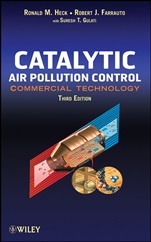
Catalytic Air Pollution Control: Commercial Technology
ISBN 9780470275030
Autor: Ronald M. Heck, Robert J. Farrauto, Suresh T. Gulati
Wydawca: Wiley
Dostępność: 3-6 tygodni
Cena: 643,65 zł
Przed złożeniem zamówienia prosimy o kontakt mailowy celem potwierdzenia ceny.
ISBN13: |
9780470275030 |
ISBN10: |
0470275030 |
Autor: |
Ronald M. Heck, Robert J. Farrauto, Suresh T. Gulati |
Oprawa: |
Hardback |
Rok Wydania: |
2009-03-20 |
Numer Wydania: |
3rd Edition |
Ilość stron: |
544 |
Wymiary: |
241x163 |
Tematy: |
PN |
The chemistry of superacids deals with acid systems stronger than conventional strong mineral Bronsted acids such as sulfuric acid and Lewis acids such as aluminum trichloride. The first edition of Superacid Chemistry, published in 1985, quickly became the definitive work in the field. Since that time, however, the field has grown exponentially, with the development of new superacid systems and innovative superacid applications. This Second Edition of Superacid Chemistry has been published to bring the acclaimed book fully up to date with all these new developments.
Superacid Chemistry features a team of pioneering authors in the field headed by George Olah, the 1994 Nobel Laureate in Chemistry. The book covers:General aspects of superacid chemistry, including types of superacids and experimental techniques for acidity measurementsSuperacid systems, including primary, binary, ternary, and solid superacidsCarbocations in superacids, including methods of generating carbocations in superacids and methods and techniques in the study of carbocationsHeterocations in superacids, including onium ions, enium ions, homo–,and heteropolyatomic cations, and cations of group 6–12 elementsSuperacid catalyzed reactions, including conversion of saturated hydrocarbons and alkylation of aromatic hydrocarbons
Extensive references are provided throughout the book to guide readers to the primary literature for further in–depth investigations. In short, this Second Edition meets the growing need for current information on superacid chemistry among researchers in inorganic, organic, and physical chemistry in order to support and advance their research.
Spis treści:
Preface.
ACKNOWLEDGEMENTS.
ACKNOWLEDGEMENTS, FIRST EDITION.
ACKNOWLEDGEMENTS, SECOND EDITION.
I. FUNDAMENTALS.
1. Catalyst Fundamentals.
1.1 Introduction.
1.2 Catalyzed Verses N
on–Catalyzed Reactions.
1.3 Catalytic Components.
1.4 Selectivity.
1.5 Promoters and their Effect on Activity and Selectivity.
1.6 Dispersed Model for Catalytic Component on Carrier: Pt on Al2O3.
1.7 Chemical and Physical Steps in Heterogeneous Catalysis.
1.8 Practical Significance of knowing the Rate–Limiting Step.
2. The Preparation of Catalytic Materials: Carriers, Active Components, and Monolithic Substrates.
2.1 Introduction.
2.2 Carriers.
2.3 Making the Finished Catalyst.
2.4 Nomenclature for Dispersed Catalysts.
2.5 Monolithic Materials as Catalyst Substrates.
2.6 Preparing Monolithic Catalysts.
2.7 Catalytic Monoliths.
2.8 Catalyzed Monoliths Nomenclature.
2.9 Precious Metal Recovery from Monolithic Catalysts.
3. Catalyst Characterization.
3.1 Introduction.
3.2 Physical Properties of Catalysts.
3.3 Chemical and Physical Morphology Structures of Catalytic Materials .
3.4 Techniques for Fundamental Studies.
4. Monolithic Reactors for Environmental Catalysis.
4.1 Introduction.
4.2 Chemical Kinetic Control.
4.3 The Arrhenius Equation and Reaction Parameters.
4.4 Bulk Mass Transfer.
4.5 Reactor Bed Pressure Drop.
4.6 Summary.
5. Catalyst Deactivation.
5.1 Introduction.
5.2 Thermally Induced Deactivation.
5.3 Poisoning.
5.4 Washcoat Loss.
5.5 General Comments on Deactivation Diagnostics in Monolithic Catalysts for Environmental Applications.
II. MOBILE SOURCE.
6. Automotive Catalyst.
6.1 Emissions and Regulations.
6.2 The Catalytic Reactions for Pollution Abatement.
6.3 The Physical Structure of the Catalytic Converter.
6.4 First–Generation Converters: Oxidation Catalyst (1976–1979).
6.5 NOx, CO and HC Reduction: The Second Generation: The Three Way Catalyst (1979 – 1986).
6.6 Vehicle Test Procedures (U.S., European and Japanese).
6.7 NOx
, CO and HC Reduction: The Third Generation (1986 – 1992).
6.8 Palladium TWC Catalyst: The Fourth Generation (Mid–1990s).
6.9 Low Emission Catalyst Technologies.
6.10 Modern TWC Technologies for the 2000s.
6.11 Towards a Zero–Emission Stoichiometric Spark–Ignit Vehicle.
6.12 Engineered Catalyst Design.
6.13 Lean–Burn Spark–Ignited Gasoline Engines.
7. Automotive Substrates.
7.1 Introduction to Ceramic Substrates.
7.2 Requirements for Substrates.
7.3 Design Sizing of Substrates.
7.4 Physical Properties of Substrates.
7.5 Physical Durability.
7.6 Advances in Substrates.
7.7 Commercial Applications.
7.8 Summary.
8. Diesel Engine Emissions.
8.1 Introduction.
8.2 Worldwide Diesel Emission Standards.
8.3 NOx–Particulate Tradeoff.
8.4 Analytical Procedures for Particulates.
8.5 Particulate Removal.
8.6 NOX Reduction Technologies.
8.7 2007 Commercial System Designs (PM Removal Only).
8.8 2010 Commercial System Approaches under Development (PM and NOx Removal).
8.9 Retrofit and Off–Highway.
8.10 Natural Gas Engines.
9. Diesel Catalyst Supports and Particulate Filters.
9.1 Introduction.
9.2 Health Effects of Diesel Particulate Emissions.
9.3 Diesel Oxidation Catalyst Supports.
9.4 Design/Sizing of Diesel Particulate Filter.
9.5 Regeneration Techniques.
9.6 Physical Properties and Durability.
9.7 Advances in Diesel Filters.
9.8 Applications.
9.9 Summary.
10. Ozone Abatement within Jet Aircraft.
10.1 Introduction.
10.2 Ozone Abatement.
10.3 Deactivation.
10.4 Analysis of In–Flight Samples.
10.5 New Technology.
III. STATIONARY SOURCES.
11. Volatile Organic Compounds.
11.1 Introduction.
11.2 Catalytic Incineration.
11.3 Halogenated Hydrocarbons.
11.4 Food Processing.
11.5 Wood Stoves.
11.6 Process Design.
11.7 De
activation.
11.8 Regeneration of Deactivated Catalysts.
12. Reduction of NOx.
12.1 Introduction.
12.2 Nonselective Catalytic Reduction of NOx.
12.3 Selective Catalytic Reduction of NOx.
12.4 Commercial Experience.
12.5 Nitrous Oxide (N2O).
12.6 Catalytically Supported Thermal Combustion.
13. Carbon Monoxide and Hydrocarbon Abatement from Gas Turbines.
13.1 Introduction.
13.2 Catalyst for CO Abatement.
13.3 Non–Methane Hydrocarbon (NMHC) Removal.
13.4 Oxidation of Reactive Hydrocarbons.
13.5 Oxidation of Unreactive Light Paraffins.
13.6 Catalyst Deactivation.
14. Small Engines.
14.1 Introduction.
14.2 Emissions.
14.3 EPA Regulations.
14.4 Catalyst for Handheld and Nonhandheld Engines.
14.5 Catalyst Durability.
IV. NEW AND EMERGING TECHNOLOGIES.
15. Ambient Air Cleanup.
15.1 Introduction.
15.2 Premair® Catalyst Systems.
15.3 Other Approaches.
16. Fuel Cells and Hydrogen Generation.
16.1 Introduction.
16.2 Low–Temperature PEM Fuel Cell Technology.
16.3 The Ideal Hydrogen Economy.
16.4 Conventional Hydrogen Generation.
16.5 Hydrogen Generation from Natural Gas for PEM Fuel Cells.
16.6 Other Fuel Cell Systems.
INDEX.
Nota biograficzna:
Ronald M. Heck, PHD, is President of RMH Consulting, where he specializes in consultation on environmental catalysis for auto, diesel, and stationary sources; general catalysis; fuel cells; reaction engineering; combustion technology; and chemical engineering. Previously, Dr. Heck was a Research Manager responsible for developing new catalyst technology for Engelhard Corporation′s worldwide customers in environmental catalysis.
Robert J. Farrauto, PHD, is a Research Fellow at BASF Catalysts and Adjunct Professor in the Earth and Environmental Engineering Department of Columbia University in the City of
Koszyk
Książek w koszyku: 0 szt.
Wartość zakupów: 0,00 zł
Informacje


Kontakt
Gambit
Centrum Oprogramowania
i Szkoleń Sp. z o.o.
Al. Pokoju 29b/22-24
31-564 Kraków
Siedziba Księgarni
ul. Kordylewskiego 1
31-542 Kraków
+48 12 410 5991
+48 12 410 5987
+48 12 410 5989
Subskrypcje
Administratorem danych osobowych jest firma Gambit COiS Sp. z o.o. Na podany adres będzie wysyłany wyłącznie biuletyn informacyjny.
Autoryzacja płatności

Informacje na temat autoryzacji płatności poprzez PayU.

© Copyright 2012: GAMBIT COiS Sp. z o.o. Wszelkie prawa zastrzeżone.
Projekt i wykonanie: Alchemia Studio Reklamy