


Wydawcy
Katalog tematyczny
- Archeologia (109)
- Ekonomia, finanse, business (13704)
- Filozofia (1445)
- Historia (3040)
- Języki i językoznawstwo (2356)
- Lifestyle, hobby i rozrywka (475)
- Medycyna (9704)
- Nauki humanistyczne (4)
- Nauki o Ziemi i środowisku (2638)
- Nauki ścisłe (20412)
- Nauki społeczne (8486)
- Nauki techniczne (13450)
- Prawo (1696)
- Publikacje informacyjne i interdyscyplinarne (1288)
- Religia i wierzenia (917)
- Technika komputerowa (4067)
- Zdrowie, relacje międzyludzkie i rozwój osobisty (657)





Informacje szczegółowe o książce
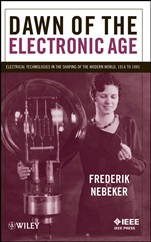
Dawn of the Electronic Age: Electrical Technologies in the Shaping of the Modern World, 1914 to 1945
ISBN 9780470260654
Autor: Frederik Nebeker
Wydawca: Wiley
Dostępność: 3-6 tygodni
Cena: 365,40 zł
Przed złożeniem zamówienia prosimy o kontakt mailowy celem potwierdzenia ceny.
ISBN13: |
9780470260654 |
ISBN10: |
0470260653 |
Autor: |
Frederik Nebeker |
Oprawa: |
Paperback |
Rok Wydania: |
2009-04-21 |
Ilość stron: |
552 |
Wymiary: |
234x156 |
Tematy: |
HB |
A comprehensive and fascinating account of electrical andelectronics history
Much of the infrastructure of today′s industrialized world arosein the period from the outbreak of World War I to the conclusion ofWorld War II. It was during these years that the capabilities oftraditional electrical engineering generators, powertransmission, motors, electric lighting and heating, homeappliances, and so on became ubiquitous. Even moreimportantly, it was during this time that a new type of electricalengineering electronics emerged. Because of itsapplications in communications (both wire–based and wireless),entertainment (notably radio, the phonograph, and sound movies),industry, science and medicine, and the military, the electronicsindustry became a major part of the economy.
Dawn of the Electronic Age?explores how this engineeringknowledge and its main applications developed in variousscientific, economic, and social contexts, and explains how eachwas profoundly affected by electrical technologies. It takes aninternational perspective and a narrative approach, unfolding thestory chronologically.
Though a scholarly study (with sources of information given inendnotes for engineers and historians of science and technology),the book is intended for the general public.?Ultimately, it tellsthe story of the development of a new realm of engineering and itswidespread applications during the remarkable and tragic period oftwo world wars and the decades in between.
Introduction.
1. The Great War and Wireless Communications.
1.1 Land–Bound Communications.
1.2 Communication Through the Ether.
1.4 The Art and Science of Radio.
2. Electrical Technologies in Total War.
2.1 Remote and Automatic Control.
2.2 Military Research and Development.
2.3 Mobilization for Total War.
3. Electrifi cation in the Interwar Period.
3.1 Lenin s Program of Development Through ElectricPower.
3.2 Generators, Power Lines, and Motors.
3.3 Power Engineering.
3.4 Technology Transfer to the Soviet Union.
3.5 Worldwide Dissemination of Technology.
3.6 Rural Electrifi cation.
4. The Jazz Age and Radio Broadcasting.
4.1 Radio in the Twenties.
4.2 The Establishment of Broadcasting in the United States.
4.3 The Establishment of Broadcasting in Other Countries.
4.4 Radio Engineering.
4.5 How Good is this Radio?
4.6 Radio s Golden Age.
5. Postwar Recovery and the Great Depression: ElectricalTechnologies in Industry and Commerce.
5.1 Electrifying the Factory.
5.2 Processing Information.
5.3 Electrifying Transportation.
5.4 Fostering Economic Growth.
6. Electrical Technologies and the Consumer Culture.
6.1 Electricity in the Home.
6.2 Mass Entertainment.
6.3 The Consumer Culture.
7. Communication Technologies in Democratic and TotalitarianCountries.
7.1 New Communication Technologies.
7.2 Telephone Technologies and Services.
7.3 Technology, Politics, and Governance.
8. Electrical Engineering in an Age of Science.
8.1 An Age of Science.
8.2 Measuring and Imaging Instruments.
8.3 Calculating Machines.
8.4 The Profession of Electrical Engineering.
9. World War II and Electrical Technology.
9.1 The World War Resumed.
9.2 Electrical Technology in Battle.
9.3 Control Systems and Computers.
9.4 The Battle of the Atlantic, Codebreaking, and Sonar.
10. Radar, the Weapon That Decided the War.
10.1 The Battle of Britain.
10.2 Radar Countermeasures.
10.3 The Proximity Fuse.
10.4 The Radar–Computer Combination.
10.5 Electronic Navigation.
10.6 Government–Industry–Academia Collaboration.
Conclusion: Dawn of the Electronic Age.
Notes on the Illustrations.
Sources.
Index.
Frederik Nebeker, PhD, is currently Senior Research Historian at the IEEE History Center, Rutgers, The State University of New Jersey.
?The volume provides a broad spectrum of nearly 700 (mostlysecondary) references and enough background material for dozens ofstudent papers.? ( CHOICE, October 2009)
"Many readers will appreciate the way in which Nebeker explainshow the technologies worked without using complicatedmathematics.... Throughout there are excellent quotes fromengineers, scientists and historians giving fantastic insight intotheir thoughts." (Engineering and Technology, June 2009)
"The Dawn of The Electronic Age is easily one of the mostinteresting books I have read in some time." (BlogCritics,June 2009)
Koszyk
Książek w koszyku: 0 szt.
Wartość zakupów: 0,00 zł
Informacje


Kontakt
Gambit
Centrum Oprogramowania
i Szkoleń Sp. z o.o.
Al. Pokoju 29b/22-24
31-564 Kraków
Siedziba Księgarni
ul. Kordylewskiego 1
31-542 Kraków
+48 12 410 5991
+48 12 410 5987
+48 12 410 5989
Subskrypcje
Administratorem danych osobowych jest firma Gambit COiS Sp. z o.o. Na podany adres będzie wysyłany wyłącznie biuletyn informacyjny.
Autoryzacja płatności

Informacje na temat autoryzacji płatności poprzez PayU.

© Copyright 2012: GAMBIT COiS Sp. z o.o. Wszelkie prawa zastrzeżone.
Projekt i wykonanie: Alchemia Studio Reklamy