


Wydawcy
Katalog tematyczny
- Archeologia (109)
- Ekonomia, finanse, business (13704)
- Filozofia (1445)
- Historia (3040)
- Języki i językoznawstwo (2356)
- Lifestyle, hobby i rozrywka (475)
- Medycyna (9704)
- Nauki humanistyczne (4)
- Nauki o Ziemi i środowisku (2638)
- Nauki ścisłe (20412)
- Astronomia (294)
- Biologia (5119)
- Chemia (6540)
- Chemia analityczna (361)
- Chemia fizyczna (346)
- Chemia nieorganiczna (137)
- Chemia organiczna (535)
- Krystalografia (27)
- Minerologia (46)
- Fizyka (3309)
- Matematyka (4574)
- Nauki ścisłe, ogólnie (503)
- Nauki społeczne (8486)
- Nauki techniczne (13450)
- Prawo (1696)
- Publikacje informacyjne i interdyscyplinarne (1288)
- Religia i wierzenia (917)
- Technika komputerowa (4067)
- Zdrowie, relacje międzyludzkie i rozwój osobisty (657)





Informacje szczegółowe o książce
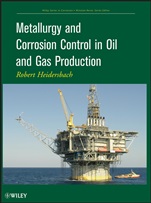
Metallurgy and Corrosion Control in Oil and Gas Production
ISBN 9780470248485
Autor: Robert Heidersbach
Wydawca: Wiley
Dostępność: 3-6 tygodni
Cena: 633,15 zł
Przed złożeniem zamówienia prosimy o kontakt mailowy celem potwierdzenia ceny.
ISBN13: |
9780470248485 |
ISBN10: |
0470248483 |
Autor: |
Robert Heidersbach |
Oprawa: |
Hardback |
Rok Wydania: |
2011-02-08 |
Ilość stron: |
296 |
Wymiary: |
282x223 |
Tematy: |
PN |
Expert guidance on the proper use of technology to assess, prevent, and reduce corrosion plaguing the oil industry
This practical guide for engineers and related professionals in the oil and gas production industries gives an insightful overview of why corrosion occurs in metals in drilling, producing wells, and pipelines; what responses are required when corrosion surfaces; and how the spread of corrosion can be greatly minimized by putting proper corrective measures in place.
Beginning with discussion of basic theoretical concepts associated with metallurgy and electro–chemistry, Metallurgy and Corrosion Control in Oil and Gas Production offers an all–encompassing perspective with useful lessons emphasizing the key roles of both the chemical and material aspects of corrosion. It teams reliable tactics with cutting–edge technologies to guide oil industries in formulating a battle plan to protect valuable equipment—from drilling rigs to the pipelines themselves—against the ferocious tenacity of ocean waters.
Dealing with subjects not taught in most formal classroom settings, this enlightening text:
Contains detailed photographs to illustrate descriptions in the text
Offers an introduction to corrosion for entry–level corrosion control specialists
Addresses corrosion technologies such as corrosion inhibitors and cathodic protection in greater detail than in any other currently available reference book
Provides guidance on the appropriate materials selection and corrosion control methods appropriate for use by oilfield engineers and managers
Explains what inspection and monitoring techniques can, and cannot, do to address corrosion and reliability issues
A significant and much–needed addition to an industry beset by technological and financial challenges, Metallurgy and Corrosion Control in Oil and Gas Production offers responsible solutions that oil
companies can apply immediately to repress corrosion—and turn a major concern into a manageable one.
Spis treści:
Preface.
1 Introduction to Oilfi eld Metallurgy and Corrosion Control.
Costs.
Safety.
Environmental Damage.
Corrosion Control.
References.
2 Chemistry of Corrosion.
Electrochemistry of Corrosion.
Electrochemical Reactions.
Electrolyte Conductivity.
Faraday′s Law of Electrolysis.
Electrode Potentials and Current.
Corrosion Rate Expressions.
pH.
Passivity.
Potential–pH (Pourbaix) Diagrams.
Summary.
References.
3 Corrosive Environments.
External Environments.
Atmospheric Corrosion.
Water as a Corrosive Environment.
Soils as Corrosive Environments.
Corrosion under Insulation.
Internal Environments.
Crude Oil.
Natural Gas.
Oxygen.
CO2.
H2S.
Organic Acids.
Scale.
Microbially Infl uenced Corrosion (MIC).
Mercury.
Hydrates.
Fluid Flow Effects on Corrosion.
Summary.
References.
4 Materials.
Metallurgy Fundamentals.
Crystal Structure.
Strengthening Methods.
Mechanical Properties.
Fracture.
Creep.
Thermal Expansion.
Forming Methods.
Wrought versus Cast Structures.
Welding.
Materials Specifi cations.
API.
AISI—The American Iron and Steel Institute.
ASTM International—formerly the American Society for Testing and Materials.
ASME.
SAE International.
UNS.
NACE—The Corrosion Society.
Other Organizations.
Use of Materials Specifi cations.
Carbon Steels, Cast Irons, and Low–Alloy Steels.
Classifi cations of Carbon Steel.
Strengthening Methods for Carbon Steels.
Heat Treatment of Carbon Steels.
Quenched and Tempered (Q&T) Steels.
Carbon Equivalents and Weldability.
Hard Spots.
Cleanliness of Steel.
Cast Irons.
CRAs.
Iron–Nickel Alloys.
Stainless Steel
s.
Nickel–Based Alloys.
Cobalt–Based Alloys.
Titanium Alloys.
Copper Alloys.
Aluminum Alloys.
Additional Considerations with CRAs.
Polymers, Elastomers, and Composites.
References.
5 Forms of Corrosion.
Introduction.
General Corrosion.
Galvanic Corrosion.
Galvanic Coupling of Two or More Metals.
Area Ratio.
Polarity Reversal.
Conductivity of the Electrolyte.
Control of Galvanic Corrosion.
Pitting Corrosion.
Occluded Cell Corrosion.
Pitting Corrosion Geometry and Stress Concentration.
Pitting Initiation.
Pitting Resistance Equivalent Numbers (PRENs).
Statistics.
Prevention of Pitting Corrosion.
Crevice Corrosion.
Alloy Selection.
Filiform Corrosion.
Intergranular Corrosion.
Stainless Steels.
Corrosion Parallel to Forming Directions.
Aluminum.
Other Alloys.
Dealloying.
Mechanism.
Selective Phase Attack.
Susceptible Alloys.
Control.
Erosion Corrosion.
Mechanism.
Velocity Effects.
Materials.
Cavitation.
Areas of Concern.
Control.
Environmentally Induced Cracking.
SCC.
HE and H2S–Related Cracking.
Hydrogen Attack.
Liquid Metal Embrittlement (LME).
Corrosion Fatigue.
Other Forms of Corrosion Important to Oilfi eld Operations.
Oxygen Attack.
Sweet Corrosion.
Sour Corrosion.
Mesa Corrosion.
Top–of–the–Line (TOL) Corrosion.
Wire Line Corrosion.
Additional Forms of Corrosion Found in Oil and Gas Operations.
Additional Comments.
References.
6 Corrosion Control.
Protective Coatings.
Paint Components.
Coating Systems.
Corrosion Protection by Paint Films.
Desirable Properties of Protective Coating Systems.
Developments in Coatings Technology.
Useful Publications.
Surface Preparation.
Purposes of Various Coatings.
Generic Binder Classifi cations.
Coatings Suitable for Various Service Environments or Applications.
Co
atings Inspection.
Areas of Concern and Inspection Concentration.
Linings, Wraps, Greases, and Waxes.
Coatings Failures.
Metallic Coatings.
Water Treatment and Corrosion Inhibition.
Oil Production Techniques.
Water Analysis.
Gas Stripping and Vacuum Deaeration.
Corrosion Inhibitors.
Cathodic Protection.
How Cathodic Protection Works.
Types of Cathodic Protection.
Cathodic Protection Criteria.
Inspection and Monitoring.
Cathodic Protection Design Procedures.
Additional Topics Related to Cathodic Protection.
Summary of Cathodic Protection.
Standards for Cathodic Protection.
References.
7 Inspection, Monitoring, and Testing.
Inspection.
Visual Inspection (VI).
Penetrant Testing (PT).
Magnetic Particle Inspection (MT).
Ultrasonic Inspection (UT).
Radiography (RT).
Eddy Current.
Positive Material Identifi cation (PMI).
Thermography.
Additional Remarks about Inspection.
Monitoring.
Monitoring Probes.
Mass–Loss Coupons and Probes.
Electrical Resistance (ER) Probes.
Electrochemical Corrosion Rate Monitoring Techniques.
Hydrogen Probes.
Sand Monitoring.
Fluid Analysis.
Bacterial Growth Monitoring.
Additional Comments on Monitoring.
Testing.
Hydrostatic Testing.
Laboratory and Field Trial Testing.
References.
8 Oilfi eld Equipment.
Drilling and Exploration.
Wireline.
Coiled Tubing.
Wells and Wellhead Equipment.
History of Production.
Downhole Corrosive Environments.
Tubing, Casing, and Capillary Tubing.
Inhibitors for Tubing and Casing in Production Wells.
Internally Coated Tubing for Oilfi eld Wells.
Material and Corrosion Concerns with Artifi cial Lift Systems.
Wellheads, Christmas Trees, and Related Equipment.
Facilities and Surface Equipment.
Piping.
Storage Tanks.
Heat Exchangers.
Other Equipment.
Bolting and Fasteners.
Flares.
Corrosion under Insulation.
Pip
elines and Flowlines.
Pipeline Problems and Failures.
Forms of Corrosion Important in Pipelines and Flowlines.
Repairs and Derating Due to Corrosion.
Casings for Road and Railway Crossings.
Pipeline Materials.
Hydrotesting.
External Corrosion.
Internal Corrosion.
Inspection and Condition Assessment.
References.
Index.
Nota biograficzna:
Robert Heidersbach, PhD, is the President of Dr. Rust, Inc., a consulting firm that specializes in corrosion, metallurgy, and materials consulting for a variety of international clients, including oil and gas production, military hardware, construction, litigation, and failure analysis. He was previously a faculty member in ocean engineering at the University of Rhode Island, chemical engineering at Oklahoma State, and metallurgy and materials engineering at California Polytechnic State University.
Okładka tylna:
Expert guidance on the proper use of technology to assess, prevent, and reduce corrosion plaguing the oil industry
This practical guide for engineers and related professionals in the oil and gas production industries gives an insightful overview of why corrosion occurs in metals in drilling, producing wells, and pipelines; what responses are required when corrosion surfaces; and how the spread of corrosion can be greatly minimized by putting proper corrective measures in place.
Beginning with discussion of basic theoretical concepts associated with metallurgy and electro–chemistry, Metallurgy and Corrosion Control in Oil and Gas Production offers an all–encompassing perspective with useful lessons emphasizing the key roles of both the chemical and material aspects of corrosion. It teams reliable tactics with cutting–edge technologies to guide oil industries in formulating a battle plan to protect valuable equipment—from drilling rigs to the pipelines themselves—against the ferocious tenacit
y of ocean waters.
Dealing with subjects not taught in most formal classroom settings, this enlightening text:
Contains detailed photographs to illustrate descriptions in the text
Offers an introduction to corrosion for entry–level corrosion control specialists
Addresses corrosion technologies such as corrosion inhibitors and cathodic protection in greater detail than in any other currently available reference book
Provides guidance on the appropriate materials selection and corrosion control methods appropriate for use by oilfield engineers and managers
Explains what inspection and monitoring techniques can, and cannot, do to address corrosion and reliability issues
A significant and much–needed addition to an industry beset by technological and financial challenges, Metallurgy and Corrosion Control in Oil and Gas Production offers responsible solutions that oil companies can apply immediately to repress corrosion—and turn a major concern into a manageable one.
Koszyk
Książek w koszyku: 0 szt.
Wartość zakupów: 0,00 zł
Informacje


Kontakt
Gambit
Centrum Oprogramowania
i Szkoleń Sp. z o.o.
Al. Pokoju 29b/22-24
31-564 Kraków
Siedziba Księgarni
ul. Kordylewskiego 1
31-542 Kraków
+48 12 410 5991
+48 12 410 5987
+48 12 410 5989
Subskrypcje
Administratorem danych osobowych jest firma Gambit COiS Sp. z o.o. Na podany adres będzie wysyłany wyłącznie biuletyn informacyjny.
Autoryzacja płatności

Informacje na temat autoryzacji płatności poprzez PayU.

© Copyright 2012: GAMBIT COiS Sp. z o.o. Wszelkie prawa zastrzeżone.
Projekt i wykonanie: Alchemia Studio Reklamy