


Wydawcy
Katalog tematyczny
- Archeologia (109)
- Ekonomia, finanse, business (13704)
- Filozofia (1445)
- Historia (3040)
- Języki i językoznawstwo (2356)
- Lifestyle, hobby i rozrywka (475)
- Medycyna (9704)
- Nauki humanistyczne (4)
- Nauki o Ziemi i środowisku (2638)
- Nauki ścisłe (20412)
- Nauki społeczne (8486)
- Edukacja (229)
- Kryminologia, opieka spełeczna (284)
- Obronność (10)
- Polityka (1389)
- Psychologia (777)
- Socjologia (410)
- Społeczeństwo i kultura (187)
- Nauki techniczne (13450)
- Prawo (1696)
- Publikacje informacyjne i interdyscyplinarne (1288)
- Religia i wierzenia (917)
- Technika komputerowa (4067)
- Zdrowie, relacje międzyludzkie i rozwój osobisty (657)





Informacje szczegółowe o książce
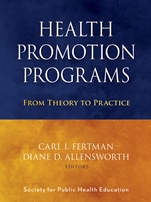
Health Promotion Programs: From Theory to Practice
ISBN 9780470241554
Autor: Carl I. Fertman, Diane D. Allensworth, Society for Public Health Education (SOPHE)
Wydawca: Wiley
Dostępność: 3-6 tygodni
Cena: 428,40 zł
Przed złożeniem zamówienia prosimy o kontakt mailowy celem potwierdzenia ceny.
ISBN13: |
9780470241554 |
ISBN10: |
0470241551 |
Autor: |
Carl I. Fertman, Diane D. Allensworth, Society for Public Health Education (SOPHE) |
Oprawa: |
Paperback |
Rok Wydania: |
2010-04-28 |
Ilość stron: |
480 |
Wymiary: |
233x180 |
Tematy: |
JC |
Health Promotion Programs introduces the theory of health promotion and presents an overview of current best practices from a wide variety of settings that include schools, health care organizations, workplace, and community. The 43 contributors to Health Promotion Programs focus on students and professionals interested in planning, implementing, and evaluating programs that promote health equity. In addition to the focus on best practices, each chapter contains information on:
Identifying health promotion programs
Eliminating health disparities
Defining and applying health promotion theories and models
Assessing the needs of program participants
Creating and supporting evidence–based programs
Implementing health promotion programs: Tools, program staff, and budgets
Advocacy
Communicating health information effectively
Developing and increasing program funding
Evaluating, improving, and sustaining health promotion programs
Health promotion challenges and opportunities
Health promotion resources and career links
"The authors have clearly connected the dots among planning, theory, evaluation, health disparity, and advocacy, and have created a user–friendly toolbox for health promotion empowerment."—Ronald L. Braithwaite, PhD, professor, Morehouse School of Medicine, Departments of Community Health and Preventive Medicine, Family Medicine, and Psychiatry
"The most comprehensive program planning text to date, this book examines all facets of planning and implementation across four key work environments where health educators function."—Mal Goldsmith, PhD, CHES, professor and coordinator of Health Education, Southern Illinois University, Edwardsville
"Health Promotion Programs . . . . explores the thinking of some of our field′s leaders and confirms its well–deserved plac
e in the field and in our personal collections."—Susan M. Radius, PhD, CHES, professor and program director, Health Science Department, Towson University
Spis treści:
Figures, Tables, and Exhibits.
Preface.
The Contributors.
SOPHE.
PART ONE: FOUNDATIONS OF HEALTH PROMOTION PROGRAMS.
1. What Are Health Promotion Programs? (Carl I. Fertman, Diane D. Allensworth, M. Elaine Auld).
Health, Health Promotion, and Health Promotion Programs.
Historical Context for Health Promotion.
Healthy People: A National Public–Private Partnership to Promote Health.
Health Education and Health Promotion.
Settings for Health Promotion Programs.
Stakeholders in Health Promotion Programs.
2. Health Promotion Programs Designed to Eliminate Health Disparities (Francisco Soto Mas, Diane D. Allensworth, Camara Phyllis Jones).
Population Groups and Health Disparities.
Understanding Racial and Ethnic Differences in Health.
Four Strategies to Eliminate Health Disparities Among Minorities.
3. Theory in Health Promotion Programs (Leonard Jack Jr., Melissa Grim, Tyra Toston, Sara Lynch, Carlen McLin).
Theory in Health Promotion Programs.
Foundational Theories: Intrapersonal Level.
Foundational Theories: Interpersonal Level.
Foundational Theories: Population Level.
Models for Developing a Health Promotion Program.
Using Health Theories and Models.
PART TWO: PLANNING HEALTH PROMOTION PROGRAMS.
4. Assessing the Needs of a Target Population (James H. Price, Joseph A. Dake, Britney Ward).
Defining a Needs Assessment.
Conducting a Health Needs Assessment.
Promoting a Needs Assessment.
Using Primary Data Methods and Tools.
Using Secondary Data Methods and Tools.
Reporting and Sharing the Findings.
5. Making Decisions to Create and Support a Program (W. William Chen, Jiunn–Jye Sheu, Huey–Shys Chen).
Identifying a Mission
Statement, Goals, and Objectives.
Writing Program Objectives.
Deciding on Program Interventions.
Selecting Health Promotion Materials.
Using Evidence–Based Interventions.
Developing Effective Policies and Procedures.
Transitioning to Program Implementation.
PART THREE: IMPLEMENTING HEALTH PROMOTION PROGRAMS.
6. Implementation Tools, Program Staff, and Budgets (Jean M. Breny Bontempi, Michael C. Fagen, Kathleen M. Roe).
From Program Planning to Action Planning.
Preparing a Logic Model.
Using a Gantt Chart to Guide Implementation.
Planning for Implementation Challenges.
Hiring and Managing High–Quality Program Staff.
Budgeting and Fiscal Management.
7. Advocacy (Regina A. Galer–Unti, Kelly Bishop Alley, Regina McCoy Pulliam).
Creating an Advocacy Agenda for a Program.
Advocacy as a Professional Responsibility.
Examples of Successful Health Policy Advocacy
Becoming Fluent in the Language of Advocacy.
Forming Alliances and Partnerships for Advocacy.
Advocacy Methods.
Advocacy and Technology.
8. Communicating Health Information Effectively (Neyal J. Ammary–Risch, Allison Zambon, Kelli McCormack Brown).
Communication in Health Promotion Programs.
Developing a Communication Plan for a Site.
Developing and Pretesting Concepts, Messages, and Materials.
9. Developing and Increasing Program Funding (Carl I. Fertman, Karen A. Spiller, Angela D. Mickalide).
Sources of Program Funding.
Funding Varies by Target Population and Setting.
Writing a Grant Proposal.
Maintaining Relationships with Funders.
Fundraising.
Working with Board Members.
PART FOUR: EVALUATING AND SUSTAINING HEALTH PROMOTION PROGRAMS.
10. Evaluating and Improving a Health Promotion Program (Daniel Perales, Andy Fourney, Barbara MkNelly, Edward Mamary).
Program Evaluation Definition, Types, and Terms.
Evaluation Frameworks.
Eval
uation Designs.
Data Collection and Analysis.
Evaluation Reports.
Evaluation and Program Design.
Implementing an Evaluation.
11. Leadership for Change and Sustainability (David A. Sleet, Sara L. Cole).
Catalyzing and Mastering Change.
Engaging Participants and Building Support.
Ensuring Competence Through Credentialing.
Enhancing Program Impact and Sustainability.
PART FIVE: HEALTH PROMOTION PROGRAMS IN DIVERSE SETTINGS.
12. Promoting Health in Schools and Universities (Marlene K. Tappe, Diane D. Allensworth, Jim Grizzell).
Rationale for Promoting Health in Schools and Universities.
Evolving Role of Promoting Health in Schools and Universities.
Current Role of Promoting Health in Schools and Universities
Resources and Tools.
Challenges.
Career Opportunities.
13. Patient–Focused Health Promotion Programs in Health Care Organizations (Louise Villejo, Cezanne Garcia, Katherine Crosson).
Evolving Role of Programs in Health Care Organizations.
Effective Programs in Health Care Organizations.
Resources and Tools.
Challenges.
Career Opportunities.
14. Health Promotion Programs in Workplace Settings (Laura Linnan, Kimberly L. Peabody, Jennifer Wieland).
Brief History of Work Site Health Promotion: 1970–Present.
Resources and Tools.
Challenges.
Career Opportunities.
15. Promoting Community Health: Local Health Departments and Community Health Organizations (Michael T. Hatcher, Diane D. Allensworth, Frances D. Butterfoss).
Brief History of Local Health Organizations.
Local Health Department Services.
Community Health Organization Services.
Resources and Tools.
Challenges.
Career Opportunities.
Glossary.
Index.
Nota biograficzna:
Carl I. Fertman, PhD, CHES, is associate professor in Health and Physical Activity and executive director of the Maximizing Adolescent Potentials (MAPS) Program, both in the
School of Education at the University of Pittsburgh. He is the author of Youth Leadership from Jossey–Bass.
Diane D. Allensworth, PhD, is professor emeritus, College of Education, Kent State University.
Society for Public Health Education (SOPHE) is the leading international professional association for health education professionals, faculty, and students. Founded in 1950, SOPHE is the only independent, professional organization devoted exclusively to health education and health promotion in all settings.
Okładka tylna:
Health Promotion Programs introduces the theory of health promotion and presents an overview of current best practices from a wide variety of settings that include schools, health care organizations, workplace, and community. The 43 contributors to Health Promotion Programs focus on students and professionals interested in planning, implementing, and evaluating programs that promote health equity. In addition to the focus on best practices, each chapter contains information on:
Identifying health promotion programs
Eliminating health disparities
Defining and applying health promotion theories and models
Assessing the needs of program participants
Creating and supporting evidence–based programs
Implementing health promotion programs: Tools, program staff, and budgets
Advocacy
Communicating health information effectively
Developing and increasing program funding
Evaluating, improving, and sustaining health promotion programs
Health promotion challenges and opportunities
Health promotion resources and career links
"The authors have clearly connected the dots among planning, theory, evaluation, health disparity, and advocacy, and have created a user–friendly toolbox for health promotion empowerment."—Ronald L. Braithwaite, PhD, professor, More
house School of Medicine, Departments of Community Health and Preventive Medicine, Family Medicine, and Psychiatry
"The most comprehensive program planning text to date, this book examines all facets of planning and implementation across four key work environments where health educators function."—Mal Goldsmith, PhD, CHES, professor and coordinator of Health Education, Southern Illinois University, Edwardsville
"Health Promotion Programs . . . . explores the thinking of some of our field′s leaders and confirms its well–deserved place in the field and in our personal collections."—Susan M. Radius, PhD, CHES, professor and program director, Health Science Department, Towson University
Koszyk
Książek w koszyku: 0 szt.
Wartość zakupów: 0,00 zł
Informacje


Kontakt
Gambit
Centrum Oprogramowania
i Szkoleń Sp. z o.o.
Al. Pokoju 29b/22-24
31-564 Kraków
Siedziba Księgarni
ul. Kordylewskiego 1
31-542 Kraków
+48 12 410 5991
+48 12 410 5987
+48 12 410 5989
Subskrypcje
Administratorem danych osobowych jest firma Gambit COiS Sp. z o.o. Na podany adres będzie wysyłany wyłącznie biuletyn informacyjny.
Autoryzacja płatności

Informacje na temat autoryzacji płatności poprzez PayU.

© Copyright 2012: GAMBIT COiS Sp. z o.o. Wszelkie prawa zastrzeżone.
Projekt i wykonanie: Alchemia Studio Reklamy