


Wydawcy
Katalog tematyczny
- Archeologia (109)
- Ekonomia, finanse, business (13704)
- Filozofia (1445)
- Historia (3040)
- Języki i językoznawstwo (2356)
- Lifestyle, hobby i rozrywka (475)
- Medycyna (9704)
- Nauki humanistyczne (4)
- Nauki o Ziemi i środowisku (2638)
- Nauki ścisłe (20412)
- Nauki społeczne (8486)
- Nauki techniczne (13450)
- Prawo (1696)
- Publikacje informacyjne i interdyscyplinarne (1288)
- Religia i wierzenia (917)
- Technika komputerowa (4067)
- Zdrowie, relacje międzyludzkie i rozwój osobisty (657)





Informacje szczegółowe o książce
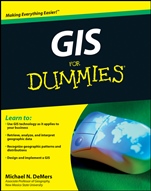
GIS For Dummies
ISBN 9780470236826
Autor: Michael N. DeMers
Wydawca: Wiley
Dostępność: 3-6 tygodni
Cena: 162,75 zł
Przed złożeniem zamówienia prosimy o kontakt mailowy celem potwierdzenia ceny.
ISBN13: |
9780470236826 |
ISBN10: |
0470236825 |
Autor: |
Michael N. DeMers |
Oprawa: |
Paperback |
Rok Wydania: |
2009-02-13 |
Ilość stron: |
384 |
Wymiary: |
235x193 |
Tematy: |
RG |
Curious about GIS?
Organizing a GIS?
Here′s the book you need!
Geographic information system, or GIS, is a powerful technology that has been called "geography on steroids." This book contains what you need to know on mapping terminology and digital mapping, how to locate geographic features and analyze their patterns, and how to generate travel directions, customer locations lists, and much more with GIS.
GIS takes a village — know all the hardware and software necessary to collect, analyze, and manipulate GIS data
Just for map mavens — explore the difference between 2D and 3D maps, create a map, or manage multiple maps
What the data mean — analyze patterns that appear in maps and interpret the results
Think spatially — recognize how spatial factors relate to geographic data
On the grid — define and locate geographic objects on the grid
The earth is not flat — accurately portray geographic features with map projections
Technological duct tape — discover the many uses of GIS for business, the military, city planning, emergency services, land management, and more
Design a GIS — determine what your organization needs, do appropriate analyses, and plan your system
Open the book and find:
How to get paper maps into your computer
Different ways to measure distance
How to organize your spatial data
What raster and vector mean to a cartographer
How to choose a GIS software vendor
How GIS can help you determine appropriate land use
Dozens of applications for GIS queries and analyses
How to create animated GIS output
Spis treści:
Introduction.
Part I: GIS: Geography on Steroids.
Chapter 1: Seeing the Scope of GIS.
Chapter 2: Recognizing How Maps Show Information.
Ch
apter 3: Reading, Analyzing, and Interpreting Maps.
Part II: Geography Goes Digital.
Chapter 4: Creating a Conceptual Model.
Chapter 5: Understanding the GIS Data Models.
Chapter 6: Keeping Track of Data Descriptions.
Chapter 7: Managing Multiple Maps.
Chapter 8: Gathering and Digitizing Geographic Data.
Part III: Retrieving, Counting, and Characterizing Geography.
Chapter 9: Finding Information in Raster Systems.
Chapter 10: Finding Features in Vector Systems.
Chapter 11: Searching for Geographic Objects, Distributions, and Groups.
Part IV: Analyzing Geographic Patterns.
Chapter 12: Measuring Distance.
Chapter 13: Working with Statistical Surfaces.
Chapter 14: Exploring Topographical Surfaces.
Chapter 15: Working with Networks.
Chapter 16: Comparing Multiple Maps.
Chapter 17: Map Algebra and Model Building.
Part V: GIS Output and Application.
Chapter 18: Producing Cartographic Output.
Chapter 19: Generating Non–Cartographic Output.
Chapter 20: GIS in Organizations.
Part VI: The Part of Tens.
Chapter 21: Ten GIS Software Vendors.
Chapter 22: Ten Questions to Ask Potential Vendors.
Chapter 23: Ten GIS Data Sources.
Index.
Nota biograficzna:
Michael N. DeMers is an Associate Professor of Geography with more than 25 years of GIS experience. He is also CEO of DeMers Geographics, a provider of educational resources for GIS students and educators.
Okładka tylna:
Curious about GIS?
Organizing a GIS?
Here′s the book you need!
Geographic information system, or GIS, is a powerful technology that has been called "geography on steroids." This book contains what you need to know on mapping terminology and digital mapping, how to locate geographic features and analyze their patterns, and how to generate travel directions, customer locations lists, and much more with GIS.
GIS takes a village
— know all the hardware and software necessary to collect, analyze, and manipulate GIS data
Just for map mavens — explore the difference between 2D and 3D maps, create a map, or manage multiple maps
What the data mean — analyze patterns that appear in maps and interpret the results
Think spatially — recognize how spatial factors relate to geographic data
On the grid — define and locate geographic objects on the grid
The earth is not flat — accurately portray geographic features with map projections
Technological duct tape — discover the many uses of GIS for business, the military, city planning, emergency services, land management, and more
Design a GIS — determine what your organization needs, do appropriate analyses, and plan your system
Open the book and find:
How to get paper maps into your computer
Different ways to measure distance
How to organize your spatial data
What raster and vector mean to a cartographer
How to choose a GIS software vendor
How GIS can help you determine appropriate land use
Dozens of applications for GIS queries and analyses
How to create animated GIS output
Koszyk
Książek w koszyku: 0 szt.
Wartość zakupów: 0,00 zł
Informacje


Kontakt
Gambit
Centrum Oprogramowania
i Szkoleń Sp. z o.o.
Al. Pokoju 29b/22-24
31-564 Kraków
Siedziba Księgarni
ul. Kordylewskiego 1
31-542 Kraków
+48 12 410 5991
+48 12 410 5987
+48 12 410 5989
Subskrypcje
Administratorem danych osobowych jest firma Gambit COiS Sp. z o.o. Na podany adres będzie wysyłany wyłącznie biuletyn informacyjny.
Autoryzacja płatności

Informacje na temat autoryzacji płatności poprzez PayU.

© Copyright 2012: GAMBIT COiS Sp. z o.o. Wszelkie prawa zastrzeżone.
Projekt i wykonanie: Alchemia Studio Reklamy