


Wydawcy
Katalog tematyczny
- Archeologia (109)
- Ekonomia, finanse, business (13704)
- Filozofia (1445)
- Historia (3040)
- Języki i językoznawstwo (2356)
- Lifestyle, hobby i rozrywka (475)
- Medycyna (9704)
- Nauki humanistyczne (4)
- Nauki o Ziemi i środowisku (2638)
- Nauki ścisłe (20412)
- Nauki społeczne (8486)
- Nauki techniczne (13450)
- Budownictwo lądowe (1045)
- Chemia przemysłowa (2258)
- Elektronika i telekomunikacja (3287)
- Energetyka (1122)
- Inne nauki stosowane (363)
- Inżynieria biochemiczna (507)
- Inżynieria transportu (232)
- Mechanika i materiały (3316)
- Nauka o środowisku (321)
- Rolnictwo (507)
- Technika, ogólnie (475)
- Prawo (1696)
- Publikacje informacyjne i interdyscyplinarne (1288)
- Religia i wierzenia (917)
- Technika komputerowa (4067)
- Zdrowie, relacje międzyludzkie i rozwój osobisty (657)





Informacje szczegółowe o książce
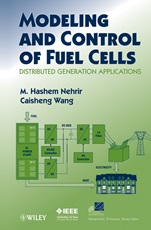
Modeling and Control of Fuel Cells: Distributed Generation Applications
ISBN 9780470233283
Autor: M. H. Nehrir, C. Wang
Wydawca: Wiley
Dostępność: 3-6 tygodni
Cena: 625,80 zł
Przed złożeniem zamówienia prosimy o kontakt mailowy celem potwierdzenia ceny.
ISBN13: |
9780470233283 |
ISBN10: |
0470233281 |
Autor: |
M. H. Nehrir, C. Wang |
Oprawa: |
Hardback |
Rok Wydania: |
2009-04-03 |
Ilość stron: |
312 |
Wymiary: |
245x165 |
Tematy: |
TJ |
The only book available on fuel cell modeling and control with distributed power generation applications
The emerging fuel cell (FC) technology is growing rapidly in its applications from small–scale portable electronics to large–scale power generation. This book gives students, engineers, and scientists a solid understanding of the FC dynamic modeling and controller design to adapt FCs to particular applications in distributed power generation.
The book begins with a fascinating introduction to the subject, including a brief history of the U.S. electric utility formation and restructuring. Next, it provides coverage of power deregulation and distributed generation (DG), DG types, fuel cell DGs, and the hydrogen economy. Building on that foundation, it covers:
Principle operations of fuel cells
Dynamic modeling and simulation of PEM and solid–oxide fuel cells
Principle operations and modeling of electrolyzers
Power electronic interfacing circuits for fuel cell applications
Control of grid–connected and stand–alone fuel cell power generation systems
Hybrid fuel cell–based energy system case studies
Present challenges and the future of fuel cells
MATLAB/SIMULINK–based models and their applications are available via a companion Web site. Modeling and Control of Fuel Cells is an excellent reference book for students and professionals in electrical, chemical, and mechanical engineering and scientists working in the FC area.
Spis treści:
Preface.
Acknowledgments.
1 Introduction.
1.1 Background: A Brief History of U.S. Electric Utility Formation and Restructuring.
1.2 Power Deregulation and Distributed Generation.
1.3 DG Types.
1.4 Fuel Cell DG.
1.5 The Hydrogen Economy.
2 Principles of Operation of Fuel Cells.
2.1 Introduction.
2.2 Chemical and Thermal Energy of an Element.
2.3 Fundamental
s of Thermodynamics.
2.4 Fundamentals of Electrochemical Processes.
2.5 Energy Balance in Chemical Reactions.
2.6 The Nernst Equation.
2.7 Fuel Cell Basics.
2.8 Types of Fuel Cells.
2.9 Fuel Cell Equivalent Circuit.
2.10 Capacitance of Double–Layer Charge Effect.
2.11 Summary.
3 Dynamic Modeling and Simulation of PEM Fuel Cells.
3.1 Introduction: Need for Fuel Cell Dynamic Models.
3.2 Nomenclature (PEMFC).
3.3 PEMFC Dynamic Model Development.
3.4 PEMFC Model Structure.
3.5 Equivalent Electrical Circuit Model of PEMFC.
3.6 PEMFC Model Validation.
4 Dynamic Modeling and Simulation of Solid Oxide Fuel Cells.
4.1 Introduction.
4.2 Nomenclature (SOFC).
4.3 SOFC Dynamic Model Development.
4.4 SOFC Dynamic Model Structure.
4.5 SOFC Model Response—Constant Fuel Flow Operation.
4.6 SOFC Model Response—Constant Fuel Utilization Operation.
5 Principles of Operation and Modeling of Electrolyzers.
5.1 Principle of Operation of Electrolyzers.
5.2 Dynamic Modeling of Electrolyzers.
5.3 Electrolyzer Model Implementation.
6 Power Electronic Interfacing Circuits for Fuel Cell Applications.
6.1 Introduction.
6.2 Overview of Basic Power Electronic Switches.
6.3 ac/dc Rectifiers.
6.4 dc to dc Converters.
6.5 Three–Phase dc/ac Inverters.
7 Control of Grid–Connected Fuel Cell Power Generation Systems.
7.1 Introduction.
7.2 Grid–Connected System Configuration.
7.3 Controller Designs for dc/dc Converters and the Inverter.
7.4 Simulation Results.
7.5 Summary.
8 Control of Stand–Alone Fuel Cell Power Generation Systems.
8.1 Introduction.
8.2 System Description and Control Strategy.
8.3 Load Transient Mitigation Control.
8.4 Simulation Results.
8.5 Summary.
9 Hybrid Fuel Cell Based Energy System Case Studies.
9.1 Introduction.
9.2 Hybrid Electronically Interfaced S
ystems.
9.3 Fuel Cells in Hybrid Combined Heat and Power Operation Mode.
9.4 Case Study I: A Hybrid Stand–Alone Wind–PV–FC System.
9.5 Case Study II: SOFC Efficiency Evaluation in Hybrid Operation Mode.
9.6 Summary.
10 Present Challenges and Future of Fuel Cells.
10.1 Introduction.
10.2 Fuel Cell System Operations.
10.3 Present Challenges and Opportunities.
10.4 U.S. Fuel Cell R&D Programs.
10.5 Future of Fuel Cells: A Summary and Authors Opinions.
References.
Appendix A Instruction for Running the PEMFC and SOFC Models and Their Distributed Generation Application Models.
Index.
Nota biograficzna:
M. HASHEM NEHRIR, PhD, is a Professor of Electrical and Computer Engineering at Montana State University–Bozeman. His primary areas of interest include modeling and control of power systems, alternative energy power generation systems, and applications of intelligent controls to power systems. In addition to this book, he is the author of two textbooks and the author or coauthor of numerous technical papers. He is a member of the IEEE PES Energy Development and Power Generation Committee and currently is Vice Chair of the IEEE PES Energy Development Subcommittee.
CAISHENG WANG, PhD, is Assistant Professor at Wayne State University in Detroit, Michigan. He has worked in the areas of both large power systems and distributed generation systems, including alternative energy sources. As a part of his doctoral research, during 2002–2006, Dr. Wang was involved in fuel cell modeling and control and design of hybrid alternative energy power generation sources, including fuel cells.
Okładka tylna:
The only book available on fuel cell modeling and control with distributed power generation applications
The emerging fuel cell (FC) technology is growing rapidly in its applications from small–scale portable electronics to large–
;scale power generation. This book gives students, engineers, and scientists a solid understanding of the FC dynamic modeling and controller design to adapt FCs to particular applications in distributed power generation.
The book begins with a fascinating introduction to the subject, including a brief history of the U.S. electric utility formation and restructuring. Next, it provides coverage of power deregulation and distributed generation (DG), DG types, fuel cell DGs, and the hydrogen economy. Building on that foundation, it covers:
Principle operations of fuel cells
Dynamic modeling and simulation of PEM and solid–oxide fuel cells
Principle operations and modeling of electrolyzers
Power electronic interfacing circuits for fuel cell applications
Control of grid–connected and stand–alone fuel cell power generation systems
Hybrid fuel cell–based energy system case studies
Present challenges and the future of fuel cells
MATLAB/SIMULINK–based models and their applications are available via a companion Web site. Modeling and Control of Fuel Cells is an excellent reference book for students and professionals in electrical, chemical, and mechanical engineering and scientists working in the FC area.
Koszyk
Książek w koszyku: 0 szt.
Wartość zakupów: 0,00 zł
Informacje


Kontakt
Gambit
Centrum Oprogramowania
i Szkoleń Sp. z o.o.
Al. Pokoju 29b/22-24
31-564 Kraków
Siedziba Księgarni
ul. Kordylewskiego 1
31-542 Kraków
+48 12 410 5991
+48 12 410 5987
+48 12 410 5989
Subskrypcje
Administratorem danych osobowych jest firma Gambit COiS Sp. z o.o. Na podany adres będzie wysyłany wyłącznie biuletyn informacyjny.
Autoryzacja płatności

Informacje na temat autoryzacji płatności poprzez PayU.

© Copyright 2012: GAMBIT COiS Sp. z o.o. Wszelkie prawa zastrzeżone.
Projekt i wykonanie: Alchemia Studio Reklamy