


Wydawcy
Katalog tematyczny
- Archeologia (109)
- Ekonomia, finanse, business (13704)
- Filozofia (1445)
- Historia (3040)
- Języki i językoznawstwo (2356)
- Lifestyle, hobby i rozrywka (475)
- Medycyna (9704)
- Chirurgia (272)
- Inne gałęzie medycyny (1871)
- Medycyna kliniczna (4187)
- Choroby wewnętrzne (514)
- Dermatologia (51)
- Diagnostyka medyczna (3)
- Endokrynologia (144)
- Gastroenterologia (27)
- Geriatria (50)
- Ginekologia i położnictwo (134)
- Hematologia (46)
- Hepatologia (10)
- Kardiologia (71)
- Laryngologia (12)
- Nefrologia (10)
- Neurologia (500)
- Oftalmologia (50)
- Pediatria (33)
- Pulmunologia (32)
- Reumatologia (14)
- Terapia genowa (1)
- Układ mięśniowo-szkieletowy (1)
- Urologia (14)
- Medycyna niekonwencjonalna (14)
- Medycyna przedkliniczna (269)
- Medycyna, ogólnie (1740)
- Medyczne służby pomocnicze (745)
- Studia medyczne (16)
- Weterynaria (548)
- Nauki humanistyczne (4)
- Nauki o Ziemi i środowisku (2638)
- Nauki ścisłe (20412)
- Nauki społeczne (8486)
- Nauki techniczne (13450)
- Prawo (1696)
- Publikacje informacyjne i interdyscyplinarne (1288)
- Religia i wierzenia (917)
- Technika komputerowa (4067)
- Zdrowie, relacje międzyludzkie i rozwój osobisty (657)





Informacje szczegółowe o książce
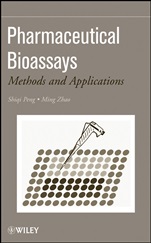
Pharmaceutical Bioassays: Methods and Applications
ISBN 9780470227602
Autor: Shiqi Peng, Ming Zhao
Wydawca: Wiley
Dostępność: 3-6 tygodni
Cena: 730,80 zł
Przed złożeniem zamówienia prosimy o kontakt mailowy celem potwierdzenia ceny.
ISBN13: |
9780470227602 |
ISBN10: |
0470227605 |
Autor: |
Shiqi Peng, Ming Zhao |
Oprawa: |
Hardback |
Rok Wydania: |
2009-11-24 |
Ilość stron: |
480 |
Wymiary: |
238x163 |
Tematy: |
MJ |
The definitive compendium of bioassay procedures and applications
A virtual encyclopedia of key bioassay protocols, this up–to–date, essential resource reviews the methods and applications of bioassays that quantify drug activity and evaluate the validity of pharmacological models.
Demonstrating the specific ways in which various pharmaceutical bioassays interpret the activity of drug molecules, the book covers the evaluation and screening of drug compounds in a wide spectrum of therapeutic categories.
Throughout, the authors use various models to link experimental observations with findings that clarify the effect of drug compounds on cellular biology and measure the pharmacological activity of chemical substances. This provides an important technological platform for successful drug research and clinical therapy, making Pharmaceutical Bioassays an ideal sourcebook for pharmacologists, pharmaceutical and medical researchers, analytical chemists, toxicologists, and students.
Just as a fundamental knowledge of pharmaceutical bioassays is vital to understanding how bioactive agents and new drugs are defined, discovered, and developed, so too is this indispensable reference, which:
Offers a complete reference on pharmaceutical bioassays and their specific applications in the assessment of therapies for cancer, Alzheimer′s, diabetes, epilepsy, inflammation, antimalarials, pharmacogenomics, and other major therapeutic areas
Covers bioassays that measure toxicity, including those for chemical toxicity and hepatoxicity—a particularly significant consideration in the development of safe and tolerable medications
Highlights clinically relevant methods, ideas, and techniques to support any pharmaceutical researcher
Suggests guidelines and systems to enhance communication between pharmacologists, chemists, and biologists
Provides an informative analysis of pharmaceutical bioassay technolo
gies and lab applications
Spis treści:
Preface.
Contributors.
1. Methods and Application of Anticancer Bioassays (Shiqi Peng).
1.1 MTT Assay for Six Carcinoma Cells.
1.2 Flow Cytometric Assay for Cell Apoptosis.
1.3 DNA Fragmentation Assay.
1.4 Bcl–XL/BH3 Interaction Assay.
1.5 Dissociation–Enhanced Lanthanide Fluoro–Immunoassay (DELFIA) .
1.6 Ishikawa Cell and Rat Assay for Detecting Antiestrogens.
1.7 ATP Assay for Eight Cells.
1.8 APh Activity Assay.
1.9 Tumor Endothelial Cell Tube Formation Assay.
1.10 Anti–Angiogenic Assay.
1.11 In Vivo Hollow Fiber Assay.
1.12 VX2 Rabbit Lung Assay.
1.13 Insulin–Like Growth Factor–I Induced Kinase Receptor Activation Assay.
1.14 Insulin–Like gD·trkA–Induced Kinase Receptor Activation Assay.
1.15 UV Spectra–Based Calf Thymus DNA Intercalation Assay.
1.16 Fluorescence Spectra–Based Calf Thymus DNA Intercalation Assay.
1.17 P–Glycoprotein Pump in MCF–7R Cells Assay.
1.18 P–Glycoprotein Pump–Related Efflux Carriers Assay.
1.19 [3H]Substrate Transport Inhibition Assay.
1.20 Lactate Dehydrogenase Release Assay.
1.21 Functional Assay of Mitochondrial P–gp .
1.22 Resistance Index Value Assay.
References and Notes.
2. Methods and Application Antiviral Assay (Chunying Cui, Shiqi Peng and Ming Zhao).
2.1 Nonradioactive HIV–1 RT Activity Assay.
2.2 Respiratory Syncytial Virus Assay.
2.3 Influenza Virus Types A and B Assay.
2.4 Nasal Exhaled NO Concentration Assay.
2.5 Nasal NOS2 mRNA Quantity Assay.
2.6 RT–PCR and Swine Assay for Anti–HEV Antibody.
2.7 HIV–1 Protease and Reverse Transcriptase Kinetic Assay.
2.8 Anti–HIV Assay.
2.9 Robust Antiviral Assays .
2.10 HIV/SIV Fusion Assay.
2.11 Rapid DNA Hybridization Assay.
2.12 Antiviral Screening Assay for
HepAD38 Cell Cultures.
2.13 Trak–CTM HCV Core Assay .
References and Notes.
3. Methods and Application of Antitubercular Assay (Chunying Cui, Shiqi Peng and Ming Zhao).
3.1 Mycobacterium tuberculosis Assay.
3.2 DNA Polymerase ß Lyase Assay.
3.3 Agar Dilution Assay for In Vitro Antitubercular Activity.
3.4 Microplate Alamar Blue Assay for In Vitro Antitubercular Activity.
3.5 Radiometric Respiratory Assay for In Vitro Antitubercular Activity.
3.6 Mycobacterium bovis BCG Inhibition Assay .
Reference and Notes.
4. Methods and Application of Thrombus Related Assays (Ming Zhao).
4.1 In Vitro Anti–Platelet Aggregation Assay.
4.2 Fibrinolytic Area Assay.
4.3 TXB2 and PGD2 TLC Assay.
4.4 TXA2 Synthase Activity Assay.
4.5 [Ca2+]i Measuring Assay.
4.6 Arachidonic Acid Liberation Assay.
4.7 Serotonin Secretion Assay.
4.8 cAMP Release Assay.
4.9 Ex Vivo Anti–Platelet Aggregation Assay for Patients.
4.10 ATP Release Assay.
4.11 PAF–Induced Mice Mortality Assay.
4.12 PGE2 and TXB2 ELISA.
4.13 Thrombelastograph Assay.
4.14 Image–Monitored FeCl3–Induced Thrombosis Assay for Rat.
4.15 Weight–Monitored FeCl3–Induced Thrombosis Assay for Rats.
4.16 Occlusion Time–Monitored FeCl3–Induced Thrombosis Assay for Pig.
4.17 Doppler Blood Flow–Monitored FeCl3–Induced Thrombosis Assay for Mouse .
4.18 Rat Groin Flap Assay.
4.19 Ferret Acute Thrombosis Assay.
4.20 Rat Acute Thrombosis Assay.
4.21 Arteriovermus Shunt Assay.
4.22 Plasma Clotting Time Assay.
4.23 Thromboembolic Photochemical Assay for Repeated Stroke in Mice.
4.24 Euglobulin Clot Lysis Assay.
4.25 Clot Formation and Lysis (CloFAL) Assay.
4.26 Fibrin Microplate Assay.
4.27 Fibrinolytic Activity Assay.
4.28 Fibr
inolysis Assay.
4.29 Thrombolytic Assay.
References and Notes.
5. Methods and Application of Anticoagulation Assays (Ming Zhao).
5.1 Ecarin Chromogenic Assay.
5.2 Anticoagulation Activity Assay in An In Vitro System.
5.3 Anticoagulation Activity Assays in An In Vivo System .
5.4 Rat Thrombosis Assay.
5.5 In Vivo Microvascular IVC Blood Flow Assay.
5.6 Owren PT Assay.
5.7 Rabbit Double–Balloon Injury Assay.
5.8 A Rapid Point–of–Care Assay for Enoxaparin.
5.9 Thromboplastin Clotting Assay.
5.10 Rat Assay for Reproducible Stasis–Induced Venous Thrombosis.
5.11 In Vivo ACT II/Ecarin Clotting Time Assay.
5.12 Ex Vivo and In Vivo Anticoagulation Assay.
5.13 Plasma–Based Ecarin Clotting Time Assay for r–Hirudin .
5.14 Protamine Titration for Heparin in Whole Blood.
5.15 Automated Assay Evaluating Response of Kaolin ACT to Heparin.
5.16 Platelet/Monocyte Interaction–Based PM Exposure Mouse Assay.
5.17 Mouse Tail–Bleeding Time Assay.
5.18 MRI Assay for Rabbit Atherosclerotic Lesions.
5.19 Spiral Computed Tomography Assay.
5.20 Duplex Ultrasound Assay.
5.21 Standard Hemochron Assay.
5.22 Platelet Serotonin Release Assay.
5.23 Activated Partial Thromboplastin Time Assay.
5.24 Rat Stroke Outcome Assay.
References and Notes.
6. Methods and Application of Blood Pressure Related Assay (Ming Zhao).
6.1 Human Plasma New Pressor Protein Assay.
6.2 Pulmonary Hypertension Assay.
6.3 Coronary Arteries Constriction Assay.
6.4 MRI and Brain Natriuretic Peptide Assays .
6.5 Competition Enzyme–Linked Immunosorbent Assay.
6.6 Right Ventricular Pressure Assay.
6.7 Plasma Nitrite/Nitrate Concentration Assay.
6.8 Adeno–Associated Virus Vector–Caused Rat Pulmonary Artery Pressure Assay.
6.9 Adeno–Associated Virus Vector–Caused Rat Protein and mRNA Assay.
6.10 N–Termina
l pro–Brain Natriuretic Peptide (N–T proBNP) Assay.
6.11 Middle Cerebral Artery Occlusion Assay.
6.12 Vascular Endothelial Growth Factor Level Assay.
6.13 Antispasmodic Agent In Vivo Action Assay.
6.14 Temperature Assay in Awake Subjects.
References and Notes.
7. Methods and Application of Assays Related to Parkinson′s Disease and Graves′ Disease (Shiqi Peng).
7.1 Flow Cytometric Assay for Cellular DNA Content and Caspase–3.
7.2 Swine Resuscitation Assay.
7.3 HTLV–tax1 or pMuLV–SV–nlslacZ Vectors Transfected Cell Assay.
7.4 Parkinsonian Rat Assay.
7.5 ELISA for Nerve Growth Factor Antigen.
7.6 Assay for ß–Nerve Growth Factor Levels in Cerebrospinai Fluid.
7.7 MDCK Scatter Assay.
7.8 Facial Nerve and Spinal Root Avulsions.
7.9 TRAb Assays.
7.10 Human Thyrotropin Receptor (hTSHR) Assay.
7.11 Soluble ICAM–1, TSAb and TBIAb Activity Assays.
7.12 Microarray Immunoassay for hTSHr Production.
7.13 Affinity Assay for [35S]GTPγS Binding to Gas/olf.
7.14 Tissue Segment Binding Assay for α1B–Adrenoceptor.
7.15 Membrane Binding Assay with Rat Cerebral Cortex for α1B–Adrenoceptor .
7.16 Whole Cell Binding Assay for α1B–Adrenoceptor.
7.17 Functional Assay for α1A,B–Adrenoceptor.
7.18 Rat Neuroprotective Assay.
7.19 GABA–Benzodiazepine Receptor Assay.
7.20 Forced Swimming and Tail Suspension Assays.
7.21 IGF–I Kinase Receptor Activation (KIRA) Assay.
7.22 gD.trkA Kinase Receptor Activation (KIRA) Assay.
7.23 gD.trk KIRA–ELISA.
7.24 Assays for Cannabinoid Receptors in Rat Cerebella or Mouse Brains .
References and Notes.
8. Methods and Application of Alzheimer’s Disease Assay (Shiqi Peng).
8.1 Assay for Oxidative Stress in Cerebral Cortex of AD Mice.
8.2 Reporter Assay for Primary Neuronal Cultur
es .
8.3 Electrophoretic Mobility Shift Assay (EMSA).
8.4 Binding Assays Using Aggregated Aß peptide in Solution.
8.5 Assay for Muscarinic Receptor 1 in Alzheimer’s Dementia Model .
8.6 ß–Secretase Activity Assay.
8.7 Aß Fibril Binding Assay.
8.8 TLC and Microplate Assays for Acetylcholinesterase Inhibitors.
8.9 Immunocapture Assay Measuring Specific Enzyme Activity of Neprilysin.
8.10 In Vivo AChE Inhibition Assay.
8.11 Single Particle Assay for Aß Aggregates.
8.12 Indirect Immunofluorescence Assay.
8.13 Mouse Behavioral Assays.
8.14 Center of Pressure (CoP) Assay in Mice.
8.15 Assay for Plasma Levels of DJ–1.
8.16 Membrane Filter Assay for Tau Aggregation.
8.17 Assays for Motor Neuron Degeneration.
8.18 HPLC Assay for Neuroprotective Agent in Mice Plasma.
8.19 Tissue Culture Assays for SOD1 Mutations.
8.20 Luciferase–Based Reporter Assay.
References and Notes.
9. Methods and Application of Antiosteoporosis Assay (Ming Zhao).
9.1 Rat Bone Mineral Density Assay.
9.2 Osteoblastic Cell Proliferation and Alkaline Phosphatase (ALP) Activity Assays.
9.3 Murine Osteoblastic MC3T3–E1 Cell Calcification and Van Kossa Assays.
9.4 Osteoclast Generation Assay for Male Senile Rat.
9.5 Bone Resorption and Recovery Related Assays.
9.6 Mouse Bone Mineral Density Assay.
9.7 PPAR–γ Competitor Assay.
9.8 Human Serum Estrogen Level Assay.
9.9 Luciferase Activity Assay.
9.10 IL–1ß and TNF–α Level Assay.
9.11 ER Binding and Receptor Activity Assays.
9.12 Fluorescent Estrogen Receptor Assay.
9.13 ELISA for Urinary Helical Peptide.
9.14 Urine Midmolecule Osteocalcin Assay.
9.15 BMD and Osteocalcin Assay.
References and Notes.
10. Methods and Application of Immunomodulating Assay (Shiqi Peng).
10.1 Rat Mast Cell Histamine–Release Assay.
10.2 Rabbit Aortic Force Assay.
1
0.3 Dopaminergic Cell Death–Based Neural Transplantation Assay.
10.4 Mast Cell Degranulation Assay.
10.5 Basophils Assay as Allergen.
10.6 RBL–2H3 Cell Desensitization Assay.
10.7 Migration Assay of Dendritic Cell from PBMCs.
10.8 Mouse EAE Induction Assay.
10.9 COSTIM Assay for DC/T–Cells.
10.10 Cytokine Assay for L–6, IL–10, IL–12, and TNF–α of DCs.
10.11 ELISPOT Assay for DC IFN–γ .
10.12 DC Function Assay for Evaluating Toll–like Receptor Function .
10.13 Migration Assay of Dendritic Cell from Bone Marrow of A/J Mice .
10.14 Lymphoid Organ Assay.
10.15 ELISA of IFN–γ from Human Myelomonocytic KG–1 Cells.
10.16 Human Whole Blood IFN– γ Assays .
10.17 Sheep Whole Blood IFN– γ Assays.
10.18 ELISPOT Assay for IFN– γ.
10.19 IFN–ß RG Assay.
10.20 Anti–rHuEPO NAb Assay.
10.21 Chloramphenicol Acetyltransferase Assay.
10.22 Chemotaxis Assay .
10.23 Fibroblast–Populated Microsphere Assay.
10.24 Fibroblast–Populated Concentric Microsphere Assay.
10.25 Radial Assay of Chemotaxis .
10.26 Antibody Forming Cell Assay.
10.27 Immunosuppressive Assay.
10.28 Cell–Based ELISA.
10.29 Large Animal Lung Transplantation Assay.
References and Notes.
11. Methods and Application of Anti–inflammatory Assays (Ming Zhao).
11.1 Adhesion Formation Assay.
11.2 Ligand Complex–Based Adhesion Assay.
11.3 Human Umbilical Vein Endothelial Cell Assay.
11.4 Pleurisy Mouse Assay.
11.5 Proliferation of PBMC Assay.
11.6 COX–1, COX–2 and 5–LOX Assay with [1–14C]Arachidonic Acid.
11.7 COX–1 and COX–2 Assay with Human Whole Blood.
11.8 o–Hydroxyleukotriene B4 Assay.
11.9 Leukocyte Rolling and Adherent of Leukocytes Assay.
11.10 CCR5 Receptor Binding Assay.
11.11 Tissue Bindi
ng Affinity Assay.
11.12 G93A–SOD1 Transgenic Mouse Assay.
11.13 MCP–1 Induced ERK1 and ERK2 Phosphorylation Assay.
11.14 LPS and IL–6 Induced ERK1 and ERK2 Phosphorylation Assay.
11.15 ELA4.NOB–1/CTLL Cell Assay .
11.16 FK506 Binding Protein 51 (FKBP51) mRNA Assay.
1.17 Xylene–Induced Ear Edema Assay.
References and Notes.
12. Methods and Application of Antioxidant Activity Assay (Shiqi Peng).
12.1 Blood and Plasma Total Antioxidant Capacity (TAC) Assay.
12.2 Ferric Reducing–Antioxidant Power (FRAP) Assay.
12.3 Human LDL Oxidation Assay.
12.4 DPPH Radical Cation Scavenging Assay.
12.5 ABTS+ Radical Cation Scavenging Assay.
12.6 Lipid Peroxidation Assay Using Rat Brain Tissue.
12.7 Flow–Through Chemiluminescence (FTCL) Assay.
12.8 Superoxide Radical Scavenging Assay.
12.9 Deoxyribose Assay for Hydroxyl Radical Scavenging Activity.
12.10 DNA Nicking Assay for Hydroxyl Radical Scavenging Activity.
12.11 Oxidative Lag–Time Assay.
12.12 TBARS and Electrophoresis Assay.
12.13 Reporter and Electrophoretic Mobility Shift Assay (EMSA).
12.14 [Ca2+]cyt Assay.
12.15 Quantitative Real–Time PCR Assay.
12.16 FT–IR Based Assay for Antioxidation Activity of Ionol and Piperidone.
12.17 HPLC Assay for Antioxidation Potential of Polyphenol.
12.18 ROS Production Assay.
12.19 Rabbit LDL Oxidation Assay.
12.20 ROS Scaverging Assays.
12.21 DNA Damage Assay.
12.22 Egg Yolk TBARS Assay.
12.23 Mouse Catalase (CAT) Assay.
12.24 Rat Tissue TBARS Assay.
12.25 Antioxidant Activity Assay for ß–Carotene/Linoleic Acid System.
12.26 Rat Brain Tissue NO Assay.
12.27 Rat Brain Antioxidative Enzyme Assay.
12.28 Rat Brain Hippocampi Protein Oxidation Assay.
References and Notes.
13. Methods and Application of Analgesic Assays (Ming Zhao).
13.1 Algogenic Activity Assay for Rat Ureter
Koszyk
Książek w koszyku: 0 szt.
Wartość zakupów: 0,00 zł
Informacje


Kontakt
Gambit
Centrum Oprogramowania
i Szkoleń Sp. z o.o.
Al. Pokoju 29b/22-24
31-564 Kraków
Siedziba Księgarni
ul. Kordylewskiego 1
31-542 Kraków
+48 12 410 5991
+48 12 410 5987
+48 12 410 5989
Subskrypcje
Administratorem danych osobowych jest firma Gambit COiS Sp. z o.o. Na podany adres będzie wysyłany wyłącznie biuletyn informacyjny.
Autoryzacja płatności

Informacje na temat autoryzacji płatności poprzez PayU.

© Copyright 2012: GAMBIT COiS Sp. z o.o. Wszelkie prawa zastrzeżone.
Projekt i wykonanie: Alchemia Studio Reklamy