


Wydawcy
Katalog tematyczny
- Archeologia (1)
- Ekonomia, finanse, business (698)
- Filozofia (20)
- Historia (57)
- Języki i językoznawstwo (4)
- Lifestyle, hobby i rozrywka (32)
- Medycyna (1025)
- Nauki humanistyczne (2)
- Nauki o Ziemi i środowisku (430)
- Nauki ścisłe (1681)
- Nauki społeczne (1297)
- Nauki techniczne (530)
- Prawo (1437)
- Publikacje informacyjne i interdyscyplinarne (32)
- Religia i wierzenia (15)
- Technika komputerowa (237)
- Zdrowie, relacje międzyludzkie i rozwój osobisty (4)





Informacje szczegółowe o książce
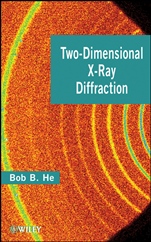
Two–Dimensional X–Ray Diffraction
ISBN 9780470227220
Autor: Bob B. He
Wydawca: Wiley
Dostępność: 3-6 tygodni
Cena: 736,05 zł
Przed złożeniem zamówienia prosimy o kontakt mailowy celem potwierdzenia ceny.
ISBN13: |
9780470227220 |
ISBN10: |
0470227222 |
Autor: |
Bob B. He |
Oprawa: |
Hardback |
Rok Wydania: |
2009-09-04 |
Ilość stron: |
426 |
Wymiary: |
240x168 |
Tematy: |
PN |
The fundamentals, theory, and wide–ranging applications of two–dimensional X–ray diffraction
Two–Dimensional X–Ray Diffraction is proving itself as an ideal non–destructive, analytical method for measuring the atomic arrangement of materials and extracting an array of information beyond the limitations of conventional X–ray diffraction. Researchers in materials science, chemistry, physics, pharmaceuticals, and related fields will find this introductory reference invaluable in understanding and applying two–dimensional X–ray diffraction for examining a broad range of samples.
Two–Dimensional X–Ray Diffraction shows how two–dimensional X–ray diffraction can be a useful tool for the examination of metals, polymers, ceramics, semiconductors, thin films, coatings, paints, biomaterials and composites for material science researches, molecular structure determination and polymorphism study for drug discovery and processing, and samples with micro volume or micro–area for forensic analysis, and archaeology analysis, to name just a few of the method′s applications.
The text covers:
The fundamentals of X–ray diffraction and its extension to two–dimensional X–ray diffraction
The geometry conventions and diffraction vector approach for diffraction data interpretation, data correction, and process algorithms for various applications
Instrumentation technologies, including the critical components, such as X–ray source and optics, two–dimensional detectors, goniometer, and sample stages
The configurations of the two–dimensional X–ray diffraction systems for various applications, such as phase identification, texture, stress, microstructure analysis, crystallinity, thin film analysis, and combinatorial screening
Experimental examples in materials research, pharmaceuticals, mater
ials processing, and quality control
Written by one of the pioneers in the field, Two–Dimensional X–Ray Diffraction brings readers up to speed on a fast–rising, state–of–the–art method for materials characterization.
Spis treści:
Preface.
1. Introduction.
1.1 X–Ray Technology and Its Brief History.
1.2 Geometry of Crystals.
1.3 Principles of X–Ray Diffraction.
1.4 Reciprocal Space and Diffraction.
1.5 Two–Dimensional X–Ray Diffraction.
2. Geometry Conventions.
2.1 Introduction.
2.2 Diffraction Space and Laboratory Coordinates.
2.3 Detector Space and Detector Geometry.
2.4 Sample Space and Goniometer Geometry.
2.5 Transformation from Diffraction Space to Sample Space.
2.6 Summary of XRD2 Geometry.
References.
3. X–Ray Source and Optics.
3.1 X–Ray Generation and Characteristics.
3.2 X–Ray Optics.
References.
4. X–Ray Detectors.
4.1 History of X–Ray Detection Technology.
4.2 Point Detectors in Conventional Diffractometers.
4.3 Characteristics of Point Detectors.
4.4 Line Detectors.
4.5 Characteristics of Area Detectors.
4.6 Types of Area Detectors.
5. Goniometer and Sample Stages.
5.1 Goniometer and Sample Position.
5.2 Goniometer Accuracy.
5.3 Sample Alignment and Visualization Systems.
5.4 Environment Stages.
References.
6. Data Treatment.
6.1 Introduction.
6.2 Nonuniform Response Correction.
6.3 Spatial Correction.
6.4 Detector Position Accuracy and Calibration.
6.5 Frame Integration.
6.6 Lorentz, Polarization, and Absorption Corrections.
7. Phase Identification.
7.1 Introduction.
7.2 Relative Intensity.
7.3 Geometry and Resolution.
7.4 Sampling Statistics.
7.5 Preferred Orientation Effect.
References.
8. Texture Analysis.
8.1 Introduction.
8.2 P
ole Density and Pole Figure.
8.3 Fundamental Equations.
8.4 Data Collection Strategy.
8.5 Texture Data Process.
8.6 Orientation Distribution Function.
8.7 Fiber Texture.
8.8 Other Advantages of XRD2 for Texture.
References.
9. Stress Measurement.
9.1 Introduction.
9.2 Principle of X–Ray Stress Analysis.
9.3 Theory of Stress Analysis with XRD2.
9.4 Process of Stress Measurement with XRD2.
9.5 Experimental Examples.
Appendix 9.A Calculation of Principal Stresses from the General Stress Tensor.
Appendix 9.B Parameters for Stress Measurement.
References.
10. Small–Angle X–Ray Scattering.
10.1 Introduction.
10.2 2D SAXS Systems.
10.3 Application Examples.
10.4 Some Innovations in 2D SAXS.
References.
11. Combinatorial Screening.
11.1 Introduction.
11.2 XRD2 Systems for Combinatorial Screening.
11.3 Combined Screening with XRD2 and Raman.
12. Quantitative Analysis.
12.1 Percent Crystallinity.
12.2 Crystal Size.
12.3 Retained Austenite.
References.
13. Innovation and Future Development.
13.1 Introduction.
13.2 Scanning Line Detector for XRD2.
13.3 Three–Dimensional Detector.
13.4 Pixel Direct Diffraction Analysis.
References.
Appendix A. Values of Commonly Used Parameters.
Appendix B. Symbols.
Index.
Nota biograficzna:
Bob Baoping He is the Director of R&D and Engineering at Bruker AXS (formerly Siemens AXS). Mr. He holds a PhD in materials science from Virginia Tech and holds twelve U.S. patents.
Okładka tylna:
The fundamentals, theory, and wide–ranging applications of two–dimensional X–ray diffraction
Two–Dimensional X–Ray Diffraction is proving itself as an ideal non–destructive, analytical method for measuring the atomic arrangement of materials and extracting an array of information beyond the limitatio
ns of conventional X–ray diffraction. Researchers in materials science, chemistry, physics, pharmaceuticals, and related fields will find this introductory reference invaluable in understanding and applying two–dimensional X–ray diffraction for examining a broad range of samples.
Two–Dimensional X–Ray Diffraction shows how two–dimensional X–ray diffraction can be a useful tool for the examination of metals, polymers, ceramics, semiconductors, thin films, coatings, paints, biomaterials and composites for material science researches, molecular structure determination and polymorphism study for drug discovery and processing, and samples with micro volume or micro–area for forensic analysis, and archaeology analysis, to name just a few of the method′s applications.
The text covers:
The fundamentals of X–ray diffraction and its extension to two–dimensional X–ray diffraction
The geometry conventions and diffraction vector approach for diffraction data interpretation, data correction, and process algorithms for various applications
Instrumentation technologies, including the critical components, such as X–ray source and optics, two–dimensional detectors, goniometer, and sample stages
The configurations of the two–dimensional X–ray diffraction systems for various applications, such as phase identification, texture, stress, microstructure analysis, crystallinity, thin film analysis, and combinatorial screening
Experimental examples in materials research, pharmaceuticals, materials processing, and quality control
Written by one of the pioneers in the field, Two–Dimensional X–Ray Diffraction brings readers up to speed on a fast–rising, state–of–the–art method for materials characterization.
Koszyk
Książek w koszyku: 0 szt.
Wartość zakupów: 0,00 zł
Informacje


Kontakt
Gambit
Centrum Oprogramowania
i Szkoleń Sp. z o.o.
Al. Pokoju 29b/22-24
31-564 Kraków
Siedziba Księgarni
ul. Kordylewskiego 1
31-542 Kraków
+48 12 410 5991
+48 12 410 5987
+48 12 410 5989
Subskrypcje
Administratorem danych osobowych jest firma Gambit COiS Sp. z o.o. Na podany adres będzie wysyłany wyłącznie biuletyn informacyjny.
Autoryzacja płatności

Informacje na temat autoryzacji płatności poprzez PayU.

© Copyright 2012: GAMBIT COiS Sp. z o.o. Wszelkie prawa zastrzeżone.
Projekt i wykonanie: Alchemia Studio Reklamy