


Wydawcy
Katalog tematyczny
- Archeologia (109)
- Ekonomia, finanse, business (13704)
- Filozofia (1445)
- Historia (3040)
- Języki i językoznawstwo (2356)
- Lifestyle, hobby i rozrywka (475)
- Medycyna (9704)
- Nauki humanistyczne (4)
- Nauki o Ziemi i środowisku (2638)
- Nauki ścisłe (20412)
- Nauki społeczne (8486)
- Nauki techniczne (13450)
- Prawo (1696)
- Publikacje informacyjne i interdyscyplinarne (1288)
- Religia i wierzenia (917)
- Technika komputerowa (4067)
- Zdrowie, relacje międzyludzkie i rozwój osobisty (657)





Informacje szczegółowe o książce
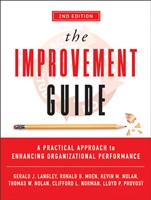
The Improvement Guide: A Practical Approach to Enhancing Organizational Performance
ISBN 9780470192412
Autor: Gerald J. Langley, Ronald D. Moen, Kevin M. Nolan, Thomas W. Nolan, Clifford L. Norman, Lloyd P.
Wydawca: Wiley
Dostępność: 3-6 tygodni
Cena: 341,25 zł
Przed złożeniem zamówienia prosimy o kontakt mailowy celem potwierdzenia ceny.
ISBN13: |
9780470192412 |
ISBN10: |
0470192410 |
Autor: |
Gerald J. Langley, Ronald D. Moen, Kevin M. Nolan, Thomas W. Nolan, Clifford L. Norman, Lloyd P. |
Oprawa: |
Hardback |
Rok Wydania: |
2009-04-29 |
Numer Wydania: |
2nd Edition |
Ilość stron: |
512 |
Wymiary: |
239x184 |
Tematy: |
KM |
Praise for The Improvement Guide
"Managers will profit enormously from studying this unique publication, which presents a very practical, readily implementable way to improve the performance of any organization. Utilizing this approach over the last fifteen years, under the guidance of a co–author, has been a major key to the success of our company."
—David R. Harvey, chairman and former CEO, Sigma–Aldrich Corporation
"The updated edition of The Improvement Guide builds on API′s practical approach to improvement, providing even more great examples, and expands into methods for large system change and spreading improvement quickly. This is an outstanding reference book for anyone leading improvement."
—Bruce Boles, master black belt, Hewlett–Packard
"The Model for Improvement developed by the authors and presented in this book is remarkably simple and profound. The first edition is a classic. The second edition retains the best features of the original and incorporates twelve years of experience of many organizations around the world that have been using its contents. It is a valuable reference for anyone working with improvement. We have been using The Improvement Guide in the Continuous Education Program on Improvement at the University since 2000, with outstanding results."
—Ademir J. Petenate, professor of statistics at University of Campinas (Brazil) and director of ANOVA—Methods for Improvement
"If you are involved in organizational improvement efforts, this book is an invaluable asset and guide to learning. The detailed explanations of theory, principles, and tools, along with pragmatic real–world examples of successful project execution, allow an improvement team to understand organizational complexity, then break improvement efforts into simpler components, yielding dramatic insights and results."
—Jerry W. Jackson, MD, Nephro
logy Associates, PC; improvement advisor, Institute for Healthcare Improvement
Spis treści:
Foreword.
Preface.
Acknowledgments.
The Authors.
Introduction: The Improvement Guide, Second Edition.
PART ONE: INTRODUCTION TO IMPROVEMENT.
Chapter One: Changes That Result in Improvement.
Principles of Improvement.
The Model for Improvement.
Key Points from Chapter One.
Chapter Two: Skills to Support Improvement.
Supporting Change with Data.
Developing a Change.
Testing a Change.
Implementing a Change.
Spreading Improvements.
The Human Side of Change.
Key Points from Chapter Two.
Chapter Three: Improvement Case Studies.
Case Study 1: Improving the Morning Meeting.
Case Study 2: Improving Service in a Dental Offi ce.
Case Study 3: Improving Methods for Teaching Biology.
Case Study 4: Contamination in Shipping Drums.
Case Study 5: Reducing Energy Use in School.
Key Points from Chapter Three.
PART TWO: METHODS FOR IMPROVEMENT.
Chapter Four: The Science of Improvement.
Profound Knowledge.
Milestones in the Development of Profound Knowledge.
Key Points from Chapter Four.
Chapter Five: Using the Model for Improvement.
What Are We Trying to Accomplish?
How Will We Know That a Change Is an Improvement?
What Changes Can We Make That Will Result in Improvement?
The Plan–Do–Study–Act Cycle.
Using the Cycle to Build Knowledge.
Key Points from Chapter Five.
Chapter Six: Developing a Change.
Some Typical Problems in Developing Changes.
Reactive Versus Fundamental Change.
Theory for Change.
Methods for Developing Fundamental Change.
Key Points from Chapter Six.
Chapter Seven: Testing a Change.
Applying the Science of Improvement to Testing.
Principles for Testing a Change.
Designs for Testing a Change.
Strategies for Testing.
Key Points from Cha
pter Seven.
Chapter Eight: Implementing a Change.
Testing a Change.
Implementing a Change.
Implementation as a Series of Cycles.
Implementing Changes to Achieve and Maintain Improvement.
The Social Aspects of Implementing a Change.
Key Points from Chapter Eight.
Chapter Nine: Spreading Improvements.
A Framework for Spread.
Phase for Organizational Readiness for Spread.
Phase for Developing an Initial Spread Plan.
Phase for Executing and Refi ning the Spread Plan.
Key Points from Chapter Nine.
Chapter Ten: Integrating Methods for the Improvement of Value.
Eliminating Quality Problems.
Reducing Costs While Maintaining or Improving Quality.
Expanding the Expectations of Customers to Increase Demand.
Developing an Environment Conducive to the Improvement of Value.
Key Points from Chapter Ten.
Chapter Eleven: Improving Large or Complex Systems.
Project Setup and Management.
Understanding the System and Developing High–Impact Changes.
Testing and Learning Systems.
Key Points from Chapter Eleven.
Chapter Twelve: Case Studies of Improvement Efforts.
Case Study 1: Reducing the Occurrence of No–Fault–Found Components.
Case Study 2: Improving the Drill Process.
Case Study 3: Reducing Infection and Mortality Rates in a Pediatric Intensive Care Unit.
Case Study 4: Improving Safety at a Manufacturing Plant.
Case Study 5: Improving the Credentialing Process at CareOregon.
Case Study 6: Improving Sales at a Specialty Chemical Company.
Key Points from Chapter Twelve.
PART THREE: IMPROVING VALUE AS A BUSINESS STRATEGY.
Chapter Thirteen: Making the Improvement of Value a Business Strategy.
Building the System of Improvement.
Key Points from Chapter Thirteen.
Chapter Fourteen: Developing Improvement Capability.
Developing Improvement Capability in the Workforce.
Organization to Support the Focus on Impro
vement.
Development of Other Capabilities.
Key Points from Chapter Fourteen.
Sample Agendas for Getting Started, Sponsors, and Improvement Advisors.
Development of Internal Improvement Advisors: Topical Agenda.
APPENDIXES.
Appendix A: A Resource Guide to Change Concepts.
How to Use Change Concepts.
The Change Concepts.
Appendix B: Tools and Methods to Support Improvement.
Methods and Tools for Viewing Systems and Processes.
Methods and Tools for Gathering Information.
Methods and Tools for Organizing Information.
Methods and Tools for Understanding Variation.
Methods and Tools for Understanding Relationships.
Methods and Tools for Project Management.
Standard Forms for Improvement Projects.
Appendix C: The Model for Improvement and Other Roadmaps.
Fundamental Questions for Improvement.
Alternative Roadmaps for Improvement Projects.
Summary.
Notes.
Index.
Nota biograficzna:
Gerald J. Langley is a statistician, author, and consultant, and co–founder of Associates in Process Improvement (API), a consulting firm that specializes in the improvement of quality and productivity.
Ronald D. Moen is a statistician, consultant, and teacher to industry, government, and education. He is co–founder of API.
Kevin M. Nolan is a statistician, author, and consultant at API, where he focuses on developing methods and assisting organizations to accelerate their rate of improvement in quality and productivity.
Dr. Thomas W. Nolan is a statistician, author, and consultant, and¿co–founder of API.
Clifford L. Norman is a consultant with API whose work has emphasized the psychology of change.
Lloyd P. Provost is a statistician who advises to organizations as an API associate.
Okładka tylna:
Praise for The Improvement Guide
"Managers will profit enormously from stu
Koszyk
Książek w koszyku: 0 szt.
Wartość zakupów: 0,00 zł
Informacje


Kontakt
Gambit
Centrum Oprogramowania
i Szkoleń Sp. z o.o.
Al. Pokoju 29b/22-24
31-564 Kraków
Siedziba Księgarni
ul. Kordylewskiego 1
31-542 Kraków
+48 12 410 5991
+48 12 410 5987
+48 12 410 5989
Subskrypcje
Administratorem danych osobowych jest firma Gambit COiS Sp. z o.o. Na podany adres będzie wysyłany wyłącznie biuletyn informacyjny.
Autoryzacja płatności

Informacje na temat autoryzacji płatności poprzez PayU.

© Copyright 2012: GAMBIT COiS Sp. z o.o. Wszelkie prawa zastrzeżone.
Projekt i wykonanie: Alchemia Studio Reklamy