


Wydawcy
Katalog tematyczny
- Archeologia (109)
- Ekonomia, finanse, business (13704)
- Filozofia (1445)
- Historia (3040)
- Języki i językoznawstwo (2356)
- Lifestyle, hobby i rozrywka (475)
- Medycyna (9704)
- Nauki humanistyczne (4)
- Nauki o Ziemi i środowisku (2638)
- Nauki ścisłe (20412)
- Nauki społeczne (8486)
- Nauki techniczne (13450)
- Budownictwo lądowe (1045)
- Budownictwo komunikacyjne (9)
- Hydraulika (33)
- Konstrukcje budowlane (95)
- Mechanika konstrukcji (182)
- Przemysł budowlany (7)
- Chemia przemysłowa (2258)
- Elektronika i telekomunikacja (3287)
- Energetyka (1122)
- Inne nauki stosowane (363)
- Inżynieria biochemiczna (507)
- Inżynieria transportu (232)
- Mechanika i materiały (3316)
- Nauka o środowisku (321)
- Rolnictwo (507)
- Technika, ogólnie (475)
- Prawo (1696)
- Publikacje informacyjne i interdyscyplinarne (1288)
- Religia i wierzenia (917)
- Technika komputerowa (4067)
- Zdrowie, relacje międzyludzkie i rozwój osobisty (657)





Informacje szczegółowe o książce
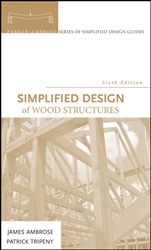
Simplified Design of Wood Structures
ISBN 9780470187845
Autor: James Ambrose, Patrick Tripeny
Wydawca: Wiley
Dostępność: 3-6 tygodni
Cena: 537,60 zł
Przed złożeniem zamówienia prosimy o kontakt mailowy celem potwierdzenia ceny.
ISBN13: |
9780470187845 |
ISBN10: |
0470187840 |
Autor: |
James Ambrose, Patrick Tripeny |
Oprawa: |
Hardback |
Rok Wydania: |
2009-03-20 |
Numer Wydania: |
6th Edition |
Ilość stron: |
416 |
Wymiary: |
219x147 |
Tematy: |
TN |
Newly updated—the most accessible, thorough introduction to the basics of wood structure design
No architect′s education would be complete without a basic understanding of how structures respond to the action of forces and how these forces affect the performance of various building material (wood, steel, concrete, etc.). In continuous publication for over sixty years, this standard guide to structural design with wood has now been updated to include current design practices, standards, and consideration of new wood products.
Written to be easily understood by readers with limited experience in engineering mechanics, structural analysis, or advanced mathematics, the book now features:
Consideration of the LRFD method of structural design in addition to the ASD method
Updated coverage conforming to current building codes, design practices, and industry standards
Expanded treatment of wood products beyond sawn lumber
More examples and a wider sweep of systems and products
Equally suited to classroom use or independent study, Simplified Design of Wood Structures, Sixth Edition stands as a valuable resource that no architect or builder should be without.
The Parker/Ambrose Series of Simplified Design Guides has been providing simple, concise solutions to common structural and environmental design problems for more than seven decades.
Spis treści:
Preface to the Sixth Edition.
Preface to the First Edition.
Introduction.
1. Structural Uses of Wood.
1.1 Sources of Wood.
1.2 Tree Growth.
1.3 Density of Wood.
1.4 Defects in Lumber.
1.5 Seasoning of Wood.
1.6 Nominal and Dressed Sizes.
1.7 Use Classification of Structural Lumber.
1.8 Grading of Structural Lumber.
1.9 Fabricated Wood Products.
2. Design Issues and Methods.
2.1 Design Goals.
2.2 Methods of Investigation and Design.
2.3 Choice of Design Method.<
br>3. Structural Investigation.
3.1 General Concerns.
3.2 Forces and Loads.
3.3 Direct Stress.
3.4 Kinds of Stress.
3.5 Deformation.
3.6 Elastic Response and Limit.
3.7 Inelastic Behavior and Ultimate Strength.
3.8 Modulus of Elasticity.
3.9 Permissible Values for Design.
4. Design Data and Criteria.
4.1 General Concerns.
4.2 Reference Design Values for Allowable Stress Design (ASD).
4.3 Adjustment of Design Values.
4.3 Modification for Loading with Relation to Grain Direction.
4.4 Design Controls for LRFD.
5. Beam Functions.
5.1 General Considerations.
5.2 Moments.
5.3 Beams Loads and Reaction Forces.
5.4 Beam Shear.
5.5 Bending Moment.
5.6 Tabulated Values for Beam Behavior.
5.7 Multiple Span Beams.
6. Behavior of Beams.
6.1 Shear in Beams.
6.2 Bending in Beams.
6.3 Deflection.
6.4 Bearing.
6.5 Buckling of Beams.
6.6 Unsymmetrical Bending.
6.7 Behavior Considerations for LRFD.
7. Design of Beams.
7.1 Design Procedure.
7.2 Beam Design Examples.
7.3 Joists and Rafters.
7.4 Alternative Spanning Elements.
8. Wood Decks.
8.1 Board Decks.
8.2 Plank Decks.
8.3 Wood Fiber Decks.
8.4 Plywood Decks.
8.5 Spanning Capability of Decks.
9. Wood Columns.
9.1 Slenderness Ratio for Columns.
9.2 Compression Capacity of Simple Solid Columns.
9.3 Column Load Capacity, LRFD.
9.4 Round Columns.
9.5 Stud Wall Construction.
9.6 Spaced Columns.
9.7 Built–up Columns.
9.8 Columns with Bending.
10. Connections for Wood Structures.
10.1 Bolted Joints.
10.2 Nailed Joints.
10.3 Screws.
10.4 Mechanically–Driven Fasteners.
10.5 Shear Developers.
10.6 Split–Ring Connectors.
10.7 Formed Steel Framing Elements.
10.8 Concrete and Masonry Anchors.
10.9 Plywood Gussets.
11. Trusses.
11.1 General Considerations.
11.2 Types of Trusses.
11.3 Bracing for Trusses.
11.4 Loads on Trusses.
11.5 Investigation for Internal Forces in Planar Trusses.
11.6 Design Forces for Truss Members.
11.7 Combined Actions in Truss Members.
11.8 Truss Members and Joints.
11.9 Timber Trusses.
11.10 Manufactured Trusses.
12. Miscellaneous Wood Products and Elements.
12.1 Engineered Wood Products.
12.2 Glued Laminated Structural Members.
12.3 Structural Composite Lumber.
12.4 Wood Structural Panels.
12.5 Plywood.
12.6 Prefabricated Wood I–Joists.
12.7 Built–Up Panel and Lumber Beams.
12.8 Flitched Beams.
12.9 Pole Structures.
13. Wood Structures for Lateral Bracing.
13.1 Application of Wind and Earthquake Effects.
13.2 Horizontal Diaphragms.
13.3 Vertical Diaphragms (Shear Walls).
13.4 Investigation and Design of Wood–Framed Shear Walls.
13.5 Trussed Bracing for Wood Frames.
13.6 Special Lateral Bracing.
14. General Considerations for Building Structures.
14.1 Choice of Building Construction.
14.2 Structural Design Standards.
14.3 Loads for Structural Design.
14.4 Dead Loads.
14.5 Building Code Requirements.
14.6 Live Loads.
14.7 Lateral Loads (Wind and Earthquake).
14.8 Load Combinations and Factors.
14.9 Determination of Design Loads.
14.10 Structural Planning.
14.11 Building System Integration.
14.12 Economics.
15. Building Design Examples.
15.1 Building One: Single Story Light Wood Frame.
15.2 Building Two: Multistory Light Wood Frame.
15.3 Building Three: Masonry and Timber Structure.
15.4 Building Four: Steel and Wood Structure.
Appendix A: Properties of Sections.
Appendix B: Study Aids.
Appendix C: Answers to Problems.
Glossary.
References.
Index.
Nota biograficzna:
James Ambrose is Editor of the Parker/Ambrose Series of Simplified Design Guides. He has practiced as an architect in California and Illinois
, and as a structural engineer in Illinois. He was professor of architecture at the University of Southern California.
Patrick Tripeny is an Associate Professor and the Director of the School of Architecture at the University of Utah.?He is a licensed architect in California, where he practiced architecture before returning to academia. He has been the recipient of a number of teaching awards at the local and national level for his work in teaching structures and design.
Okładka tylna:
Newly updated—the most accessible, thorough introduction to the basics of wood structure design
No architect′s education would be complete without a basic understanding of how structures respond to the action of forces and how these forces affect the performance of various building material (wood, steel, concrete, etc.). In continuous publication for over sixty years, this standard guide to structural design with wood has now been updated to include current design practices, standards, and consideration of new wood products.
Written to be easily understood by readers with limited experience in engineering mechanics, structural analysis, or advanced mathematics, the book now features:
Consideration of the LRFD method of structural design in addition to the ASD method
Updated coverage conforming to current building codes, design practices, and industry standards
Expanded treatment of wood products beyond sawn lumber
More examples and a wider sweep of systems and products
Equally suited to classroom use or independent study, Simplified Design of Wood Structures, Sixth Edition stands as a valuable resource that no architect or builder should be without.
The Parker/Ambrose Series of Simplified Design Guides has been providing simple, concise solutions to common structural and environmental design problems for more than seven decades.
Koszyk
Książek w koszyku: 0 szt.
Wartość zakupów: 0,00 zł
Informacje


Kontakt
Gambit
Centrum Oprogramowania
i Szkoleń Sp. z o.o.
Al. Pokoju 29b/22-24
31-564 Kraków
Siedziba Księgarni
ul. Kordylewskiego 1
31-542 Kraków
+48 12 410 5991
+48 12 410 5987
+48 12 410 5989
Subskrypcje
Administratorem danych osobowych jest firma Gambit COiS Sp. z o.o. Na podany adres będzie wysyłany wyłącznie biuletyn informacyjny.
Autoryzacja płatności

Informacje na temat autoryzacji płatności poprzez PayU.

© Copyright 2012: GAMBIT COiS Sp. z o.o. Wszelkie prawa zastrzeżone.
Projekt i wykonanie: Alchemia Studio Reklamy