


Wydawcy
Katalog tematyczny
- Archeologia (109)
- Ekonomia, finanse, business (13704)
- Filozofia (1445)
- Historia (3040)
- Języki i językoznawstwo (2356)
- Lifestyle, hobby i rozrywka (475)
- Medycyna (9704)
- Nauki humanistyczne (4)
- Nauki o Ziemi i środowisku (2638)
- Nauki ścisłe (20412)
- Nauki społeczne (8486)
- Nauki techniczne (13450)
- Prawo (1696)
- Publikacje informacyjne i interdyscyplinarne (1288)
- Religia i wierzenia (917)
- Technika komputerowa (4067)
- Zdrowie, relacje międzyludzkie i rozwój osobisty (657)





Informacje szczegółowe o książce
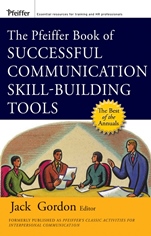
The Pfeiffer Book of Successful Communication Skill–Building Tools
ISBN 9780470181805
Autor: Jack Gordon
Wydawca: Wiley
Dostępność: 3-6 tygodni
Cena: 286,65 zł
Przed złożeniem zamówienia prosimy o kontakt mailowy celem potwierdzenia ceny.
ISBN13: |
9780470181805 |
ISBN10: |
047018180X |
Autor: |
Jack Gordon |
Oprawa: |
Paperback |
Rok Wydania: |
2007-11-09 |
Ilość stron: |
432 |
Wymiary: |
228x153 |
Tematy: |
KM |
The Pfeiffer Book of Successful Interpersonal Communication Tools is organized into three sections: Presentations and Discussions (articles); Experiential Learning Activities; and Inventories, Questionnaires, and Surveys. These selections represent the all–time best the Pfeiffer Annuals and Handbooks have to offer on the topic. The Pfeiffer Book of Successful Interpersonal Communication Tools
· Provides articles that offer quick, solid, and insightful grounding in a classic theme of communication–skills training
· Contains complete, ready–made training exercises designed to meet a variety of needs for different audiences
· Offers inventories that include questionnaires and instruments that help trainees understand their own communication habits, measure the health of actual relationships, and shed light on communication practices within the organization
Spis treści:
Introduction.
PART 1: PRESENTATION AND DISCUSSION RESOURCES.
1. Conditions That Hinder Effective Communication (J. William Pfeiffer).
2. The Lost Art of Feedback (Hank Karp).
3. The Influence Continuum (Marlene Caroselli).
4. Communicating Communication (J. Ryck Luthi).
5. The Johari Window: A Model for Eliciting and Giving Feedback (Philip G. Hanson).
6. Using Personality Typology to Build Understanding (Toni La Motta).
7. Communicating Organizational Change: Information Technology Meets the Carbon–Based Employee Unit (Joseph G. Wojtecki, Jr., and Richard G. Peters).
8. Confrontational Communication (Merna L. Skinner).
9. Assertion Theory (Colleen Kelley).
10. E–Mail Basics: Practical Tips to Improve Communication (Kristin J. Arnold).
PART
2: EXPERIENTIAL LEARNING ACTIVITIES (ELAS).
ELA Section 1: Personal Communication Skills.
1. In Other Words: Building Oral–Communication Skills (Editors).
2. Poor Listening Habits: Identifying and Improving Them (Joseph Seltzer and Leland Howe).
3. Mixed Messages: A Communication Experiment (Branton K. Holmberg and Daniel W. Mullene).
4. Gestures: Perceptions and Responses (Stella Lybrand Norman).
5. Time Flies: Negotiating Personal Effectiveness Through Assertion (Michael Lee Smith).
6. Resistance: A Role Play (H.B. Karp).
7. Seeing Ourselves As Others See Us: Using Video Equipment for Feedback (Gilles L. Talbot).
8. Your Voice, Your Self: Improving Vocal Presentations (Taggart Smith).
9. E–Prime: Distinguishing Facts from Opinions (Gilles L. Talbot).
10. Speed Up! Increasing Communication Skills (Marlene Caroselli).
ELA Section 2: Oganizational Communication Issues.
1. One–Way, Two–Way: A Communication Experiment (Adapted from H. J. Leavitt).
2. Pass It On: Simulating Organizational Communication (Linda Costigan Lederman and Lea P. Stewart).
3. Red Light/Green Light: From Fear to Hope (Niki Nichols).
4. Blivet: A Communication Experience (Ken Myers, Rajesh Tandon, and Howard Bowens, Jr.).
5. Analyzing and Increasing Open Behavior: The Johari Window (Philip G. Hanson).
6. Work Dialogue: Building Team Relationships (Judith F. Vogt and Karen L. Williams).
7. Defensive and Supportive Communication: A Paired Role Play (Gary W. Combs).
8. Mediated Message Exchange: Exploring the Implications of Distance Communication in the Workplace (Heidi A. Campbell).
9. Bugs: Improving Customer Service (James W. Kinneer).
10. Enhancing Communication: Identifying Techniques to Use with Diverse Groups (Robert William Lucas).PART 3: INVENTORIES, QUESTIONNAIRES, AND SURVEYS.
1. The Communication Climate Inventory (James I. Costigan and Martha A. Schmeidler).
2. Organizational Values and Voice Audit (Diane M. Gayeski).
3. Interpersonal Communication Inventory (Millard J. Bienvenu, Sr.).
4. Communication Audit: A Pairs Analysis (Scott B. Parry).
5. The Behavior Description (John E. Oliver).
6. Cross–Cultural Interactive Preference Profile (Morris Graham and Dwight Miller).
7. Organization Behavior Describer Survey (OBDS) (Roger Harrison and Barry Oshry).
8. The Negotiation–Stance Inventory (H.B. Karp).
About the Editor.
Koszyk
Książek w koszyku: 0 szt.
Wartość zakupów: 0,00 zł
Informacje


Kontakt
Gambit
Centrum Oprogramowania
i Szkoleń Sp. z o.o.
Al. Pokoju 29b/22-24
31-564 Kraków
Siedziba Księgarni
ul. Kordylewskiego 1
31-542 Kraków
+48 12 410 5991
+48 12 410 5987
+48 12 410 5989
Subskrypcje
Administratorem danych osobowych jest firma Gambit COiS Sp. z o.o. Na podany adres będzie wysyłany wyłącznie biuletyn informacyjny.
Autoryzacja płatności

Informacje na temat autoryzacji płatności poprzez PayU.

© Copyright 2012: GAMBIT COiS Sp. z o.o. Wszelkie prawa zastrzeżone.
Projekt i wykonanie: Alchemia Studio Reklamy