


Wydawcy
Katalog tematyczny
- Archeologia (109)
- Ekonomia, finanse, business (13704)
- Filozofia (1445)
- Historia (3040)
- Języki i językoznawstwo (2356)
- Lifestyle, hobby i rozrywka (475)
- Medycyna (9704)
- Nauki humanistyczne (4)
- Nauki o Ziemi i środowisku (2638)
- Nauki ścisłe (20412)
- Nauki społeczne (8486)
- Edukacja (229)
- Kryminologia, opieka spełeczna (284)
- Obronność (10)
- Polityka (1389)
- Psychologia (777)
- Socjologia (410)
- Społeczeństwo i kultura (187)
- Nauki techniczne (13450)
- Prawo (1696)
- Publikacje informacyjne i interdyscyplinarne (1288)
- Religia i wierzenia (917)
- Technika komputerowa (4067)
- Zdrowie, relacje międzyludzkie i rozwój osobisty (657)





Informacje szczegółowe o książce
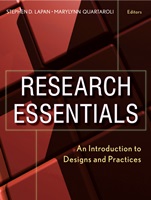
Research Essentials: An Introduction to Designs and Practices
ISBN 9780470181096
Autor: Stephen D. Lapan, MaryLynn T. Quartaroli
Wydawca: Wiley
Dostępność: 3-6 tygodni
Cena: 428,40 zł
Przed złożeniem zamówienia prosimy o kontakt mailowy celem potwierdzenia ceny.
ISBN13: |
9780470181096 |
ISBN10: |
0470181095 |
Autor: |
Stephen D. Lapan, MaryLynn T. Quartaroli |
Oprawa: |
Paperback |
Rok Wydania: |
2009-02-13 |
Ilość stron: |
440 |
Wymiary: |
235x179 |
Tematy: |
JB |
Research Essentials: An Introduction to Designs and Practices addresses the broad spectrum of research methodologies for the student or new researcher in a practical manner.
The comprehensive approach of Research Essentials includes key interpretive and qualitative strategies. With contributions from experts in research, Stephen D. Lapan and MaryLynn T. Quartaroli offer an innovative discussion of sources of knowledge and explain the role that research plays in the social sciences and education. Their book explores research traditions, making explicit distinctions between disciplines of inquiry–approaches or methodologies–and data collection procedures–techniques or methods–and addresses topics such as ethics in research and conducting literature reviews. It includes an array of specific approaches used in designing research studies.
Each chapter includes the most pertinent and useful information about the research approach, addressing background, definitions, contrasting approaches, sampling and design alternatives, data collection and analysis, and appropriate uses of study results. The book is packed with practical examples and relevant resources from across the disciplines in the social sciences and education. Study questions placed throughout each chapter and lists of the most relevant journals, websites, and organizations enhance and provide support to student learning.
Spis treści:
Preface.
Introduction.
The Editors.
The Authors.
1. Research Ethics and the Use of Human Participants (K. Larson).
Key Ideas.
Ethical Standards.
The Genesis of Research Standards.
Federal Regulations for Ethical Research.
Institutional Review Boards.
Minimizing Risks to Participants.
Informed Consent.
Deception.
Debriefing.
Confidentiality and Anonymity.
Publishing Research.
Social Consequences of Unethical Research.
Reading and Evaluating Studies.
Summary.
Key Term
s.
Further Readings and Resources.
2. Understanding Literature Reviews (G. McAllister and A. Furlong).
Key Ideas.
Understanding Literature Reviews.
What Is a Literature Review?.
Basic Elements of a Literature Review.
Types of Literature Reviews.
Literature Reviews and Rigor.
How to Read a Literature Review.
Value of the Studies.
Readability.
Writing a Literature Review.
Muck About.
Set Your Parameters.
Conduct Your Research.
Analyze the Literature.
Focus on the Purpose of Your Literature Review.
Write Up the Literature Review.
Summary.
Activities.
Key Terms.
Further Readings and Resources.
3. Essential Elements of Experimental and Quasi–Experimental Research (W. E. Martin Jr. and K. Bridgmon).
Key Ideas.
Experimental Research Today.
Essential Elements of Experimental Research.
Processes of Designing and Conducting Experimental Research.
Formulating Experimental Conditions and Procedures.
Reducing Imprecision in Measurement.
Controlling Extraneous Experimental Influences.
Experimental Designs.
Randomized Posttest Only Control Group Design.
Randomized Pretest–Posttest Control Group Design.
Randomized Multiple Treatments and Control with Pretest Design.
Randomized Longitudinal Design.
External Validity.
Quasi–Experimental Research.
Nonequivalent Control Group Design.
Untreated Control Group Design with Dependent Pretest and Posttest Samples Using a Double Pretest.
Multiple Time–Series Design.
Summary.
Key Terms.
Further Readings and Resources.
4. Nonexperimental Quantitative Research (G. Belli).
Key Ideas.
Overview of Nonexperimental Research.
Variables and Their Measurement.
Defining Variables.
Phrasing Questions.
Classifying Nonexperimental Research.
Classification Based on Purpose (Dimension 1).
Classification Based on Time (Dimension 2).
Combining Classification D
imensions.
Causal Explanations and Nonexperimental Studies.
Requirements for Causality.
Ruling Out Alternative Hypotheses.
Analysis and Interpretation in Nonexperimental Studies.
Summary.
Discussion Questions or Activities.
Key Terms.
Further Readings and Resources.
5. A Primer of Survey Methods (M. Berends and G. Zottola).
Key Ideas.
What Is Survey Research?.
Surveys You Know.
The Research Process.
Choosing a Topic.
Focusing the Research: Concepts and Constructs.
Hypotheses, Variables, and Operationalization.
Independent Versus Dependent Variables.
Writing Good Survey Questions.
Piloting and Cognitive Interviews.
Sampling, Response Rates, and Nonresponse.
Probability or Random Sampling.
Simple, Stratified, and Systemic Samples.
Nonprobability Sampling.
Response Rates and Nonresponse.
Is the Framework Intact?.
Data Reduction.
Types of Surveys.
Face–to–Face Interviews.
Telephone Surveys.
Mail Surveys.
Internet and Web–Based Surveys.
Ethical Issues in Survey Research.
Ways to Ensure Confidentiality and Increase Anonymity.
Informed Consent.
Ethics Beyond Data Collection.
Summary.
Key Terms.
Further Readings and Resources.
6. Quantitative Data Analysis (M. T. Quartaroli).
Key Ideas.
What Do Those Numbers Mean?.
Meanings of Numbers.
Summarizing Data: Descriptive Statistics.
Frequency Distributions.
Distribution Patterns.
Types of Numerical Data.
Measures of Central Tendency.
Measures of Variability.
Measures of Relative Position.
Measures of Relationship.
Descriptive Statistics Are Important.
Generalizing Results: Inferential Statistics.
Tests of Significance.
Selection of the Statistical Tests.
Using Inferential Statistics for Decision Making.
Evaluating Reports with Quantitative Data.
Summary.
Key Terms.
Further Readings and Resources.
7. Understanding Meta
–Analyses (G. V. Glass).
Key Ideas.
What Is Meta–Analysis?.
Meta–Analysis Illustrated.
Evaluating Meta–Analyses.
Another Example.
Summary.
Key Terms.
Further Readings and Resources.
8. Evaluating Historical Research (L. M. Hines).
Key Ideas.
Basics of Historical Research.
How Are Questions Posed, or "So What"?.
Intriguing and Important Questions.
Filling a Gap.
Interpretive Differences.
Exploring Current Policy.
What Data Are Used, or "How Do You Know"?.
Primary Sources.
Secondary Sources.
What Is the Interpretation, or "Why Do You Think That"?.
Foci of Historical Studies.
Perspective on History.
Categories of Analysis.
Types of Historical Research.
Learning More.
Summary.
Key Terms.
Further Readings and Resources.
9. Case Study Research (S. D. Lapan and S. W. J. Armfield).
Key Ideas.
Purposes of Program Case Studies.
Program Case Study Designs.
One–Shot or Snapshot Design.
Longitudinal Design.
Comparison Design.
Identifying the Case.
Planning and Conducting Case Studies.
Case Study Example: The Sentinel Middle School TILE Program.
Case Study Question 1: Influence on Instructional Planning.
Case Study Question 2: Student Thinking in Classroom Discussions.
Common Case Study Characteristics.
Learning from Case Studies.
Trusting Case Study Reports.
Summary.
Key Terms.
Further Readings and Resources.
10. Program Evaluation (S. D. Lapan and C. M. Haden).
Key Ideas.
What Is Evaluation?.
The Logic of Evaluation.
Qualitative Versus Quantitative Data.
Forms of Evaluation.
Definition of a Program.
Purposes of Program Evaluation.
Program Evaluation History.
How Is Evaluation Done?.
Evaluation Agreement.
Criteria and Standard Selection.
Measuring Through Data Collection.
Synthesizing and Reporting Study Results.
Trusting Program Evaluation Fin
Koszyk
Książek w koszyku: 0 szt.
Wartość zakupów: 0,00 zł
Informacje


Kontakt
Gambit
Centrum Oprogramowania
i Szkoleń Sp. z o.o.
Al. Pokoju 29b/22-24
31-564 Kraków
Siedziba Księgarni
ul. Kordylewskiego 1
31-542 Kraków
+48 12 410 5991
+48 12 410 5987
+48 12 410 5989
Subskrypcje
Administratorem danych osobowych jest firma Gambit COiS Sp. z o.o. Na podany adres będzie wysyłany wyłącznie biuletyn informacyjny.
Autoryzacja płatności

Informacje na temat autoryzacji płatności poprzez PayU.

© Copyright 2012: GAMBIT COiS Sp. z o.o. Wszelkie prawa zastrzeżone.
Projekt i wykonanie: Alchemia Studio Reklamy