


Wydawcy
Katalog tematyczny
- Archeologia (109)
- Ekonomia, finanse, business (13704)
- Filozofia (1445)
- Historia (3040)
- Języki i językoznawstwo (2356)
- Lifestyle, hobby i rozrywka (475)
- Medycyna (9704)
- Nauki humanistyczne (4)
- Nauki o Ziemi i środowisku (2638)
- Nauki ścisłe (20412)
- Nauki społeczne (8486)
- Edukacja (229)
- Kryminologia, opieka spełeczna (284)
- Obronność (10)
- Polityka (1389)
- Psychologia (777)
- Socjologia (410)
- Społeczeństwo i kultura (187)
- Nauki techniczne (13450)
- Prawo (1696)
- Publikacje informacyjne i interdyscyplinarne (1288)
- Religia i wierzenia (917)
- Technika komputerowa (4067)
- Zdrowie, relacje międzyludzkie i rozwój osobisty (657)





Informacje szczegółowe o książce
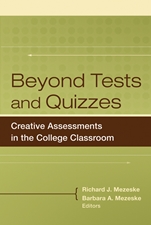
Beyond Tests and Quizzes: Creative Assessments in the College Classroom
ISBN 9780470180839
Autor: Richard J. Mezeske, Barbara A. Mezeske
Wydawca: Wiley
Dostępność: 3-6 tygodni
Cena: 214,20 zł
Przed złożeniem zamówienia prosimy o kontakt mailowy celem potwierdzenia ceny.
ISBN13: |
9780470180839 |
ISBN10: |
0470180838 |
Autor: |
Richard J. Mezeske, Barbara A. Mezeske |
Oprawa: |
Hardback |
Rok Wydania: |
2007-10-23 |
Ilość stron: |
256 |
Wymiary: |
235x153 |
Tematy: |
JD |
Beyond Tests and Quizzes
Because the drive toward external assessment speaks almost exclusively in terms of standardized testing, we need to be reminded of the internal purposes of assessment: measuring learning for both student and teacher so that instruction can be adjusted and improved. This book is written for college instructors who are striving to creatively change assessment practice to better reflect learner–centered teaching. It is intended to consider not only the multiple ways in which individuals learn content, but also the multiple avenues to assessment the variety of learning styles demands.
Creative assessment is defined here as assessments that spin, twist, and reform what might be a standard kind of assessment in an ordinary classroom. Instructors should use these examples of creative assessment as starting points, and as the beginnings of an internal discussion on what matters most in the courses they teach: What components of each course count the most for solving a range of problems in the discipline? If facts are important, and they usually are, how can they be used to support a flexible approach to thinking, solving, considering options, and gathering and interpreting evidence? What are the facts not telling us?
The approaches suggested in this book focus on learning, on what students can do as a result of learning, and on how teachers can observe what students do. The assessment models presented here include concept mapping, variable grading, learning logs, moving from memorization to analysis, making labs more practical, exams as learning experiences, web–based assessment, thinking styles, tracking learning over time, and assessment in the real world. Each translates to a range of academic settings and is easily adaptable for use by a variety of instructors in any discipline.
Spis treści:
About the Authors.
Acknowledgments.
Introduction: Why These Assessment Opportunities Make Sense in a
World Where Assessment of Factual Knowledge Has Taken Hold (Elizabeth Gayton).
1. Why Creative Assessment (Richard J. Mezeske, Barbara A. Mezeske)?
2. Concept Mapping: Assessing Pre–Service Teachers′ Understanding and Knowledge (Richard J. Mezeske).
3. Getting Creative in a Required Course: Variable Grading, Learning Logs, and Authentic Testing (Barbara A. Mezeske).
4. "From Now On You′ll Be History": The Transition from Memorization to Analysis (Janis M. Gibbs).
5. Resurrecting the Lab Practical (Kathy Winnett–Murray).
6. Exams as Learning Experiences: One Nutty Idea After Another (Thomas Smith).
7. Web–Based Instruction and Assessment in a German Culture Course (Lee Forester).
8. Challenging Students (and the Professor) to Use All of Their Brains: A Semester–Long Exercise in Thinking Styles and Synthesis (Elizabeth A. Trembley).
9. Demonstrating Synthesis: Technology Assessment Tools for Field Experience Learning (Susan Cherup).
10. Assessing an Engineering Design Team Project: Build It, and They Will Come (Michael Misovich and Roger Veldman).
11. Tracking Learning Over Time in Health Care Education Using Clinical Proficiency Transcripts (Richard Ray).
12. Verbing the Noun: Grammar in Action (Rhoda Janzen).
13. Hands–On Assessment Can Work for Pre–Service Elementary Teachers (Mary DeYoung).
14. Building Assignments Within Community: Assessment in the Real World (David B. Schock).
Conclusion: Do Classroom Assessment Techniques Improve Student Learning and Fulfill Larger Assessment Goals (Scott VanderStoep and Carla Reyes).
Index.
Nota biograficzna:
Richard J. Mezeske is professor of teacher education and chair of the Department of Education at Hope College.
Barbara A. Mezeske is associate professor in the Department of English at Hope College.
Okładka tylna:
Beyond Tests and Quizzes
Because the drive toward external
assessment speaks almost exclusively in terms of standardized testing, we need to be reminded of the internal purposes of assessment: measuring learning for both student and teacher so that instruction can be adjusted and improved. This book is written for college instructors who are striving to creatively change assessment practice to better reflect learner–centered teaching. It is intended to consider not only the multiple ways in which individuals learn content, but also the multiple avenues to assessment the variety of learning styles demands.
Creative assessment is defined here as assessments that spin, twist, and reform what might be a standard kind of assessment in an ordinary classroom. Instructors should use these examples of creative assessment as starting points, and as the beginnings of an internal discussion on what matters most in the courses they teach: What components of each course count the most for solving a range of problems in the discipline? If facts are important, and they usually are, how can they be used to support a flexible approach to thinking, solving, considering options, and gathering and interpreting evidence? What are the facts not telling us?
The approaches suggested in this book focus on learning, on what students can do as a result of learning, and on how teachers can observe what students do. The assessment models presented here include concept mapping, variable grading, learning logs, moving from memorization to analysis, making labs more practical, exams as learning experiences, web–based assessment, thinking styles, tracking learning over time, and assessment in the real world. Each translates to a range of academic settings and is easily adaptable for use by a variety of instructors in any discipline.
Koszyk
Książek w koszyku: 0 szt.
Wartość zakupów: 0,00 zł
Informacje


Kontakt
Gambit
Centrum Oprogramowania
i Szkoleń Sp. z o.o.
Al. Pokoju 29b/22-24
31-564 Kraków
Siedziba Księgarni
ul. Kordylewskiego 1
31-542 Kraków
+48 12 410 5991
+48 12 410 5987
+48 12 410 5989
Subskrypcje
Administratorem danych osobowych jest firma Gambit COiS Sp. z o.o. Na podany adres będzie wysyłany wyłącznie biuletyn informacyjny.
Autoryzacja płatności

Informacje na temat autoryzacji płatności poprzez PayU.

© Copyright 2012: GAMBIT COiS Sp. z o.o. Wszelkie prawa zastrzeżone.
Projekt i wykonanie: Alchemia Studio Reklamy