


Wydawcy
Katalog tematyczny
- Archeologia (109)
- Ekonomia, finanse, business (13704)
- Filozofia (1445)
- Historia (3040)
- Języki i językoznawstwo (2356)
- Lifestyle, hobby i rozrywka (475)
- Medycyna (9704)
- Nauki humanistyczne (4)
- Nauki o Ziemi i środowisku (2638)
- Nauki ścisłe (20412)
- Astronomia (294)
- Biologia (5119)
- Chemia (6540)
- Chemia analityczna (361)
- Chemia fizyczna (346)
- Chemia nieorganiczna (137)
- Chemia organiczna (535)
- Krystalografia (27)
- Minerologia (46)
- Fizyka (3309)
- Matematyka (4574)
- Nauki ścisłe, ogólnie (503)
- Nauki społeczne (8486)
- Nauki techniczne (13450)
- Prawo (1696)
- Publikacje informacyjne i interdyscyplinarne (1288)
- Religia i wierzenia (917)
- Technika komputerowa (4067)
- Zdrowie, relacje międzyludzkie i rozwój osobisty (657)





Informacje szczegółowe o książce
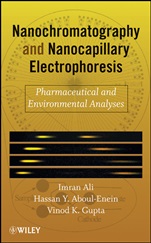
Nanochromatography and Nanocapillary Electrophoresis: Pharmaceutical and Environmental Analyses
ISBN 9780470178515
Autor: Imran Ali, Hassan Y. Aboul–Enein, Vinod K. Gupta
Wydawca: Wiley
Dostępność: 3-6 tygodni
Cena: 538,65 zł
Przed złożeniem zamówienia prosimy o kontakt mailowy celem potwierdzenia ceny.
ISBN13: |
9780470178515 |
ISBN10: |
0470178515 |
Autor: |
Imran Ali, Hassan Y. Aboul–Enein, Vinod K. Gupta |
Oprawa: |
Hardback |
Rok Wydania: |
2009-04-21 |
Ilość stron: |
296 |
Wymiary: |
240x161 |
Tematy: |
PN |
The latest tested and proven methods for detecting nanolevels of drugs and xenobiotics
Filling an important gap in the literature, this book enables you to successfully perform nanoanalyses using chip–based nanoliquid chromatography (NLC) and nanocapillary electrophoresis (NCE). The authors carefully guide readers through each stage of the instrumentation, detection, and applications of NLC and NCE in order to accurately identify compounds at a nanogram per liter or lower. This is the first book in the world describing NLC and NCE techniques in separation science.
Nanochromatography and Nanocapillary Electrophoresis begins with an introductory chapter that defines and sets forth a protocol for nanoanalyses. The chapters that follow guide you step by step through such important topics as:
Fabrication of microchips
Instrumentation, detection, and sample preparation in NLC and NCE
Nano high–performance liquid chromatography
Nanocapillary electrochromatography and nanomicellar electrokinetic chromatography
Chiral separations by nanoliquid chromatography and nanocapillary electrophoresis
Throughout the book, the authors translate theory into practice, with examples of applications in materials science, nutrition, agriculture, chemistry, biology, and environmental science. Each chapter ends with a set of conclusions highlighting the most salient points as well as references to guide readers to the primary literature for further research.
This book equips readers with new, sophisticated tools to detect and analyze drugs and xenobiotics at nano levels. It is therefore highly recommended for scientists, researchers, academicians, and students in analytical chemistry, environmental monitoring, drugs analyses, and chromatography.
Spis treści:
Chapter 1: Introduction.
1. Nano Analyses.
2. Definition of Nano–Chromatography and Nano–Capi
llary Electrophoresis.
3. Nano–Chromatography and Nano–Capillary Electrophoresis.
4. Fabrication of Micro Devices.
5. Development in Nano Analyses.
6. Data Integration.
7. Protocol of Nano Analyses.
8. Scope of the Book.
9. Conclusion.
10. References.
Chapter 2: Fabrication of Micro Chips.
1. Introduction.
2. Substrates.
3. Techniques of Fabrication.
3.1 Glass Chips.
3.2 Quartz Chips.
3.3 Silica Chips.
3.4 Polymer Chips.
3.5 Plastic Chips.
3.6 Chips and PCR.
4. Surface Modification.
4.1 Modification by Polymers.
4.2 Modification by Silica Gel.
4.3 Modification by Monolithics.
4.4 Modification by Sulfonation.
5. Designs of Chips.
6. Bindings of Chips.
7. Conclusion.
8. References.
Chapter 3: Instrumentation of Nano–Chromatogrpahy and Nano–Capillary Electrophoresis.
1. Introduction.
2. Nano–Liquid Chromatography.
2.1 Mobile Phase Reservoirs.
2.2 Mobile Phases and Flow Calibration.
2.3 Mobile Phase Tubings.
2.4 Solvent Delivery Pump.
2.6 Sample Injector.
2.7 Separation Chips.
2.8 Detectors.
2.9 Recorder.
2.10 Sample Preparation Units.
3. Nano Capillary Electrophoresis.
3.1 Separation Chip.
3.2 Background Electrolyte and its Reservoirs.
3.3 Sample Injection Port.
3.4 Detectors.
3.5 Recorder.
3.6 Sample Preparation Units.
4. Conclusion.
5. References.
Chapter 4: Detection in Nano Chromatography and Nano Capillary Electrophoresis.
1. Introduction.
2. Mass Spectrometer Detectors.
3. Fluorescence Detectors.
4. Electrochemical Detectors.
5. Element Specific Detectors.
6. Miscellaneous Detectors.
7. Conclusion.
8. References.
Chapter 5: Sample Preparation in Nano Chromatography and Nano–Capillary Electrophoresis.
1. Introduction.
2. Sample Preparation.
3. Sampling.
3.1 Biological Samples.
3.1.1 Blood.
3.1.2 Urine.
3.1.3
Tissues.
3.1.4 Plants.
3.1.5 Food Stuffs.
3.2 Environmental Samples.
3.2.1 Air.
3.2.2 Water.
3.2.3 Sediment and Soils.
4. Preservation.
5. Filtration.
6. Digestion/Homogenization.
7. Extractions.
8. Clean–Up.
9. Pre–concentration.
10. Off–Line Nano–Sample Preparation Methods.
10.1 Nano Solid Phase Extractions.
10.2 Nano Membrane Extractions.
10.3 Nano Miscellaneous Extractions.
11. On–Line Nano–Sample Preparation Methods.
12. Conclusion.
13. References.
Chapter 6: Nano High Performance Liquid Chromatography.
1. Introduction.
2. Nano–HPLC.
3. Applications.
3.1 Nano–HPLC of Biological Matrices.
3.1.1 Proteomics.
3.1.2 Drugs Development and Design.
3.1.3 Environmental Analysis.
4. Optimization of Separations in Nano–HPLC.
5. Trouble Shooting in Nano–HPLC.
6. Conclusion.
7. References.
Chapter 7: Nano Capillary Electro–Chromatography and Nano Micellar Electrokinetic Chromatography.
1. Introduction.
2. Nano Capillary Electro–Chromatography.
2.1 Biological Samples.
2.2 Environmental Samples.
2.3 Mechanism of Separation.
3. Nano Micellar Electrokinetic Chromatography.
3.1 Biological Samples.
3.2 Environmental Samples.
3.3 Mechanisms of Separation.
4. Conclusion.
5. References.
Chapter 8: Nano Capillary Electrophoresis.
1. Introduction.
2. Optimization.
3. Applications.
3.1 Proteomics.
3.2 Genomics.
3.3 Amino Acids.
3.4 Drugs Development and Design.
3.5 Enzymes and Hormones.
3.6 Biological Fluids.
3.7 Foods and Beverages.
3.8 Viruses and Bacteria.
3.9 Explosives.
3.10 Environmental Analyses.
3.11 Miscellaneous Applications.
4. Mechanism of Separation.
5. Conclusion.
6. References.
Chapter 9: Chiral Separations by Nano Liquid Chromatography and Nano Capillary Electrophoresis.
1. Introductio
n.
2. Nano Liquid Chromatography.
3. Nano Capillary Electrophoresis.
4. Mechanisms of Chiral Separations.
5. Conclusion.
6. References.
Chapter 10: Perspectives of Nano Analyses.
1. Introduction.
2. Future of Micro Fluidic Devices.
3. Future Challenges.
4. Conclusion.
5. References.
Nota biograficzna:
Imran Ali, PhD, is Associate Professor at the Department of Chemistry, Jamia Millia Islamia (Central University), New Delhi, India. Dr. Ali has published more than 150 scholarly works, including complete books, book and encyclopedia chapters, review articles, research papers, technical reports, and conference presentations.
Hassan Y. Aboul–Enein, PhD, is a Professor at Pharmaceutical and Medicinal Chemistry Department, Pharmaceutical and Drug Industries Research Division, National Research Centre, Dokki, Cairo, Egypt. He has published more than 600 articles, including several books and encyclopedia chapters.
Vinod K. Gupta is a Professor in the Department of Chemistry, Indian Institute of Technology, Roorkee, India. He has published more than 200 articles including book and encyclopedia chapters, review articles, research papers, technical reports, and conference presentations.
Okładka tylna:
The latest tested and proven methods for detecting nanolevels of drugs and xenobiotics
Filling an important gap in the literature, this book enables you to successfully perform nanoanalyses using chip–based nanoliquid chromatography (NLC) and nanocapillary electrophoresis (NCE). The authors carefully guide readers through each stage of the instrumentation, detection, and applications of NLC and NCE in order to accurately identify compounds at a nanogram per liter or lower. This is the first book in the world describing NLC and NCE techniques in separation science.
Nanochromatography and Nanocapillary Electrophoresis begins with an introductory chapter that defines and se
Koszyk
Książek w koszyku: 0 szt.
Wartość zakupów: 0,00 zł
Informacje


Kontakt
Gambit
Centrum Oprogramowania
i Szkoleń Sp. z o.o.
Al. Pokoju 29b/22-24
31-564 Kraków
Siedziba Księgarni
ul. Kordylewskiego 1
31-542 Kraków
+48 12 410 5991
+48 12 410 5987
+48 12 410 5989
Subskrypcje
Administratorem danych osobowych jest firma Gambit COiS Sp. z o.o. Na podany adres będzie wysyłany wyłącznie biuletyn informacyjny.
Autoryzacja płatności

Informacje na temat autoryzacji płatności poprzez PayU.

© Copyright 2012: GAMBIT COiS Sp. z o.o. Wszelkie prawa zastrzeżone.
Projekt i wykonanie: Alchemia Studio Reklamy