


Wydawcy
Katalog tematyczny
- Archeologia (109)
- Ekonomia, finanse, business (13704)
- Filozofia (1445)
- Historia (3040)
- Języki i językoznawstwo (2356)
- Lifestyle, hobby i rozrywka (475)
- Medycyna (9704)
- Nauki humanistyczne (4)
- Nauki o Ziemi i środowisku (2638)
- Nauki ścisłe (20412)
- Nauki społeczne (8486)
- Nauki techniczne (13450)
- Budownictwo lądowe (1045)
- Chemia przemysłowa (2258)
- Elektronika i telekomunikacja (3287)
- Energetyka (1122)
- Inne nauki stosowane (363)
- Inżynieria biochemiczna (507)
- Inżynieria transportu (232)
- Mechanika i materiały (3316)
- Nauka o środowisku (321)
- Rolnictwo (507)
- Technika, ogólnie (475)
- Prawo (1696)
- Publikacje informacyjne i interdyscyplinarne (1288)
- Religia i wierzenia (917)
- Technika komputerowa (4067)
- Zdrowie, relacje międzyludzkie i rozwój osobisty (657)





Informacje szczegółowe o książce
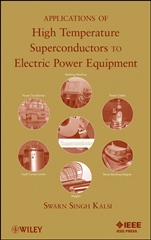
Applications of High Temperature Superconductors to Electric Power Equipment
ISBN 9780470167687
Autor: Swarn S. Kalsi
Wydawca: Wiley
Dostępność: 3-6 tygodni
Cena: 543,90 zł
Przed złożeniem zamówienia prosimy o kontakt mailowy celem potwierdzenia ceny.
ISBN13: |
9780470167687 |
ISBN10: |
0470167688 |
Autor: |
Swarn S. Kalsi |
Oprawa: |
Hardback |
Rok Wydania: |
2011-04-08 |
Ilość stron: |
332 |
Wymiary: |
236x164 |
Tematy: |
TG |
A number of devices utilizing HTS technology are being installed in electric grids worldwide but there is no single source or book that discusses design and manufacturing issues relating to power applications of HTS. This book will provide a single source illustrating design, analysis and manufacturing concepts for different power devices utilizing HTS. Engineers at OEM, utilities, industry and universities will be able to understand the basic theory, perform design and analysis for different devices. Each chapter will be dedicated to a specific device; i.e. motors, generators, cables, etc. For each device, the book will discuss its history, advantages offered by the HTS technology, contrast between conventional and HTS device design approaches, design and performance analyses. It will also provide examples of devices built to date utilizing the HTS technology.
Spis treści:
PREFACE.
ACKNOWLEDGEMENTS.
CHAPTER 1 Introduction.
CHAPTER 2 HTS Superconductors.
2.1 Introduction.
2.2 HTS Background and Nomenclature.
2.2.1 Background.
2.2.2 Nomenclature.
2.3 BSCCO–2212 Conductors.
2.4 BSCCO–2223 OPIT Wires.
2.4.1 Manufacturing Process.
2.4.2 Characteristics – Electrical and Mechanical.
2.5 YBCO–123 Coated Conductors.
2.6 Magnesium Diboride (MgB2).
2.7 State–of–the–art of Various HTS Conductors.
2.8 Superconducting Magnet Design.
2.9 Summary.
References.
CHAPTER 3 Cooling and Thermal Insulation Systems.
3.1 Introduction.
3.2 Anatomy of a Cryostat.
3.3 Cryogenic Fluids for Cooling HTS Magnets.
3.4 Direct Cooling with Cryogens.
3.5 Indirect or Conduction Cooling.
3.6 Refrigeration Systems.
3.6.1 Gifford–McMahon (G–M) Cryocoolers.
3.6.2 Stirling Coolers.
3.6.3 Pulse Tube Coolers.
3.7 Open Loop Cooling with Liquid Nitrogen.
3.8 Magnet Materials.
3.9 Current Leads.
3.9.1 De
sign of Conduction Cooled Leads.
3.10 Example Cryostat Design.
3.10.1 Configuration.
3.10.2 Thermal Load Calculations.
3.10.2.1 Radiation Thermal Load Through MLI.
3.10.3 Current Leads.
3.10.4 Conduction.
3.10.5 Selection of Refrigerator.
3.11 Summary.
References.
CHAPTER 4 Rotating AC Machines.
4.1 Introduction.
4.2 Topology.
4.3 Analysis and Parameter Calculations.
4.3.1 Magnetic Circuit and Harmonic Components.
4.3.2 Parameter Calculations.
4.3.3 Machine Terminal Parameters.
4.4 Design.
4.4.1 Stator Winding Design Issues.
4.4.2 Field Winding Design Issues.
4.4.3 Electromagnetic (EM) Shield Design Issues.
4.4.4 Loss and Efficiency Calculations.
4.4.5 Example Design.
4.5 Manufacturing Issues.
4.5.1 Superconducting Field Winding and Its Cooling Systems.
4.5.2 Torque Transfer from Col Field Winding to Warm Shaft.
4.5.3 Stator Winding.
4.6 Simulation.
4.7 Generators.
4.7.1 High Speed Generators.
4.7.2 Low Speed Generators.
4.8 Motors.
4.8.1 High Speed Motors.
4.8.2 Low Speed Motors.
4.9 Summary.
References.
CHAPTER 5 Rotating DC Homoploar Machines.
5.1 Introduction.
5.5 Principle.
5.3 Configuration.
5.4 Design Challenges.
5.5 Prototypes.
5.6 Summary.
References.
CHAPTER 6 Synchronous AC Homoploar Machines.
6.1 Introduction.
6.2 Principle.
6.3 Design.
6.4 Design Challenges.
6.5 Prototypes.
6.6 Summary.
References.
CHAPTER 7 Transformers.
7.1 Introduction.
7.2 Configuration.
7.3 Design Analysis.
7.3.1 50MVA Example Design.
7.4 Challenges.
7.5 Manufacturing Issues.
7.6 Prototypes.
7.7 Summary.
References.
CHAPTER 8 Fault Current Limiters.
8.1 Introduction.
8.2 Principle and Configuration.
8.2.1 Resistive Fault Current Limiters (R–FCL).
8.2.2 Inductive FCL with Shielded Iron Core.
8.2.3 Inductive FCL with Saturated Iron Core.
8.3
Design Analysis.
8.3.1 Example Design – Resistive FCL.
8.3.2 Example Design – Saturated Core FCL.
8.4 Challenges.
8.4.1 Challenges of Resistive FCL.
8.4.2 Challenges of Inductive FCL.
8.5 Manufacturing Issues.
8.6 Prototypes.
8.6.1 AMSC’s Fault Current Limiter.
8.6.2 Superpower’s Fault Current Limiter.
8.6.3 Zenergy Power’s Fault Current Limiter.
8.6.4 Nexans’s Fault Current Limiter.
8.7 Summary.
References.
CHAPTER 9 Power Cables.
9.1 Introduction.
9.2 Configurations.
9.2.1 Resistive Cryogenic Cable.
9.2.2 HTS Cables.
9.3 Design Analysis.
9.3.1 Cryogenic Cable Analysis.
9.3.2 HTS Cable Analysis.
9.3.2.1 HTS Coaxial Cable – High Voltage.
9.3.2.2 HTS Coaxial Cable – Medium Voltage.
9.3.2.3 TriaxTM HTS Cable – Medium Voltage.
9.4 Challenges.
9.4.1 Resistive Cryogenic Cable.
9.4.2 HTS Cable.
9.5 Manufacturing Issues.
9.5.1 Resistive Cryogenic Cable.
9.5.2 HTS Cable.
9.6 Prototypes.
9.6.1 Resistive Cryogenic Cable.
9.6.2 HTS Cable – High Voltage.
9.6.3 HTS Cable – Medium Voltage.
9.6.4 TriaxTM HTS Cable – Medium Voltage.
9.7 Summary.
References.
CHAPTER 10 Maglev Transport.
10.1 Introduction.
10.2 Configuration.
10.2.1 Electro–dynamic Suspension (EDS).
10.2.2 Electro–magnetic Suspension (EMS) .
10.3 Design Analysis.
10.3.1 Electro–dynamic Suspension Maglev.
10.3.2 Electro–magnetic Suspension Maglev.
10.4 Challenges (Technical/Economic).
10.4.1 EDS System Challenges.
10.4.2 EMS System Challenges.
10.5 Manufacturing Issues.
10.6 Prototypes.
10.6.1 Northrop Grumman Concept.
10.7 Summary.
References.
CHAPTER 11 Other Applications of HTS.
11.1 Introduction.
11.2 Air–Core Magnets.
11.2.1 High Field Magnets.
11.2.2 Low Field Magnets.
11.3 Iron–Core Magnets.
11.3.1 Beam Ben
ding.
11.3.2 Induction Heating.
11.3.3 Synchrotron.
11.4 Challenges.
11.5 Summary.
INDEX.
Koszyk
Książek w koszyku: 0 szt.
Wartość zakupów: 0,00 zł
Informacje


Kontakt
Gambit
Centrum Oprogramowania
i Szkoleń Sp. z o.o.
Al. Pokoju 29b/22-24
31-564 Kraków
Siedziba Księgarni
ul. Kordylewskiego 1
31-542 Kraków
+48 12 410 5991
+48 12 410 5987
+48 12 410 5989
Subskrypcje
Administratorem danych osobowych jest firma Gambit COiS Sp. z o.o. Na podany adres będzie wysyłany wyłącznie biuletyn informacyjny.
Autoryzacja płatności

Informacje na temat autoryzacji płatności poprzez PayU.

© Copyright 2012: GAMBIT COiS Sp. z o.o. Wszelkie prawa zastrzeżone.
Projekt i wykonanie: Alchemia Studio Reklamy