


Wydawcy
Katalog tematyczny
- Archeologia (109)
- Ekonomia, finanse, business (13704)
- Filozofia (1445)
- Historia (3040)
- Języki i językoznawstwo (2356)
- Lifestyle, hobby i rozrywka (475)
- Medycyna (9704)
- Chirurgia (272)
- Inne gałęzie medycyny (1871)
- Medycyna kliniczna (4187)
- Choroby wewnętrzne (514)
- Dermatologia (51)
- Diagnostyka medyczna (3)
- Endokrynologia (144)
- Gastroenterologia (27)
- Geriatria (50)
- Ginekologia i położnictwo (134)
- Hematologia (46)
- Hepatologia (10)
- Kardiologia (71)
- Laryngologia (12)
- Nefrologia (10)
- Neurologia (500)
- Oftalmologia (50)
- Pediatria (33)
- Pulmunologia (32)
- Reumatologia (14)
- Terapia genowa (1)
- Układ mięśniowo-szkieletowy (1)
- Urologia (14)
- Medycyna niekonwencjonalna (14)
- Medycyna przedkliniczna (269)
- Medycyna, ogólnie (1740)
- Medyczne służby pomocnicze (745)
- Studia medyczne (16)
- Weterynaria (548)
- Nauki humanistyczne (4)
- Nauki o Ziemi i środowisku (2638)
- Nauki ścisłe (20412)
- Nauki społeczne (8486)
- Nauki techniczne (13450)
- Prawo (1696)
- Publikacje informacyjne i interdyscyplinarne (1288)
- Religia i wierzenia (917)
- Technika komputerowa (4067)
- Zdrowie, relacje międzyludzkie i rozwój osobisty (657)





Informacje szczegółowe o książce
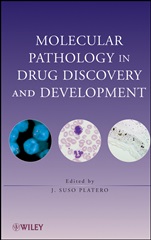
Molecular Pathology in Drug Discovery and Development
ISBN 9780470145593
Autor: J. Suso Platero
Wydawca: Wiley
Dostępność: 3-6 tygodni
Cena: 681,45 zł
Przed złożeniem zamówienia prosimy o kontakt mailowy celem potwierdzenia ceny.
ISBN13: |
9780470145593 |
ISBN10: |
0470145595 |
Autor: |
J. Suso Platero |
Oprawa: |
Hardback |
Rok Wydania: |
2009-09-11 |
Ilość stron: |
376 |
Wymiary: |
239x164 |
Tematy: |
MJ |
Covers powerful new tools for drug development
Molecular pathology offers tools and techniques that can greatly enhance the drug discovery and development process, helping to make the promises of personalized medicine a reality. Molecular Pathology in Drug Discovery and Development provides an unmatched guide to this cutting–edge discipline and its applications to pharmaceutical science.
With contributions from leading lights in drug discovery, drug development, and molecular pathology balanced by a consistent editorial approach, this reference offers both an overview of molecular pathology and a close look at the methods as they are applied to the process of drug discovery and development. Presented as steps in the drug development process, the coverage includes the use of molecular pathology to:
Identify and validate new drug candidates
Enhance transcriptional profiling to better find and validate biomarkers
Assess toxicology
Employ toxicogenomics to identify genes relevant to the safety of compounds
Identify correct doses for different drugs
Identify patients for treatment
Develop molecular therapies
Further the new techniques of Immunohistochemistry and Immunofluorescence
With many tests and treatments already working today, drug research and development using molecular pathology has shown itself an extremely fruitful area. Molecular Pathology in Drug Discovery and Development gives practitioners an up–to–date resource on this highly active discipline and its role in furthering pharmaceutical research.
Spis treści:
Preface.
Contributors.
1 MOLECULAR PATHOLOGY AND DRUG DEVELOPMENT (Franz Fogt and J. Suso Platero).
1.1. General Pathology.
1.2. General Aspects.
1.3. Molecular Pathology, the Molecular Way.
1.4. Application of Molecular Pathology.
1.5. Molecular Pat
hology in Drug Development.
1.6. Pharmaceutical Drug Development.
References.
2 MOLECULAR PATHOLOGY IN ONCOLOGY TARGET AND DRUG DISCOVERY (Rolf–P. Ryseck, Ricardo Attar, Matthew V. Lorenzi, and Brent A. Rupnow).
2.1. Introduction.
2.2. History of Chemotherapy and Cancer Drug Discovery.
2.3. Target–Based Drug Discovery.
2.4. Utilization of Molecular Pathology in the Discovery of Novel Cancer Targets.
2.5. Hit Identifi cation and In Vitro Lead Optimization.
2.6. Implications for Molecular Pathology in Cancer Drug Development and Use.
2.7. Summary and Future Considerations.
References.
3 MOLECULAR PATHOLOGY AND TRANSCRIPTIONAL PROFILING IN EARLY DRUG DEVELOPMENT (Cornelia Liedtke, Lajos Pusztai, and W. Fraser Symmans).
3.1. Introduction.
3.2. Biomarkers in Clinical Setting and in Early Drug Development.
3.3. Advantages of Biomarker Implementation.
3.4. Changing Paradigm in Clinical Drug and Biomarker Development.
3.5. Promises of Transcriptional Profiling.
3.6. Biomarker Development and Validation Using Microarray Analysis.
3.7. Neoadjuvant Chemotherapy as an Intriguing Model for Biomarker Development.
3.8. Transcriptional Profi ling for Identifi cation of Individual Genes as Biomarkers.
3.9. Transcriptional Profi ling for the Definition of Multigene Predictors Using .Transcriptional Profiling.
3.10. Novel Tools for Pathway Analysis.
3.11. Implementation of Biomarkers into the Clinical Setting.
3.12. Conclusion.
References.
4 MOLECULAR PATHOLOGY IN NONCLINICAL SAFETY ASSESSMENT (Richard A. Westhouse).
4.1. Introduction.
4.2. Drug Development.
4.3. Drug Discovery.
4.4. Biopharmaceuticals.
4.5. Summary.
References.
5 TOXICOGENOMICS IN DRUG DEVELOPMENT (Wayne R. Buck and Eric A. G. Blomme).
5.1. Introduction.
5.2. Brief Overview of Large–Scale Gene Expression Technologies.
5.3. Analysis of Mi
croarray Data.
5.4. Application of Toxicogenomics in Drug Development.
5.5. Considerations for Toxicogenomic Study Design.
5.6. Overview of Major Regulatory Developments Related to Use of Toxicogenomics in Drug Discovery and Development.
5.7. Summary.
References.
6 MOLECULAR PATHOLOGY AS A WAY TO FIND THE RIGHT DOSE FOR A DRUG (F. Rojo, A. Rovira, S. Serrano, and J. Albanell).
6.1. Introduction.
6.2. Anti–EGFR–Targeted Therapies: The Pharmacodynamic Experience.
6.3. Molecular Pathology with Small Molecules Gefitinib and Erlotinib.
6.4. Molecular Pathology with Cetuximab and Other Monoclonal Antibodies to EGFR.
6.5. Proteasome Inhibitors: Pharmacodynamics on Blood Samples.
6.6. Pharmacodynamics with Rapamycin Analogs.
6.7. Second Generation of Targeted Therapies: Multitarget Agents.
6.8. Conclusions and Perspectives: Phase 0 Clinical Trials.
References.
7 MOLECULAR PATHOLOGY IN LIFE–CYCLE MANAGEMENT IN DRUG DEVELOPMENT (Martha Quezado, Carlos A. Torres–Cabal, and David Berman).
7.1. Introduction.
7.2. Molecular Pathology Techniques.
7.3. Practical Applications of Molecular Pathology Biomarkers.
7.4. Conclusion.
References.
8 MOLECULAR PATHOLOGY AND MOLECULAR THERAPY (Hewei Li).
8.1. Introduction.
8.2. Molecular Therapy Strategies.
8.3. Molecular Therapy Clinical Trials.
References.
9 MOLECULAR PATHOLOGY: IMMUNOHISTOCHEMISTRY ASSAYS IN DRUG DEVELOPMENT PERFORMED BY A CONTRACT RESEARCH LABORATORY (Frank Lynch and Steve Bernstein).
9.1. Immunohistochemistry Is the Technique of Microscopic Visualization of Target Proteins in Tissue Sections Using Specific Antibodies.
9.2. Basics of the IHC Assay.
9.3. Immunohistochemistry Assay Development.
9.4. Sending a Study to a Contract Laboratory vs. Running In–house.
9.5. Choosing and Working with an Outside Laboratory— Keys for a Succe.ssfu
l Relationship—What to Do before a Slide Is Stained.
9.6. Running and Managing Outsourced Clinical Studies
9.7. Applications of IHC in Drug Discovery and Development Process.
9.8. Conclusion.
References.
10 QUANTIFICATION OF MOLECULAR PATHOLOGY: COLORIMETRIC IMMUNOHISTOCHEMISTRY (Raphael Marcelpoil).
10.1. Introduction.
10.2. Imaging Devices and Systems.
10.3. Quantifi cation: Introduction to Colorimetric Image Analysis.
10.4. Measuring Colorimetric Information.
10.5. Chromogen Separation.
10.6. Measuring Information.
10.7. Conclusion.
References.
11 AQUA® TECHNOLOGY AND MOLECULAR PATHOLOGY (Mark Gustavson, Marisa Dolled–Filhart, Jason Christiansen, Robert Pinard, and David Rimm).
11.1. Introduction.
11.2. AQUA Technology—How It Works.
11.3. Standardization.
11.4. Quantification.
11.5. Localization.
11.6. Multiparametric Analysis.
11.7. Application of AQUA Technology to Drug Discovery and Companion Diagnostics.
11.8. Summary and Conclusions.
References.
Index.
Nota biograficzna:
J. Suso Platero is Director of Oncology Biomarkers at Centocor. Formerly, he was associate director of molecular pathology at Bristol–Myers Squibb. Dr. Platero has more than ten years of experience in the discovery, development, and validation of assays for clinical purposes.
Okładka tylna:
Covers powerful new tools for drug development
Molecular pathology offers tools and techniques that can greatly enhance the drug discovery and development process, helping to make the promises of personalized medicine a reality. Molecular Pathology in Drug Discovery and Development provides an unmatched guide to this cutting–edge discipline and its applications to pharmaceutical science.
With contributions from leading lights in drug discovery, drug development, and molecular pathology balanced by a consistent e
ditorial approach, this reference offers both an overview of molecular pathology and a close look at the methods as they are applied to the process of drug discovery and development. Presented as steps in the drug development process, the coverage includes the use of molecular pathology to:
Identify and validate new drug candidates
Enhance transcriptional profiling to better find and validate biomarkers
Assess toxicology
Employ toxicogenomics to identify genes relevant to the safety of compounds
Identify correct doses for different drugs
Identify patients for treatment
Develop molecular therapies
Further the new techniques of Immunohistochemistry and Immunofluorescence
With many tests and treatments already working today, drug research and development using molecular pathology has shown itself an extremely fruitful area. Molecular Pathology in Drug Discovery and Development gives practitioners an up–to–date resource on this highly active discipline and its role in furthering pharmaceutical research.
Koszyk
Książek w koszyku: 0 szt.
Wartość zakupów: 0,00 zł
Informacje


Kontakt
Gambit
Centrum Oprogramowania
i Szkoleń Sp. z o.o.
Al. Pokoju 29b/22-24
31-564 Kraków
Siedziba Księgarni
ul. Kordylewskiego 1
31-542 Kraków
+48 12 410 5991
+48 12 410 5987
+48 12 410 5989
Subskrypcje
Administratorem danych osobowych jest firma Gambit COiS Sp. z o.o. Na podany adres będzie wysyłany wyłącznie biuletyn informacyjny.
Autoryzacja płatności

Informacje na temat autoryzacji płatności poprzez PayU.

© Copyright 2012: GAMBIT COiS Sp. z o.o. Wszelkie prawa zastrzeżone.
Projekt i wykonanie: Alchemia Studio Reklamy