


Wydawcy
Katalog tematyczny
- Archeologia (109)
- Ekonomia, finanse, business (13704)
- Filozofia (1445)
- Historia (3040)
- Języki i językoznawstwo (2356)
- Lifestyle, hobby i rozrywka (475)
- Medycyna (9704)
- Nauki humanistyczne (4)
- Nauki o Ziemi i środowisku (2638)
- Nauki ścisłe (20412)
- Nauki społeczne (8486)
- Edukacja (229)
- Kryminologia, opieka spełeczna (284)
- Obronność (10)
- Polityka (1389)
- Psychologia (777)
- Socjologia (410)
- Społeczeństwo i kultura (187)
- Nauki techniczne (13450)
- Prawo (1696)
- Publikacje informacyjne i interdyscyplinarne (1288)
- Religia i wierzenia (917)
- Technika komputerowa (4067)
- Zdrowie, relacje międzyludzkie i rozwój osobisty (657)





Informacje szczegółowe o książce
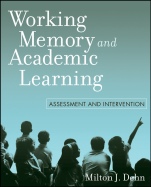
Working Memory and Academic Learning: Assessment and Intervention
ISBN 9780470144190
Autor: Milton J. Dehn
Wydawca: Wiley
Dostępność: 3-6 tygodni
Cena: 327,60 zł
Przed złożeniem zamówienia prosimy o kontakt mailowy celem potwierdzenia ceny.
ISBN13: |
9780470144190 |
ISBN10: |
047014419X |
Autor: |
Milton J. Dehn |
Oprawa: |
Paperback |
Rok Wydania: |
2008-05-16 |
Ilość stron: |
408 |
Wymiary: |
231x191 |
Tematy: |
JC |
An indispensable guide that examines the function of working memory in educational achievement
Equipping school and child psychologists, neuropsychologists, as well as other educational professionals with critical information on the role of working memory in learning and achievement, Working Memory and Academic Learning: Assessment and Intervention offers guidance on assessment tools, interventions, and current evidence–based best practices.
This practical resource bridges theory and practice to provide professional guidance with coverage of:
The history of the major theories and models of working memory, including Baddeley′s model
An integrated model of working memory designed to facilitate working memory assessment
Working memory development during the early elementary years
The relationships between specific memory components and the academic skills of reading, mathematics, and written language
Numerous measures of cognition and memory, including the WISC®–IV Integrated, Children′s Memory Scale, and the Working Memory Test Battery for Children
Assessment cases that illustrate typical profiles found in children and adolescents with working memory deficits
Drawing on his extensive training and experience, author Milton Dehn presents both the theory and research on working memory—while offering specific, step–by–step guidance and hands–on case studies enabling professionals to identify how working memory relates to academic attainment and how to apply this knowledge in professional practice.
Spis treści:
Chapter 1. Introduction and Overview.
What is Working Memory?
Working Memory versus Short–Term Memory.
Controversies Surrounding Working Memory.
Working Memory Measurement.
Compatibility with Response–to–Intervention.
Interventions for Working Memory.
Le
arning Objectives.
Chapter 2. Theories and Models of Working Memory.
Information Processing Model.
The Atkinson–Shiffrin Model.
Levels of Processing Model.
Baddeley′s Model.
Contributions from Daneman and Carpenter.
Kane and Engle′s Executive Attention Model.
Cowan′s Embedded–Process Model.
Oberauer′s Facet Theory.
Long–Term Working Memory.
Neuropsychological Evidence.
The Controversy Over Working Memory Capacity.
Chapter 3. An Integrated Model of Working Memory.
The Structure of the Integrated Model.
Definition of Working Memory.
Descriptions of Memory Components.
Capacity of Working Memory Operations.
Key Points.
Chapter 4. Working Memory Development and Related Cognitive Processes.
Development of Working Memory Capacity.
Long–Term Memory.
Expertise and Automatization.
Deficit Models.
Relations with Other Cognitive Processes.
Disorders and Conditions with Working Memory Deficits.
Conclusions and Implications.
Chapter 5. Working Memory and Academic Learning.
Working Memory and Learning Disabilities.
Working Memory and Oral Language.
Oral Language Disabilities.
Working Memory and Reading.
Working Memory and Mathematics.
Working Memory and Written Language.
Implications for Assessment, Instruction, and Intervention.
Chapter 6. Working Memory Assessment Strategies.
Working Memory Assessment Challenges.
Distinguishing Between Short–Term and Working Memory Measures.
Short–Term and Working Memory Testing Paradigms.
Hypothesis Driven Assessment of Working Memory.
Multimethod Assessment of Working Memory.
Reviewing Records for History.
Interviews.
Observations.
Cross–Battery and Selective Testing.
Assessment Recommendations for Specific Disabilities.
General Guidelines for Interpreting Test Scores.
Analysis of Working Memory Test Scor
es.
Interpretation of Working Memory Assessment Results.
The Use of Non–Standardized Working Memory Measures.
Key Points.
Chapter 7. Using Cognitive Scales to Assess Working Memory.
Cattell–Horn–Carroll (CHC) Theory and Working Memory.
General Guidelines for Selecting Working Memory Subtests.
General Guidelines for Administering Working Memory Subtests.
Stanford–Binet Intelligence Scales, Fifth Edition (SB5).
Differential Ability Scales, Second Edition (DAS–II).
Kaufman Assessment Battery for Children, Second Edition (KABC–II).
Cognitive Assessment System (CAS).
Woodcock–Johnson III Tests of Cognitive Abilities (WJ III COG).
Universal Nonverbal Intelligence Test (UNIT).
The Wechsler Scales.
WISC–IV Integrated.
The NEPSY–II: A Developmental Neuropsychological Assessment.
Key Points.
Chapter 8. Assessing Working Memory with Memory Scales.
Wechsler Memory Scales–Third Edition (WMS–III).
Children′s Memory Scale (CMS).
Test of Memory and Learning–Second Edition (TOMAL–2).
Wide Range Assessment of Memory and Learning (WRAML–2).
Working Memory Test Battery for Children (WMTB–C).
Automated Working Memory Assessment (AWMA).
Swanson Cognitive Processing Test (S–CPT).
Key Points.
Chapter 9. Working Memory Interventions.
General Approaches to Working Memory Interventions.
General Strategy Training Procedures.
Metacognitive Training.
Metamemory Training.
Working Memory Interventions.
Mnemonics.
Long–Term Memory Interventions.
Phonological Processing Interventions.
Reading Comprehension Strategies.
Academic Skills and Automaticity.
Working Memory Training in Children with ADHD.
Medication.
Computerized Working Memory Training.
Classroom Instruction That Supports Working Memory.
Key Points.
Chapter 10. Case Studies, Reporti
ng Results, and Recommendations.
Applied Research Study.
Assessment Case Studies.
Written Interpretation of Working Memory Test Results.
Illustrative Psychological Report Summary.
Oral Interpretation of Working Memory Test Results.
Recommendations for Future Working Memory Tests.
Appendix A. Working Memory Subtests in Cognitive Scales.
Appendix B. Working Memory Assessment Plan.
Appendix C. Working Memory Analysis Worksheet.
Appendix D. Working Memory Interpretative Summary.
Appendix E. Working Memory Subtests in Memory Scales.
Appendix F. Conversion Table: Scaled Scores to Standard Scores.
Appendix G. Related Processing Subtests in Cognitive Scales.
References.
Index.
Nota biograficzna:
Milton J. Dehn, EdD, NCSP, is the cofounder andProgram Director of Schoolhouse Tutoring®, an agency that provides assessment, tutoring, and instructional support forstudents of all ages and abilities. He is also author of Essentials of Processing Assessment (Wiley).
Okładka tylna:
An indispensable guide that examines the function of working memory in educational achievement
Equipping school and child psychologists, neuropsychologists, as well as other educational professionals with critical information on the role of working memory in learning and achievement, Working Memory and Academic Learning: Assessment and Intervention offers guidance on assessment tools, interventions, and current evidence–based best practices.
This practical resource bridges theory and practice to provide professional guidance with coverage of:
The history of the major theories and models of working memory, including Baddeley′s model
An integrated model of working memory designed to facilitate working memory assessment
Working memory development during the early elementary years
The relationships between specific memory components and the acade
Koszyk
Książek w koszyku: 0 szt.
Wartość zakupów: 0,00 zł
Informacje


Kontakt
Gambit
Centrum Oprogramowania
i Szkoleń Sp. z o.o.
Al. Pokoju 29b/22-24
31-564 Kraków
Siedziba Księgarni
ul. Kordylewskiego 1
31-542 Kraków
+48 12 410 5991
+48 12 410 5987
+48 12 410 5989
Subskrypcje
Administratorem danych osobowych jest firma Gambit COiS Sp. z o.o. Na podany adres będzie wysyłany wyłącznie biuletyn informacyjny.
Autoryzacja płatności

Informacje na temat autoryzacji płatności poprzez PayU.

© Copyright 2012: GAMBIT COiS Sp. z o.o. Wszelkie prawa zastrzeżone.
Projekt i wykonanie: Alchemia Studio Reklamy