


Wydawcy
Katalog tematyczny
- Archeologia (109)
- Ekonomia, finanse, business (13704)
- Filozofia (1445)
- Historia (3040)
- Języki i językoznawstwo (2356)
- Lifestyle, hobby i rozrywka (475)
- Medycyna (9704)
- Nauki humanistyczne (4)
- Nauki o Ziemi i środowisku (2638)
- Nauki ścisłe (20412)
- Astronomia (294)
- Biologia (5119)
- Chemia (6540)
- Chemia analityczna (361)
- Chemia fizyczna (346)
- Chemia nieorganiczna (137)
- Chemia organiczna (535)
- Krystalografia (27)
- Minerologia (46)
- Fizyka (3309)
- Matematyka (4574)
- Nauki ścisłe, ogólnie (503)
- Nauki społeczne (8486)
- Nauki techniczne (13450)
- Prawo (1696)
- Publikacje informacyjne i interdyscyplinarne (1288)
- Religia i wierzenia (917)
- Technika komputerowa (4067)
- Zdrowie, relacje międzyludzkie i rozwój osobisty (657)





Informacje szczegółowe o książce
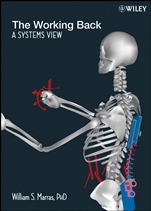
The Working Back: A Systems View
ISBN 9780470134054
Autor: William S. Marras
Wydawca: Wiley
Dostępność: 3-6 tygodni
Cena: 590,10 zł
Przed złożeniem zamówienia prosimy o kontakt mailowy celem potwierdzenia ceny.
ISBN13: |
9780470134054 |
ISBN10: |
0470134054 |
Autor: |
William S. Marras |
Oprawa: |
Hardback |
Rok Wydania: |
2008-04-29 |
Ilość stron: |
320 |
Wymiary: |
264x188 |
Tematy: |
PN |
A systems approach to understanding and minimizing the causes of low back pain in the workplace
Low back pain affects 80% of the population at some point during their lifetime; it is responsiblefor over 40% of the compensation costs for work–related injuries. This book provides an understanding of the mechanisms influencing low back pain in the workplace and indicates how low back pain might be prevented, saving employers extraordinary amounts in medical costs and protecting workers from the most common on–the–job injury. With a unique, multidisciplinary perspective that shows how various influences or risk factors can be considered collectively, The Working Back: A Systems View:
Explains basic concepts in anatomy and physiology that are essential to understanding and preventing low back pain
Provides a systems perspective on the occupational causes of back pain, not only addressing factors such as spine loading, but also considering the potential impact of psychosocial and organizational interactions, genetics, and physiology
Discusses implementing preventive engineering and administrative controls and integrating risk interventions into the workplace
Offers an expert analysis of current medical research on low back pain in one comprehensive, accessible reference
This book gives readers the knowledge to assess a work environment and prescribe effective interventions. It is a hands–on reference for ergonomists, manufacturing engineers, process engineers, industrial engineers and managers, safety engineers, nurses, therapists, chiropractors, physicians, and workers with back pain. It is also an excellent resource for graduate or undergraduate students of kinesiology, physiology, ergonomics, physical therapy, nursing, industrial design, engineering, and general medicine.
Spis treści:
Chapter 1: Introduction.
Audience for the Book.
Apolitical Causality Assessment.
A Systems Vie
w of Low Back Pain Causality.
The Reality of Work.
How Might the Different Aspects of Work Be Associated with Back Pain.
Organization of the Book.
References.
Chapter 2: Back Pain Magnitude and Potential Risk Factors.
What is back pain?
How common is back pain?
Back Pain at Work.
Epidemiology of Work Risk Factors.
Epidemiology of Physical Risk Factors.
Epidemiology of Individual (Personal) Risk Factors.
Age.
Gender.
Anthropometry.
Fitness/Strength.
Alcohol.
Smoking.
Heredity/Genetics.
Social Class and Psychological Factors.
Epidemiology of Work–Related Psychosocial/Organizational Factors.
Potential Interaction of Physical and Psychosocial Factors.
Key Points.
References.
Chapter 3: Function, Structure, and Support of the Back.
Body Coordinates.
Bony Structures of the Spine.
The Disc (and the spinal joint).
Functional Spinal Unit.
Spine Support.
Ligaments.
Muscles.
Fascia.
Nerves.
Blood Vessels.
End Plates and Nutrition.
Facets.
The System.
Key Points.
References.
Chapter 4: The Process of Pain.
What is Pain?
Origins of Pain.
Pain Transmission.
The Pain Process.
The Inflammatory Process (Cytokines).
Peripheral Nervous System Sensitization.
Neuropathic Pain: The Cytokine Cascade and Nerve Sensitization.
Pain Mechanisms of the Central Nervous System.
Role of the Environment in Central Sensitization.
Implications for Low Back Pain.
Nerves at Risk of Sensitization.
Tissues at Risk of Sensitization.
Disc and Nerve Roots.
Facet Joints.
Muscular based Pain.
Lumbar Nerve Roots.
Relationship between Tissue Loading and Pain.
Conclusions.
Key Points.
References.
Chapter 5: Potential Pathways to Back Pain.
Views of Back Pain Causality.
A Unifying Model of Low Back Pain Pathways.
The Support Structure Disruption Pathways.
Support Structure Tolerance.
Disc Tolerance Summary.
Pain Tolerance.
The Muscle Function Disruption Pathway.
The Role of Individual Differences in the Pain Pathways.
System Feedback.
Summary.
Key Points.
References.
Chapter 6: The Assessment of Biomechanical Forces Acting on the Low Back.
Biomechanical Concepts Applicable to the Back.
Load – Toleranc.
Moments and Levers.
External vs. Internal Loading.
How can we Modify Internal Spine Loads?
Biomechanical Arrangement of the Musculoskeletal Lever System.
Length–Strength Relationship.
The Impact of Velocity on Muscle Force.
Temporal Relationships.
Incorporating Spine Load Reductions into the Work System.
Loading of the Lumbar Spine.
Spine Load Assessments.
Models of Spine Load.
Biologically–Driven Modeling of Spine Loading.
Stability–Driven Spine Loading Models.
Predictions of Muscle (Motor) Control within Torso.
What Drives Motor Control– – The Mental Model.
Summary.
Key Points.
References.
Chapter 7: The Influence of Physical Work Factors on Muscle Activities and Spine Loads.
Introduction.
Industrial Quantitative Surveillance of Physical Exposure.
Strength Capacity Assessments of Work Load.
Static Analyses of Work Load.
Dynamic Analyses of Work Load.
Surveillance Conclusions.
Spine Loading and Task Performance.
Spine Loading and Primary Physical Workplace Factors.
Moment Exposure.
Role of Trunk Muscle Cocontraction in Spine Loading.
Trunk Motion.
Non–Sagittal Plane Loading.
Lateral Motion.
Twisting Motion.
Task Asymmetry.
Lift Height.
One–Handed vs. Two–Handed Lifting.
Lifting vs. Lowering.
Cumulative Exposure.
Duration of Exposure to Lifting Tasks.
Worker Experience, Task Frequency, and Moment Exposure.
Spine Loading associated with Modification of Physical Workplace Factors.
Handles.
Lifting While Supporting the
Body.
Team Lifting.
Pushing and Pulling.
Seated and Constrained Work Postures.
Physical Work Factor Summary.
Relationship between Spine Loading and Observed Risk of Low Back Pain.
Summary.
Key Points.
References.
Chapter 8: Psychosocial and Organizational Factor Influence on Spine Loading.
Introduction.
Psychosocial and Organizational Interactions.
Biomechanical Responses to Psychosocial Environment.
Biomechanical Responses to Mental Stress at Work.
Expectation.
Conclusions.
Key Points.
References.
Chapter 9: Individual Factors Role in Spine Loading.
Introduction.
Gender.
Personality.
Experience.
Conclusions.
Key Points.
References.
Chapter 10: Physical, Individual, and Psychosocial/Organizational Risk Factor Interactions.
When Risk Factors Collide.
The Magnitude of Influence of the Three Risk Factor Categories.
Can Risk Factor Interactions be Predicted?
Conclusions.
Key Points.
References.
Chapter 11: Engineering Controls to Mediate Back Pain at Work: Tools for the Assessment of Physical Factor Impact on Spine Loads and Intervention.
Effectiveness.
Introduction.
Static Strength Prediction Programs.
Psychophysical Tolerance Limits.
Job Demand Index.
NIOSH Lifting Guide and Revised Equation.
The 1981 Lifting Guide.
The 1993 Revised Equation.
Video–based biomechanical models.
Lumbar Motion Monitor Risk Assessment.
Lifting Threshold Limit Values (TLVs).
Workplace Assessment Comparisons.
Conclusions.
Key Points.
References.
Chapter 12: Administrative Controls for the Workplace: Psychosocial and Organizational Interventions.
Implementing Psychosocial and Organizational Change.
Elements of the Process.
Traditional Administrative Controls.
Worker Selection.
Worker Rotation.
Training.
Stretching Programs.
Back Belts.
Summary.
Key Points.
References.
Koszyk
Książek w koszyku: 0 szt.
Wartość zakupów: 0,00 zł
Informacje


Kontakt
Gambit
Centrum Oprogramowania
i Szkoleń Sp. z o.o.
Al. Pokoju 29b/22-24
31-564 Kraków
Siedziba Księgarni
ul. Kordylewskiego 1
31-542 Kraków
+48 12 410 5991
+48 12 410 5987
+48 12 410 5989
Subskrypcje
Administratorem danych osobowych jest firma Gambit COiS Sp. z o.o. Na podany adres będzie wysyłany wyłącznie biuletyn informacyjny.
Autoryzacja płatności

Informacje na temat autoryzacji płatności poprzez PayU.

© Copyright 2012: GAMBIT COiS Sp. z o.o. Wszelkie prawa zastrzeżone.
Projekt i wykonanie: Alchemia Studio Reklamy