


Wydawcy
Katalog tematyczny
- Archeologia (109)
- Ekonomia, finanse, business (13704)
- Filozofia (1445)
- Historia (3040)
- Języki i językoznawstwo (2356)
- Lifestyle, hobby i rozrywka (475)
- Medycyna (9704)
- Nauki humanistyczne (4)
- Nauki o Ziemi i środowisku (2638)
- Nauki ścisłe (20412)
- Astronomia (294)
- Biologia (5119)
- Chemia (6540)
- Chemia analityczna (361)
- Chemia fizyczna (346)
- Chemia nieorganiczna (137)
- Chemia organiczna (535)
- Krystalografia (27)
- Minerologia (46)
- Fizyka (3309)
- Matematyka (4574)
- Nauki ścisłe, ogólnie (503)
- Nauki społeczne (8486)
- Nauki techniczne (13450)
- Prawo (1696)
- Publikacje informacyjne i interdyscyplinarne (1288)
- Religia i wierzenia (917)
- Technika komputerowa (4067)
- Zdrowie, relacje międzyludzkie i rozwój osobisty (657)





Informacje szczegółowe o książce
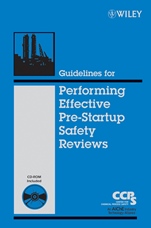
Guidelines for Performing Effective Pre–Startup Safety Reviews
ISBN 9780470134030
Autor: CCPS (Center for Chemical Process Safety)
Wydawca: Wiley
Dostępność: 3-6 tygodni
Cena: 746,55 zł
Przed złożeniem zamówienia prosimy o kontakt mailowy celem potwierdzenia ceny.
ISBN13: |
9780470134030 |
ISBN10: |
0470134038 |
Autor: |
CCPS (Center for Chemical Process Safety) |
Oprawa: |
Hardback |
Rok Wydania: |
2007-04-26 |
Ilość stron: |
192 |
Wymiary: |
234x156 |
Tematy: |
PN |
This book provides guidance to those with responsibility for scheduling and executing a Pre–Startup Safety Review (PSSR). It outlines a protocol and tool for use by project or turnaround teams, to effectively and efficiently schedule and execute a PSSR.
∗ Integrates PSSR throughout the project/turnaround phases, with a verification check at the traditional PSSR step
∗ Supports a "right first time" and "check only once" project philosophy to eliminate surprises
∗ Features how–to checklists, hazard assessment, batch and continuous processes, validation, and documentation
∗ Includes a CD with PSSR checklists and PSSR management system examples.
Spis treści:
List of Tables.
List of Figures.
Items on the CD Accompanying This Book.
Acronyms and abbreviations.
Glossary.
Acknowledgements.
Preface.
1. Introduction.
1.1 What are the Benefits of Performing Pre–startup Safety Reviews?
1.2 How PSSR Relates to Other Process Safety Elements.
1.3 An Overview of the Risk–based Approach to PSSR.
1.4 What is the Scope of a PSSR? Process Safety, Environmental, Quality and Personnel Safety Considerations.
1.5 This Guideline’s Audience.
1.6 How to use this Guideline.
1.7 References.
2. What Is a Pre–Startup Safety Review?
2.1 The Basics of Pre–startup Safety Review.
2.1.1 Some Common Steps for Performing PSSR.
2.2 What is a Risk–based Approach to PSSR?
2.3 The Role of Training in Pre–startup Safety Review.
2.3.1 Training Team Leaders and Members.
2.3.2 Training Managers and the Remaining Workforce.
2.4 Scheduling Considerations.
2.4.1 Capital Projects.
2.4.2 Changes to Operating Facilities.
2.4.3 Temporary Changes.
2.4.4 Restarting a Mothballed Process.
2.4.5 Post–turnaround Startup.
2.4.6 Routine Maintenance.
2.4.7 Startup After Emergency Shutdown.
2.5 References.
3. Regulatory Issues.
3.1 An Overview of PSSR Industry Guidelines and Regulations.
3.2 Best Practices for PSSR.
3.3 Environmental Considerations.
3.4 General Safety, Security, and Occupational Health Considerations.
3.5 References.
4. A Risk–Based Approach to Pre–Startup Safety Review.
4.1 Using Risk Analysis Techniques to Select the Level of Detail for a PSSR.
4.1.1 A Case of Complexity Versus Simplicity.
4.1.2 The Term Complexity Includes Novelty.
4.1.3 The Effect of Complexity on PSSR Team Size and Expertise.
4.1.4 The Effect on the Level and Scope of the Review.
4.2 A Decision Guideline for Designing a PSSR.
4.2.1 A Definition of Risk–based PSSR. A Qualitative Approach.
4.2.2 An Example Algorithm.
4.3 Typical Considerations for all Pre–startup Safety Reviews.
4.3.1 Hardware and Software: Equipment, Instrumentation, and Process Control.
4.3.2 Documentation: Process Safety Information, Procedures, and Maintenance Management System Data.
4.3.3 Training: Quality and Verification of Completeness.
4.3.4 Special Items: Specific Safety, Health, and Environmental Issues.
4.4 An Example Risk–based Questionnaire.
4.5 Two Examples of Using a Risk–based Approach to PSSR Design.
4.5.1 A Simple PSSR.
4.5.2 A More Complex PSSR.
4.6 References.
5. The Pre–Startup Safety Review Work Process.
5.1 Defining the PSSR System.
5.1.1 Double Checking Management of Change.
5.1.2 Who Is Responsible for Driving the System?
5.2 PSSR Sub–elements.
5.2.1 Construction and equipment meet the designed specifications.
5.2.2 Safety, operating, maintenance and emergency procedures are in place and adequate.
5.2.3 A PHA has been performed for new facilities.
5.2.4 Training of each employee involved in the process is complete.
5.2.5 General requirements.
5.3 Designing and Implementing an Initial PSSR Program.
5.3.1 Defining a
Policy on PSSR.
5.3.2 Defining the PSSR Team.
5.3.3 Designing the Specific PSSR.
5.3.4 Training the Workforce on the PSSR Program.
5.3.5 An Example PSSR Program.
5.4 Preparing to Perform a Pre–statup Safety Review.
5.4.1 Gather the Documentation.
5.4.2 Schedule Meetings as Needed.
5.4.3 Verify the Trigger Event Related Work Is Complete.
5.4.4 Identify and Track the Process Hazard Analysis Action Items.
5.5 Follow Pre–startup Safety Review Action Items.
5.5.1 Which Items Are Critical for Safe Operation?
5.5.2 Consider Past PSSR PSM Compliance Audit Findings.
5.6 Approve the Pre–startup Safety Review Report.
5.6.1 Reference the Documentation: Electronic or Hardcopy.
5.6.2 PSSR Team Approval.
5.6.3 Management Approval.
5.7 References.
6. Methodologies for Compiling and Using A PSSR Checklist.
6.1 Building Your Facility’s Database of Questions.
6.1.1 Beware of Shortcuts.
6.1.2 Considerations for Different Industries.
6.2 Various Approaches: Electronic versus Hardcopy.
6.2.1 Using your Existing Facility Action Item Tracking System.
6.2.2 Basic Electronic PSSR Checklist Tools.
6.2.3 Electronic Change Management Systems with PSSR Tools.
6.3 An Example Electronic Checklist.
6.3.1 Collapse the Checklist for Simple PSSR.
6.3.2 Expand the Checklist for Complex PSSR.
7. Continuous Improvement.
7.1 Diagnosing PSSR System Issues.
7.2 Training and Communication.
7.3 Examine Excesses as well as Deficiencies.
7.4 Why Refine, Improve, Upgrade, or Redesign?
7.4.1 Workforce Reductions.
7.4.2 Company Restructuring.
7.4.3 Acquisitions, Mergers, and Divestiture.
7.4.4 Regulatory Changes.
7.4.5 Changes in Process Risk.
7.5 Upgrading the System.
7.6 Example PSSR Performance and Efficiency Metrics.
7.6.1 PSSR Performance Indicators.
7.6.2 PSSR Efficiency Indicators.
7.7 Audit Frequency.
7.8 Qualification Considerations for
PSSR Auditors.
7.9 Sample PSSR Audit Protocols.
7.10 Addressing Audit Results.
7.11 Summary.
7.12 References.
Appendix A. PSSR Checklist Examples.
Appendix B. Industry References.
Appendix C. Regulatory References.
Index.
Nota biograficzna:
Since 1985, the Center for Chemical Process Safety (CCPS) has been the world leader in developing and disseminating information on process safety management and technology. CCPS, an industry technology alliance of the American Institute of Chemical Engineers (AIChE), has published over 80 books in its process safety guidelines and process safety concepts series.
Koszyk
Książek w koszyku: 0 szt.
Wartość zakupów: 0,00 zł
Informacje


Kontakt
Gambit
Centrum Oprogramowania
i Szkoleń Sp. z o.o.
Al. Pokoju 29b/22-24
31-564 Kraków
Siedziba Księgarni
ul. Kordylewskiego 1
31-542 Kraków
+48 12 410 5991
+48 12 410 5987
+48 12 410 5989
Subskrypcje
Administratorem danych osobowych jest firma Gambit COiS Sp. z o.o. Na podany adres będzie wysyłany wyłącznie biuletyn informacyjny.
Autoryzacja płatności

Informacje na temat autoryzacji płatności poprzez PayU.

© Copyright 2012: GAMBIT COiS Sp. z o.o. Wszelkie prawa zastrzeżone.
Projekt i wykonanie: Alchemia Studio Reklamy