


Wydawcy
Katalog tematyczny
- Archeologia (109)
- Ekonomia, finanse, business (13704)
- Filozofia (1445)
- Historia (3040)
- Języki i językoznawstwo (2356)
- Lifestyle, hobby i rozrywka (475)
- Medycyna (9704)
- Nauki humanistyczne (4)
- Nauki o Ziemi i środowisku (2638)
- Nauki ścisłe (20412)
- Nauki społeczne (8486)
- Nauki techniczne (13450)
- Prawo (1696)
- Publikacje informacyjne i interdyscyplinarne (1288)
- Religia i wierzenia (917)
- Technika komputerowa (4067)
- Zdrowie, relacje międzyludzkie i rozwój osobisty (657)





Informacje szczegółowe o książce
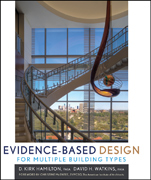
Evidence–Based Design for Multiple Building Types
ISBN 9780470129340
Autor: D. Kirk Hamilton, David H. Watkins
Wydawca: Wiley
Dostępność: 3-6 tygodni
Cena: 422,10 zł
Przed złożeniem zamówienia prosimy o kontakt mailowy celem potwierdzenia ceny.
ISBN13: |
9780470129340 |
ISBN10: |
0470129344 |
Autor: |
D. Kirk Hamilton, David H. Watkins |
Oprawa: |
Hardback |
Rok Wydania: |
2009-01-29 |
Ilość stron: |
288 |
Wymiary: |
236x206 |
Tematy: |
AM |
"D. Kirk Hamilton, FAIA, and David H. Watkins, FAIA, have written this enlightening book showcasing the process and products of evidence–based design, a practice that should be in the top drawer of every architect′s toolkit. Evidence–based design sounds a clarion call for more rigor in the knowledge–based practice of creating the built environment, as well as stronger collaboration and sharing of knowledge between client and designer. I can′t think of two people more qualified to have taken on this topic." From the Foreword by Christine McEntee, Executive Vice President/CEO, The American Institute of Architects Gain a competitive advantage from research–based design Evidence–based design enables architects and their clients to optimize design decisions via a process of gathering, evaluating, and applying current best evidence from research and practice. Written by leading experts in the field of evidence–based design, this book guides the reader through the complete process, culminating in the creation of high–performance environments, including: Locating the best available evidence from a variety of fields and sources Creating meaningful collaborations with clients and users for decision making Recognizing and responding to the unique context of each project Using critical thinking to interpret the implications of research Establishing a strong chain of logic that links research findings to design In addition to providing general guidelines for the evidence–based design process, the authors describe how the process is applied in the design of specific building types, including hospitals, schools, offices, retail stores, and performance spaces. Throughout the book, examples underscore the effectiveness of credible research to support evidence–based design decisions. Moreover, comprehensive case studies are presented for each building type, demonstrating, for example, how design impacts a worker′s productivity and efficiency or a student′s ability to learn and achieve. Following the authors′ advice, architects, interior designers, facility managers, and related professionals will learn to create better, more effective designs by moving from an approach based on intuition and anecdotal information to one solidly based on evidence and outcomes.
Foreward By Chris McEntee. Acknowledgements. ntroduction. PART I: THE CASE FOR EVIDENCE–BASED DESIGN. Chapter 1: What is Evidence–Based Design?. Chapter 2: Precedent–Based Professions & Transforming Architecture. Chapter 3: The New Practitioner. Chapter 4: Sustainable Design is Founded on Evidence (Lia Johnson). PART II: EVIDENCE–BASED DESIGN FOR BUILDING TYPES. Chapter 5: Evidence–Based Medicine and Healthcare Design. Chapter 6: Evidence in the Design of Learning Environments (Alejandro Iriarte Dent). Chapter 7: Evidence and Data in the Design of Workplace Environments. Chapter 8: Data Drives the Design of Retail Environments. Chapter 9: Evidence–Based Environments for Science. Chapter 10: Evidence in Places for Assembly and Performance. Chapter 11: Evidence in Historic Preservation & Adaptive Reuse. Chapter 12: Evidence in Urban Planning. PART III: DESIGNING WITH EVIDENCE. Chapter 13: Process & Methods for Evidence–Based Design. Chapter 14: Evidence Sources & Limitations. Chapter 15: The Practitioner as Researcher (A. Ray Pentecost III). Chapter 16: The Challenges for Architectural Education. Conclusion: Architecture will always be Knowledge–Based. Bibliography. Index.
D. Kirk Hamilton, FAIA, FACHA, is associate director of the Center for Health Systems & Design and associate professor of architecture at Texas A&M University. His research focuses on the relationship between evidence–based design of health facilities and measurable organizational perform–ance. A founding principal emeritus of WHR Architects, Hamilton is a board–certified healthcare architect with thirty years′ experience in hospital design. Currently on the board of The Center for Health Design, Hamilton has served as president of both the AIA Academy of Architecture for Health and the American College of Healthcare Architects. David H. Watkins, FAIA, is chair–man and founding principal of WHR Architects in Houston, a nationally recognized firm specializing in high– performance buildings for healthcare, science, and higher education. A longtime advocate for advancing the knowledge resources available to the profession of architecture, Watkins served as a vice president of the American Institute of Architects (AIA) and inaugural chair of the AIA board′s knowledge committee in 2004. He serves on the advisory boards for the architectural programs at Rice University and The University of Texas at Austin, and from 2005 to 2007, he was a director of the National Architectural Accrediting Board.
"Hamilton and Watkins have written a guide for architects and those in related professions that details how to create better, more effective designs by using an approach based on evidence and outcomes rather than intuition and anecdotal information." ( Book News , May 2009)
Koszyk
Książek w koszyku: 0 szt.
Wartość zakupów: 0,00 zł
Informacje


Kontakt
Gambit
Centrum Oprogramowania
i Szkoleń Sp. z o.o.
Al. Pokoju 29b/22-24
31-564 Kraków
Siedziba Księgarni
ul. Kordylewskiego 1
31-542 Kraków
+48 12 410 5991
+48 12 410 5987
+48 12 410 5989
Subskrypcje
Administratorem danych osobowych jest firma Gambit COiS Sp. z o.o. Na podany adres będzie wysyłany wyłącznie biuletyn informacyjny.
Autoryzacja płatności

Informacje na temat autoryzacji płatności poprzez PayU.

© Copyright 2012: GAMBIT COiS Sp. z o.o. Wszelkie prawa zastrzeżone.
Projekt i wykonanie: Alchemia Studio Reklamy