


Wydawcy
Katalog tematyczny
- Archeologia (109)
- Ekonomia, finanse, business (13704)
- Filozofia (1445)
- Historia (3040)
- Języki i językoznawstwo (2356)
- Lifestyle, hobby i rozrywka (475)
- Medycyna (9704)
- Nauki humanistyczne (4)
- Nauki o Ziemi i środowisku (2638)
- Nauki ścisłe (20412)
- Nauki społeczne (8486)
- Nauki techniczne (13450)
- Prawo (1696)
- Publikacje informacyjne i interdyscyplinarne (1288)
- Religia i wierzenia (917)
- Technika komputerowa (4067)
- Zdrowie, relacje międzyludzkie i rozwój osobisty (657)





Informacje szczegółowe o książce
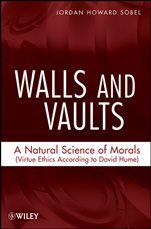
Walls and Vaults: A Natural Science of Morals (Virtue Ethics According to David Hume)
ISBN 9780470127612
Autor: Jordan Howard Sobel
Wydawca: Wiley
Dostępność: 3-6 tygodni
Cena: 354,90 zł
Przed złożeniem zamówienia prosimy o kontakt mailowy celem potwierdzenia ceny.
ISBN13: |
9780470127612 |
ISBN10: |
0470127619 |
Autor: |
Jordan Howard Sobel |
Oprawa: |
Paperback |
Rok Wydania: |
2009-03-27 |
Ilość stron: |
414 |
Wymiary: |
234x156 |
Tematy: |
HP |
This unique book provides a modern discussion of David Hume′s work in ethical theory and moral judgment Widely regarded as one of the most important philosophers in Western thinking, David Hume contributed significant works that profoundly influenced the study of ethics and morality. Now, in Walls and Vaults , internationally renowned author Jordan Howard Sobel blends Hume′s moral theory with his own groundbreaking observations and employs mathematical thought to explore timeless questions about the grounds of morality, the organization of moral principles, and the rationale for being moral. Blending a modern treatment with a classical perspective, this book presents an illuminating account of Hume′s philosophy and the contemporary problems that exist in the metaphysics, language, and logic of morals. Two of Hume′s eminent works, A Treatise of Human Nature and An Enquiry Concerning the Principles of Morals, are used as the cornerstone for the discussion of major topics in the study of morality such as virtue theory, cooperation and coordination, error theory, the prisoner′s dilemma, and ′Glaucon′s Problem′, "Why be moral? Why in particular be just?" Concepts from game theory, logic of conditionals, and decision–making are used to illuminate Hume′s ideas. The Bayesian methodology of Hume′s science of moral ethics is also underscored throughout the text. Detailed appendices located at the end of selected chapters include technical elaborations, and an extensive bibliography directs readers to additional literature on Hume′s works. Extensively class–tested and complete with thought–provoking detail, Walls and Vaults is ideal as a supplementary text in philosophy, economics, law, and political science courses at the advanced undergraduate and graduate levels. It also serves as a valuable reference for scholars specializing in ethics, game theory, and the works of David Hume.
PREFACE. I. Introduction. 1. The Business of Moral Philosophy and the Question, “Why Be Moral?”. 2. Hume’s Questions in Moral Philosophy and His Answers—in Brief. 3. Coming Chapters. PART ONE: ANALYSIS AND METAPHYSICS—SEMANTICS, PRAGMATICS, AND LOGIC. II. Virtue and Vice. 1. David Hume: Virtue Theorist. 2. What Kinds of Things Are Virtues and Vices According to Hume. 3. Hume’s First Question in Order of Explanation: What Is It for Something to Be a Virtue? 4. The Nature or Defi nition of Virtue and Vice: Hume’s Hypothesis in Brief. 5. Detailing Hume’s Account. 6. The Nature of Virtue According to This Hypothesis. 7. Illusory Qualities. 8. “A Controversy Started of Late” (David Hume) and “The Moral Problem” (Michael Smith) of Late. Appendix: Virtuous and Vicious Actions. III. Moral Judgments. 1. They Are Not, Although They Could Be, What They Seem to Be. 2. The Good Sense of Sentences of Moral Judgments. 3. The Bad Sense of Moral Judgments: Their Bogus Propositional Conjuncts. 4. Diffi culties for Nonpropositional Theories of Moral Judgments. 5. The Function of Moral Language. IV. Species Bias. 1. Humes Hypotheses Concerning Moral Distinctions and Judgments. 2. Evidence for This Theory. 3. The Human Species Bias of Morality. 4. Hume’s Theory Predicts and Explains This Bias and Addresses Its Proper Measure. 5. The Moral Innocence of Plants and Animals. 6. Animal Moralities. 7. Bias Toward Us of Another Kind. PART TWO: NORMATIVE THEORIES. V. Virtues Agreeable and Useful. 1. A Utilitarian Theory of the Virtues. 2. Methodology. 3. Of What Primarily Is Hume’s Delineation of Personal Merit a Theory? 4. Extending the Theory to Culture–Specifi c, Local, and Cult Virtues. 5. The Case for This Utilitarian Theory of the Virtues Is Very Strong. 6. Relations of Hume’s Theory of the Virtues and His Theory of Virtue. 7. Intrinsic Logic of These Theories. 8. Tables of Virtues. 9. Piety. 10. Gratitude. 11. Strength of Mind. 12. Justice and Benevolence. Appendix A: Contents of Volume II of Essays and Treatises , 1777, the “Advertisement” and “A Dialogue”. Appendix B: Essentials of Hume’s Theory of Morals, But for Its Semantics. VI. Hume’s Theory of Right and Wrong Actions. 1. Attributing a Theory to Hume. 2. A Sometimes Actual–Rule, Sometimes Straight Act, Pure Utilitarian Principle of “Right” and “Wrong” for Hume. 3. Ancillary Accounts of ‘Rules of Justice’ and Extraordinary Cases. 4. Texts That Can Suggest Modifi cations. 5. Diffi culties for the Theory Attributed to Hume. 6. Looking Ahead. Appendix A: Contractarian Considerations. Appendix B: Infl uencing Motives of Right and Wrong. PART THREE: AN EVERYWHERE RELEVANT DISTINCTION. VII. That Species of Utility That Attends Justice. 1. The Utilities of Benevolence and Justice Compared. 2. Texts for Distinction. 3. Apparent Paradox Redux and Texts Featuring Variously Moderating Clauses. 4. Comparisons of Several Ideas of the Utilities of Acts of Justice that Are Constitutive of Useful Systems or Schemes. 5. Justice Utility Defined. 6. Not a Vault, But a Pontoon Bridge, or Better, a Fail–Safe Device. 7. The Two Problems of How This Species of Utility Is Possible. VIII. The Logical Possibility of Justice Utility. 1. Argument for This Possibility. 2. Toward Explanations of This Possibility. Appendix A: Hume’s Corn Case. Appendix B: Getting in More Corn. IX. The Real Possibility of Justice Utility: How Systems with It Come to Be and Are Maintained. 1. We Are Not Out of the Woods Yet. 2. Problems of Cooperation and Coordination. 3. How Did Such Schemes, Especially Schemes of Cooperation, Begin? 4. As Society Grows These Schemes Are Maintained Largely by Senses of Duty. 5. Summing Up. Appendix A: Getting in the Corn Again and Again. Appendix B: A Three–Person Prisoners’ Dilemma in Which Backward–Conditional Resolutions Would Not Redirect Interests. Appendix C: Circumstances of Justice. PART FOUR: AND NOW AT LAST THE “FIRST” QUESTION. X. Our Interested Obligation to Virtue: Why Be Moral? 1. It Is a Question Best Left to Last. 2. The Problem of Part II of the Conclusion, Finely Drawn. 3. Benevolence and Humanity. 4. The Problem Is “Why Be Just?”. 5. What Knaves Are Missing. 6. Elements for a Nonevasive Case For Justice. 7. The Case for Justice Assembled. 8. Glaucon’s Problem. 9. Signing Off. Appendix A: Richard Hare’s Approach to the Question “Why Be Moral?”. Appendix B: An Amendment After Alasdair MacIntyre. Appendix C: Humean and Platonic Moral Consciences. REFERENCES. NAME INDEX. SUBJECT INDEX.
Jordan Howard Sobel , PhD, is Professor Emeritus of Philosophy at the University of Toronto Scarborough, Canada. Dr. Sobel has made major contributions to the literature on moral theory, particularly the works of David Hume, and he has also published extensively in his areas of teaching and research interest, which include logic, philosophical logic, probability, games and decisions, ethics, metaphysics, and the philosophy of religion.
Koszyk
Książek w koszyku: 0 szt.
Wartość zakupów: 0,00 zł
Informacje


Kontakt
Gambit
Centrum Oprogramowania
i Szkoleń Sp. z o.o.
Al. Pokoju 29b/22-24
31-564 Kraków
Siedziba Księgarni
ul. Kordylewskiego 1
31-542 Kraków
+48 12 410 5991
+48 12 410 5987
+48 12 410 5989
Subskrypcje
Administratorem danych osobowych jest firma Gambit COiS Sp. z o.o. Na podany adres będzie wysyłany wyłącznie biuletyn informacyjny.
Autoryzacja płatności

Informacje na temat autoryzacji płatności poprzez PayU.

© Copyright 2012: GAMBIT COiS Sp. z o.o. Wszelkie prawa zastrzeżone.
Projekt i wykonanie: Alchemia Studio Reklamy