


Wydawcy
Katalog tematyczny
- Archeologia (109)
- Ekonomia, finanse, business (13704)
- Filozofia (1445)
- Historia (3040)
- Języki i językoznawstwo (2356)
- Lifestyle, hobby i rozrywka (475)
- Medycyna (9704)
- Chirurgia (272)
- Inne gałęzie medycyny (1871)
- Medycyna kliniczna (4187)
- Choroby wewnętrzne (514)
- Dermatologia (51)
- Diagnostyka medyczna (3)
- Endokrynologia (144)
- Gastroenterologia (27)
- Geriatria (50)
- Ginekologia i położnictwo (134)
- Hematologia (46)
- Hepatologia (10)
- Kardiologia (71)
- Laryngologia (12)
- Nefrologia (10)
- Neurologia (500)
- Oftalmologia (50)
- Pediatria (33)
- Pulmunologia (32)
- Reumatologia (14)
- Terapia genowa (1)
- Układ mięśniowo-szkieletowy (1)
- Urologia (14)
- Medycyna niekonwencjonalna (14)
- Medycyna przedkliniczna (269)
- Medycyna, ogólnie (1740)
- Medyczne służby pomocnicze (745)
- Studia medyczne (16)
- Weterynaria (548)
- Nauki humanistyczne (4)
- Nauki o Ziemi i środowisku (2638)
- Nauki ścisłe (20412)
- Nauki społeczne (8486)
- Nauki techniczne (13450)
- Prawo (1696)
- Publikacje informacyjne i interdyscyplinarne (1288)
- Religia i wierzenia (917)
- Technika komputerowa (4067)
- Zdrowie, relacje międzyludzkie i rozwój osobisty (657)





Informacje szczegółowe o książce
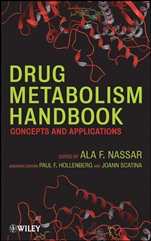
Drug Metabolism Handbook: Concepts and Applications
ISBN 9780470118030
Autor: Ala F. Nassar
Wydawca: Wiley
Dostępność: 3-6 tygodni
Cena: 1 000,65 zł
Przed złożeniem zamówienia prosimy o kontakt mailowy celem potwierdzenia ceny.
ISBN13: |
9780470118030 |
ISBN10: |
0470118032 |
Autor: |
Ala F. Nassar |
Oprawa: |
Hardback |
Rok Wydania: |
2009-03-06 |
Ilość stron: |
1064 |
Wymiary: |
246x167 |
Tematy: |
MJ |
Explains All The Latest Tools And Technologies In Drug Metabolism
Drug Metabolism Handbook is dedicated to helping bench scientists take full advantage of the latest and most advanced tools and techniques in the field of drug metabolism. From creating new molecular entities to drug development to troubleshooting, the book explains the concepts of drug metabolism and guides readers through its applications in pharmaceutical research, development, and assessment.
Concise and easy to follow, Drug Metabolism Handbook offers:
Succinct reviews of drug metabolism that underscore the importance of the human metabolic system as well as pharmacokinetics and drug interactions
Thorough and carefully referenced reviews of most drug metabolism phase I and phase II metabolic enzymes
Illustrative case studies that highlight the critical role of drug metabolism in the drug development process
Descriptions of the latest findings and tools such as online H–D exchange, LC–ram, LC–MS/MS, and LC–MS–NMR
Full coverage of recent FDA regulations and guidelines for drug safety
Each chapter is written by one or more leading experts in the field of drug metabolism. Contributions are based on the authors′ own first hand experience at the bench as well as a thorough examination of the literature.
By combining a solid conceptual understanding of the drug metabolism system with detailed explanations of the latest cutting–edge tools and techniques, this book is essential readingfor pharmaceutical scientists, students at universities, and all other researchers involved in drug development.
Spis treści:
Preface.
List of Contributors.
Part I: Introduction.
1. Historical Perspective (Roberta S. King).
2. Factors Affecting Metabolism (Roberta S. King).
3. Biotransformation sin Drug Metabolism (Roberta S. King).
4.In Vivo Metabolite Kinetics (Zheng
Yang).
5. Pharmacogenetics and Pharmacogenomics (Lilian G. Yengi).
6. Introduction to drug transporters (Louis Leung and Aram Oganesian).
Part II: Technologies for In Vitro and In Vivo Studies.
7. Automated Drug Screening for ADMET Properties (Melvin Reichman and Helen Gill).
8. Mass Spectrometry (Thomas R. Sharp).
9. Approaches to Performing Metabolite Elucidation: One Key to Success in Drug Discovery and Development (Ala F. Nassar).
10. Structural Modifications of Drug Candidates: How Useful Are They in Improving Metabolic Stability of New Drugs? Part I: Enhancing Metabolic Stability (Ala F. Nassar).
11. Structural Modifications of Drug Candidates: How Useful Are They in Improving PK Parameters of New Drugs? Part II: Drug Design Strategies (Ala F. Nassar).
12. Minimizing the Potential for Drug bioactivation of drug Candidates to Success in Clinical Development (Ala F. Nassar).
13. Screening for reactive Metabolites Using Genotoxicity Arrays and Enzyme/DNA Biocolloids (James F. Rusling, Eli G. Hvastkovs, and John B. Schenkman).
Part III: Drug Interactions.
14. Enzyme Inhibition (Paul F. Hellenberg).
15. Evaluating and Predicting Human Cytochrome P450 Enzyme Induction (Michael Sinz, Sean Kim, Stephen Ferguson, and Edward LeCluyse).
16. An Introduction to Metabolic Reaction Phenotyping (Carl D. Davis and A. David Rodrigues).
17. Nuclear receptor–Mediated Gene Regulation in Drug Metabolism (Hongbing Wang and Wen Xie).
18. Characterization of Cytochrome P450 Mechanism–Based Inhibition (Dan Rock and Larry C. Wienkers).
19. Clinical Drug–Drug Interactions.
20. Pharmaceutical Excipients in drug–Drug Interaction (Chuan Chen and Abu J. M. Sadeque).
Part IV: Toxicity.
21. The Role of Drug Metabolism in Toxicity (Carl D. Davis and Umesh M. Hanumegowda).
22. Allergic reactions to Drugs (Mark P. Grillo).
23. Chemical Mechanism in toxicology (Mark P. Grillo).
24. M
echanisms of Reproductive Toxicity (Aileen F. Keating and Patricia B. Hoyer).
25. An Introduction to Toxicogenomics (Aaron L. Vollrath and Christopher A. Bradfield).
26. Role of Bioactivation Reactions in Chemically Induced Nephrotoxicity (Lawrence H. Lash).
Part V: Regulatory Perspectives.
27. Drug Metabolism in regulatory Guidances, clinical trials, and Product Labeling (Mark N. Milton).
Index.
Nota biograficzna:
Ala F. Nassar, PhD, provides technical and operational leadership in characterizing in vitro and in vivo metabolites. His research focuses on understanding how structure modification can improve the ADME profile for new chemical entities as they advance towards clinical candidacy. Recently, he identified and patented pharmacologically active metabolites of Nexavar®. Dr. Nassar serves on the Editorial Board of Drug Metabolism Letters and The Open Drug Metabolism Journal and is also a reviewer for several other journals.
Paul F. Hollenberg, PhD, is Maurice H. Seevers Collegiate Professor and Chair of Pharmacologyat The University of Michigan. His current research focuses on the relationship between thestructures of the active sites of cytochrome P450s and their catalytic function. Dr. Hollenbergwas cofounder and Associate Editor of Chemical Research in Toxicology and has served onnumerous editorial boards and review panels.
Joann Scatina, PhD, has over twenty–four years of drug metabolism experience, and is currentlyVice President of the Drug Metabolism Division, Drug Safety and Metabolism, for WyethResearch. Dr. Scatina′s research interests include identification of metabolites, metabolicpathways and enzymes responsible, in vitro–in vivo extrapolation, and prediction of druginteractions. She is a member of the American Society for Pharmacology and ExperimentalTherapeutics and the International Society for the Study of Xenobiotics (ISSX) and is currentlyserving on the Editorial Boar
d of Drug Metabolism Reviews.
Okładka tylna:
Explains All The Latest Tools And Technologies In Drug Metabolism
Drug Metabolism Handbook is dedicated to helping bench scientists take full advantage of the latest and most advanced tools and techniques in the field of drug metabolism. From creating new molecular entities to drug development to troubleshooting, the book explains the concepts of drug metabolism and guides readers through its applications in pharmaceutical research, development, and assessment.
Concise and easy to follow, Drug Metabolism Handbook offers:
Succinct reviews of drug metabolism that underscore the importance of the human metabolic system as well as pharmacokinetics and drug interactions
Thorough and carefully referenced reviews of most drug metabolism phase I and phase II metabolic enzymes
Illustrative case studies that highlight the critical role of drug metabolism in the drug development process
Descriptions of the latest findings and tools such as online H–D exchange, LC–ram, LC–MS/MS, and LC–MS–NMR
Full coverage of recent FDA regulations and guidelines for drug safety
Each chapter is written by one or more leading experts in the field of drug metabolism. Contributions are based on the authors′ own first hand experience at the bench as well as a thorough examination of the literature.
By combining a solid conceptual understanding of the drug metabolism system with detailed explanations of the latest cutting–edge tools and techniques, this book is essential readingfor pharmaceutical scientists, students at universities, and all other researchers involved in drug development.
Koszyk
Książek w koszyku: 0 szt.
Wartość zakupów: 0,00 zł
Informacje


Kontakt
Gambit
Centrum Oprogramowania
i Szkoleń Sp. z o.o.
Al. Pokoju 29b/22-24
31-564 Kraków
Siedziba Księgarni
ul. Kordylewskiego 1
31-542 Kraków
+48 12 410 5991
+48 12 410 5987
+48 12 410 5989
Subskrypcje
Administratorem danych osobowych jest firma Gambit COiS Sp. z o.o. Na podany adres będzie wysyłany wyłącznie biuletyn informacyjny.
Autoryzacja płatności

Informacje na temat autoryzacji płatności poprzez PayU.

© Copyright 2012: GAMBIT COiS Sp. z o.o. Wszelkie prawa zastrzeżone.
Projekt i wykonanie: Alchemia Studio Reklamy