


Wydawcy
Katalog tematyczny
- Archeologia (109)
- Ekonomia, finanse, business (13704)
- Filozofia (1445)
- Historia (3040)
- Języki i językoznawstwo (2356)
- Lifestyle, hobby i rozrywka (475)
- Medycyna (9704)
- Nauki humanistyczne (4)
- Nauki o Ziemi i środowisku (2638)
- Nauki ścisłe (20412)
- Nauki społeczne (8486)
- Nauki techniczne (13450)
- Prawo (1696)
- Publikacje informacyjne i interdyscyplinarne (1288)
- Religia i wierzenia (917)
- Technika komputerowa (4067)
- Zdrowie, relacje międzyludzkie i rozwój osobisty (657)





Informacje szczegółowe o książce
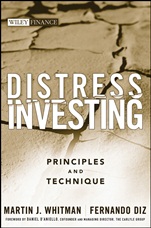
Distress Investing: Principles and Technique
ISBN 9780470117675
Autor: Martin J. Whitman, Fernando Diz
Wydawca: Wiley
Dostępność: 3-6 tygodni
Cena: 341,25 zł
Przed złożeniem zamówienia prosimy o kontakt mailowy celem potwierdzenia ceny.
ISBN13: |
9780470117675 |
ISBN10: |
0470117672 |
Autor: |
Martin J. Whitman, Fernando Diz |
Oprawa: |
Hardback |
Rok Wydania: |
2009-04-29 |
Ilość stron: |
272 |
Wymiary: |
241x157 |
Tematy: |
KF |
Praise for Distress Investing
"Marty Whitman has distilled decades of distressed investing experience into a text that is a must–read for everyone interested in the field, whether a student or a professional investor."
—Wilbur L. Ross, Chairman and CEO, WL Ross & Co. LLC
"Distress Investing: Principles and Technique represents a detailed and unique perspective on an arcane arena of investment that is going to get a lot more attention. Marty Whitman is the master, and has set the standard for many years."
—Sam Zell, Chairman, Equity Group Investments, LLC
"Martin Whitman and Professor Diz have produced a seminal work on the ins and outs of distressed investing for all distressed debt investors. It is jam–packed with information and guidance for the novice and the experienced. A must–read for anyone interested in distressed investing."
—Lewis Kruger, Stroock & Stroock & Lavan LLP
"Marty Whitman, a legend in distress investing, packs decades of experience into these pages. The restructuring of the capital markets currently under way is sure to provide great distress investment opportunities, which this guide book can make count for you."
—Bruce Flatt, Brookfield Asset Management Inc.
"The principles found in this book are those I used in the reorganization of my business from bankruptcy to an S&P 500 company with an investment grade rating and a multibillion–dollar market capitalization. An excellent premier by Marty Whitman and Professor Diz, integrating economic theory with real–world investment to help investors of all shapes and sizes understand and invest in distressed securities."
—Gene Isenberg, Chairman and CEO, Nabors Industries, Inc.
"Marty Whitman, the unquestioned ′Dean′ of active distressed investors, and Fernando Diz, one of the few academics specializing in distre
ssed investing, have teamed up to provide perhaps the best and most comprehensive primer on distressed securities and markets. I learned so much from this remarkable volume."
—Edward I. Altman, Max L. Heine Professor of Finance, NYU Stern School of Business, Director of credit and debt markets research at the NYU Salomon Center and adviser to several financial institutions including, Paulson & Co. and Concordia Advisers
Spis treści:
Foreword.
Preface.
Acknowledgments.
PART ONE: The General Landscape of Distress Investing.
CHAPTER 1: The Changed Environment.
Trends in Corporate Debt Growth and Leverage before the Financial Meltdown of 2007–2008.
Junk Bonds and the Levering–Up Period.
The Syndicated Loan Market and Leveraged Loans.
Financial Meltdown of 2007–2008.
Principal Provisions of the 2005 Bankruptcy Act as They Affect Chapter 11 Reorganizations of Businesses.
CHAPTER 2: The Theoretical Underpinning.
What Market?
Toward a General Theory of Market Efficiency.
External Forces Influencing Markets Explained.
What Risk?
Capital Structure and Credit Risk.
Valuation.
The Company as a Stand–Alone Entity.
Control and Its Vital Importance.
CHAPTER 3: The Causes of Financial Distress.
Lack of Access to Capital Markets.
Deterioration of Operating Performance.
Deterioration of GAAP Performance.
Large Off–Balance–Sheet Contingent Liabilities.
CHAPTER 4: Deal Expenses and Who Bears Them.
Attorneys and Financial Advisers’ Compensation Structure and the Distribution of the Fee Pie.
Time in Chapter 11 and Number of Legal Firms Retained.
Determinants of Legal Fees and Expenses.
Determinants of Financial Advisers’ Fees and Expenses.
Can Professional Costs Be Excessive?
Appendix.
CHAPTER 5: Other Important Issues.
Management Compensation and Entrenchmen
t.
Tax and Political Disadvantages.
CHAPTER 6: The Five Basic Truths of Distress Investing.
Truth 1: No One Can Take Away a Corporate Creditor′s Right to a Money Payment Outside of Chapter 11 or Chapter 7.
Truth 2: Chapter 11 Rules Influence All Reorganizations.
Truth 3: Substantive Characteristics of Securities.
Truth 4: Restructurings Are Costly for Creditors.
Truth 5: Creditors Have Only Contractual Rights.
PART TWO: Restructuring Troubled Issuers.
CHAPTER 7: Voluntary Exchanges.
Problems with Voluntary Exchanges.
The Holdout Problem Illustrated.
Making a Voluntary Exchange Work.
Tax Disadvantages of a Voluntary Exchange versus Chapter 11 Reorganization.
CHAPTER 8: A Brief Review of Chapter 11.
Liquidations and Reorganizations.
Starting a Case: Voluntary versus Involuntary Petitions.
Forum Shopping.
Parties in a Chapter 11 Case.
Administration of a Chapter 11 Case.
The Chapter 11 Plan.
CHAPTER 9: The Workout Process.
Parties and Their Differing Needs and Desires.
Types of Chapter 11 Cases.
Leverage Factors in Chapter 11.
PART THREE: The Investment Process.
CHAPTER 10: How to Analyze: Valuation.
Strict Going Concern Valuation.
Resource Conversion Valuation.
Liquidation Valuations.
CHAPTER 11: Due Diligence for Distressed Issues.
CHAPTER 12: Distress Investing Risks.
Risks Associated with the Alteration of Priorities.
Risks Associated with Collateral or Enterprise Valuation.
Reorganization Risks.
Other Risks.
CHAPTER 13: Form of Consideration versus Amount of Consideration.
PART FOUR: Cases and Implications for Public Policy.
CHAPTER 14: Brief Case Studies of Distressed Securities, 2008–2009.
Performing Loans Likely to Remain Performing Loans.
Small Cases.
Large Cases.
Capital Infusions into Troubled Companies.
CHAPTER 15: A Small Case: Hom
e Products International.
The Early Years.
Growth by Acquisitions.
Retail Industry Woes.
The Fight for Control.
Amendment of Indenture and Event of Default.
The Decision: Prepackaged Chapter 11.
Treatment of Impaired Classes under the Plan.
Financial Means for Implementation of the Plan.
Going–Concern and Liquidation Valuations.
CHAPTER 16: A Large Reorganization Case: Kmart Corporation.
Landlords and Unexpired Leases.
Vendors and Critical Vendor Motions.
Management and KERPs Pre–2005 BAPCPA.
Fraudulent Transfers.
Subsidiary Guarantees and Substantive Consolidation.
Chapter 11 Committees and Out–of–Control Professional Costs.
Blocking Positions.
Buying Claims in Chapter 11.
Debtor–in–Possession Financing.
Kmart’s Plan of Reorganization and Plan Investors.
Investment Performance.
CHAPTER 17: An Ideal Restructuring System.
Feasibility and Cash Bailouts.
Good Enough Rather Than Ideal.
Highly Beneficial Elements in the U.S. Restructuring System.
Goals of an Ideal Restructuring System.
Suggested Reforms.
Notes.
About the Authors.
Index.
Nota biograficzna:
Martin J. Whitman is Chairman and co–CIO of Third Avenue Management LLC. He has taught courses in value investing and distressed investing for the past thirty years at the Schools of Management at both Syracuse University and Yale University. Whitman is also the author of the Wiley titles Value Investing and The Aggressive Conservative Investor.
Fernando Diz is the Martin J. Whitman Associate Professor of Finance and Director of the Ballentine Investment Institute at Syracuse University. His research specialties are in the areas of trading, derivative securities, and value and distress investing. Diz has written for the Journal of Futures Markets, the Review of Financial Studies, and the Journal of Alt
Koszyk
Książek w koszyku: 0 szt.
Wartość zakupów: 0,00 zł
Informacje


Kontakt
Gambit
Centrum Oprogramowania
i Szkoleń Sp. z o.o.
Al. Pokoju 29b/22-24
31-564 Kraków
Siedziba Księgarni
ul. Kordylewskiego 1
31-542 Kraków
+48 12 410 5991
+48 12 410 5987
+48 12 410 5989
Subskrypcje
Administratorem danych osobowych jest firma Gambit COiS Sp. z o.o. Na podany adres będzie wysyłany wyłącznie biuletyn informacyjny.
Autoryzacja płatności

Informacje na temat autoryzacji płatności poprzez PayU.

© Copyright 2012: GAMBIT COiS Sp. z o.o. Wszelkie prawa zastrzeżone.
Projekt i wykonanie: Alchemia Studio Reklamy