


Wydawcy
Katalog tematyczny
- Archeologia (109)
- Ekonomia, finanse, business (13704)
- Filozofia (1445)
- Historia (3040)
- Języki i językoznawstwo (2356)
- Lifestyle, hobby i rozrywka (475)
- Medycyna (9704)
- Nauki humanistyczne (4)
- Nauki o Ziemi i środowisku (2638)
- Nauki ścisłe (20412)
- Nauki społeczne (8486)
- Nauki techniczne (13450)
- Budownictwo lądowe (1045)
- Chemia przemysłowa (2258)
- Elektronika i telekomunikacja (3287)
- Energetyka (1122)
- Inne nauki stosowane (363)
- Inżynieria biochemiczna (507)
- Inżynieria transportu (232)
- Mechanika i materiały (3316)
- Nauka o środowisku (321)
- Rolnictwo (507)
- Technika, ogólnie (475)
- Prawo (1696)
- Publikacje informacyjne i interdyscyplinarne (1288)
- Religia i wierzenia (917)
- Technika komputerowa (4067)
- Zdrowie, relacje międzyludzkie i rozwój osobisty (657)





Informacje szczegółowe o książce
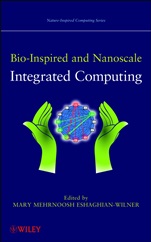
Bio–Inspired and Nanoscale Integrated Computing
ISBN 9780470116593
Autor: Mary Mehrnoosh Eshaghian–Wilner
Wydawca: Wiley
Dostępność: 3-6 tygodni
Cena: 653,10 zł
Przed złożeniem zamówienia prosimy o kontakt mailowy celem potwierdzenia ceny.
ISBN13: |
9780470116593 |
ISBN10: |
0470116595 |
Autor: |
Mary Mehrnoosh Eshaghian–Wilner |
Oprawa: |
Hardback |
Rok Wydania: |
2009-06-26 |
Ilość stron: |
576 |
Wymiary: |
234x163 |
Tematy: |
TCB |
Nature–Inspired Computing Series
Bio–Inspired and NanoScale Integrated Computing
Edited by
Mary Mehrnoosh Eshaghian–Wilner
Brings the latest advances in nanotechnology and biology to computing
This pioneering book demonstrates how nanotechnology can create even faster, denser computing architectures and algorithms. Furthermore, it draws from the latest advances in biology with a focus on bio–inspired computing at the nanoscale, bringing to light several new and innovative applications such as nanoscale implantable biomedical devices and neural networks.
Bio–Inspired and Nanoscale Integrated Computing features an expert team of interdisciplinary authors who offer readers the benefit of their own breakthroughs in integrated computing as well as a thorough investigation and analyses of the literature. Carefully edited, the book begins with an introductory chapter providing a general overview of the field. It ends with a chapter setting forth the common themes that tie the chapters together as well as a forecast of emerging avenues of research.
Among the important topics addressed in the book are modeling of nano devices, quantum computing, quantum dot cellular automata, dielectrophoretic reconfigurable nano architectures, multilevel and three–dimensional nanomagnetic recording, spin–wave architectures and algorithms, fault–tolerant nanocomputing, molecular computing, self–assembly of supramolecular nanostructures, DNA nanotechnology and computing, nanoscale DNA sequence matching, medical nanorobotics, heterogeneous nanostructures for biomedical diagnostics, biomimetic cortical nanocircuits, bio–applications of carbon nanotubes, and nanoscale image processing.
Readers in electrical engineering, computer science, and computational biology will gain new insights into how bio–inspired and nanoscale devices can be used to design the next generation of enhanced integrated circuits.
Spis treści:
1. An Introduction to Nanocomputing (Elaine Ann Ebreo Cara, Stephen Chu, Mary M. Eshaghian–Wilner, Eric Mlinar, Fady Rofail, Michael M. Safaee, Shawn Singh, Daniel Wu, and Chun Wing Yip).
2. Nanoscale devices: applications and modeling (Alireza Nojeh).
3. Quantum Computing (John H. Reif).
4. Computing with Quantum–Dot Cellular Automata (Konrad Walus and Graham A. Jullien).
5. Dielectrophoretic Architectures (Alexander D. Wissner–Gross).
6. Multilevel and Three–dimensional Nanomagnetic Recording (S. Khizroev, R. Chomko, I. Dumer and D. Litvinov).
7. Spin–Wave Architectures (Mary M. Eshaghian–Wilner, Alex Khitun, Shiva Navab, and Kang L. Wang).
8. Parallel Computing with Spin Waves (Mary M. Eshaghian–Wilner and Shiva Navab).
9. Nanoscale Standard Digital Modules (Shiva Navab).
10. Fault and Defect Tolerant Architectures for Nano–Computing (Sumit Ahuja, Gaurav Singh, Debayan Bhaduri, and Sandeep Shukla).
11. Molecular Computing: Integration of Molecules for Nanocomputing (James M. Tour and Lin Zhong).
12. Self–Assembly of Supramolecular Nanostructures: Ordered Arrays of Metal Ions and Carbon Nanotubes (Mario Ruben).
13. DNA Nanotechnology and its Biological Applications (John H Reif and Thomas H LaBean).
14. DNA Sequence Matching at Nanoscale Level (Mary M. Eshaghian–Wilner, Ling Lau, Shiva Navab, and David D. Shen).
15. Computational Tasks in Medical Nanorobotics (Robert A. Freitas).
16. Heterogeneous Nano Structures: Multiscale structures with NEMS and MEMS components (Hongyu Yu, Mahsa Rouhanizadeh, Lisong Ai and Tzung K. Hsiai).
17. Biomimetic Cortical Nanocircuits (Alice C. Parker, Aaron K. Friesz, and Ko–Chung Tseng).
18. Biomedical and Biomedicine Applications of CNTs (Tulin Mangir).
1
9. Nanoscale Image Processing (Mary M. Eshaghian–Wilner and Shiva Navab).
20. Concluding Remarks at the Beginning of a New Computing Era (Varun Bhojwani, Stephen Chu, Mary M. Eshaghian–Wilner, Shawn Singh, and Chun Wing Yip).
Nota biograficzna:
Mary Mehrnoosh Eshaghian–Wilner, PhD, LLM, is an Adjunct Professor of Electrical Engineering at University of California, Los Angeles, with more than twenty years of teaching and research experience in the field of computer engineering. Dr. Eshaghian–Wilner is best known for her pioneering contributions to optical computing, heterogeneous computing, and nanocomputing. She is licensed to practice before the United States Patent and Trademark Office, and is the recipient of several IEEE and NSF awards.
Okładka tylna:
Nature–Inspired Computing Series
Bio–Inspired and NanoScale Integrated Computing
Edited by
Mary Mehrnoosh Eshaghian–Wilner
Brings the latest advances in nanotechnology and biology to computing
This pioneering book demonstrates how nanotechnology can create even faster, denser computing architectures and algorithms. Furthermore, it draws from the latest advances in biology with a focus on bio–inspired computing at the nanoscale, bringing to light several new and innovative applications such as nanoscale implantable biomedical devices and neural networks.
Bio–Inspired and Nanoscale Integrated Computing features an expert team of interdisciplinary authors who offer readers the benefit of their own breakthroughs in integrated computing as well as a thorough investigation and analyses of the literature. Carefully edited, the book begins with an introductory chapter providing a general overview of the field. It ends with a chapter setting forth the common themes that tie the chapters together as well as a forecast of emerging avenues of research.
Among the important topics addressed
in the book are modeling of nano devices, quantum computing, quantum dot cellular automata, dielectrophoretic reconfigurable nano architectures, multilevel and three–dimensional nanomagnetic recording, spin–wave architectures and algorithms, fault–tolerant nanocomputing, molecular computing, self–assembly of supramolecular nanostructures, DNA nanotechnology and computing, nanoscale DNA sequence matching, medical nanorobotics, heterogeneous nanostructures for biomedical diagnostics, biomimetic cortical nanocircuits, bio–applications of carbon nanotubes, and nanoscale image processing.
Readers in electrical engineering, computer science, and computational biology will gain new insights into how bio–inspired and nanoscale devices can be used to design the next generation of enhanced integrated circuits.
Koszyk
Książek w koszyku: 0 szt.
Wartość zakupów: 0,00 zł
Informacje


Kontakt
Gambit
Centrum Oprogramowania
i Szkoleń Sp. z o.o.
Al. Pokoju 29b/22-24
31-564 Kraków
Siedziba Księgarni
ul. Kordylewskiego 1
31-542 Kraków
+48 12 410 5991
+48 12 410 5987
+48 12 410 5989
Subskrypcje
Administratorem danych osobowych jest firma Gambit COiS Sp. z o.o. Na podany adres będzie wysyłany wyłącznie biuletyn informacyjny.
Autoryzacja płatności

Informacje na temat autoryzacji płatności poprzez PayU.

© Copyright 2012: GAMBIT COiS Sp. z o.o. Wszelkie prawa zastrzeżone.
Projekt i wykonanie: Alchemia Studio Reklamy